Can you introduce yourself?
My name is Juan Carlos Manque Muñoz. I was born in the south of what is now called Chile. I belong to the Puel-huillimapu people from the southeast, who are originally from the Andes region, and the area used to be called that way. We are part of the large Mapuche family. That is our great nation.
We have differences in language, but it is not difficult to understand each other. We have a different dialect. It’s nice to have a language that is understood in Argentina and in the north and south of Chile.
They made us disappear for about twenty days. Tortured us. They just wanted to kill us, but eventually our family and the church found out where we were and saved our lives. We were a group of about twenty young people, and three of them were shot dead somewhere. They’re gone. Do not exist any more. The soldiers did very crazy things. I lost a lot of friends during that time. Comrades in battle, Mapuche friends. Then I ended up in the Netherlands. I didn’t want to be here. I wanted to go back and work underground again. It was by chance that I ended up in the Netherlands. I already had a visa for England for a month. I waited for the papers. Then a delegation from the Netherlands came to the prison, and my friends said: ‘Register with them’. I did that, and within two weeks the visa for the Netherlands arrived. During those two weeks, people looked up things for me and told me what the Netherlands was like. A crash course. I heard about the Netherlands, about that little boy holding back the water with his finger. There is a story about a dam that broke. And I heard about the windmills. But I didn’t know the country is so flat. I got a little depressed.
But our language is dying. It is a complicated language. Spanish is the language that governs us, both Chilean society and Mapuche society. There are only a quarter of a million Mapuches who speak the language. At most 400,000 people. But we are more than a million Mapuche. Three quarters do not speak the language. A big loss. That’s because of the colonial way of doing things, so to speak. We call it ‘internal colonialism’. It is not from Europe but colonialism created from the capital and implanted in the south of the country. They dictate: ‘this is how it should be’. When I was fifteen years old, I joined the struggle together with other students. That was in 1973. But unfortunately there was a coup in September, and I was finally arrested by the secret police in March 1975.
My mountains were gone. But the Netherlands does have water and that is the most important thing. I was born near a river, the Rahue, and I was always near the water. And also in the countryside near the community there was a very cold river, the Chirre. Once in the Netherlands, I tried to leave for three years, but I didn’t succeed. And in the end I said: Well, I’ll have to stay here.’ So I started learning the language. I had previously taken a course but I didn’t dedicate myself much. I did not want to. But then I started studying. My head exploded, but I pursued. Then I met young people. Guess who? They were punks. I went to hang out with them. I really learned the slang with them of the Jordaan. Then I went to the social academy. I was from the Socialist Party, but here there was a fight between the Chilean Communist Party and the Chilean Socialist Party. Dogmatically they started fighting. As young people, we did not accept that and left our parties and started working together anyway. We organized a kind of peña. That is a kind of occasion with folk music and typical food. And sometimes I also showed a video of South America to connect with other people through our culture. We continued that for about seven years, volunteer-based, every end of the month. It was a lot of fun.
What is your dream space? Where can you dream?
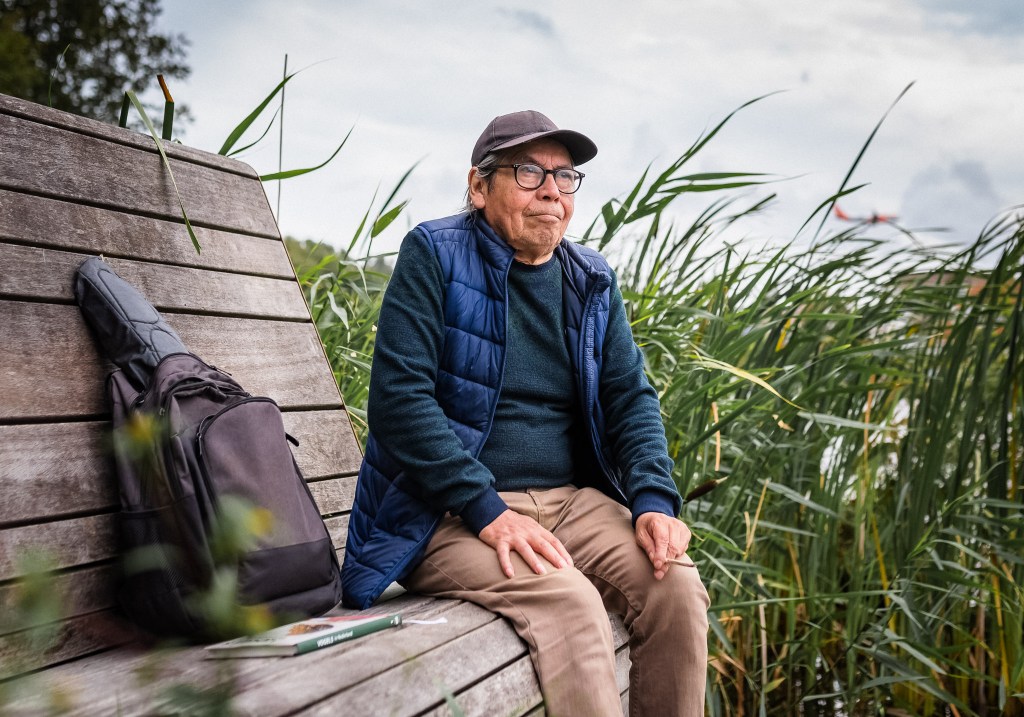
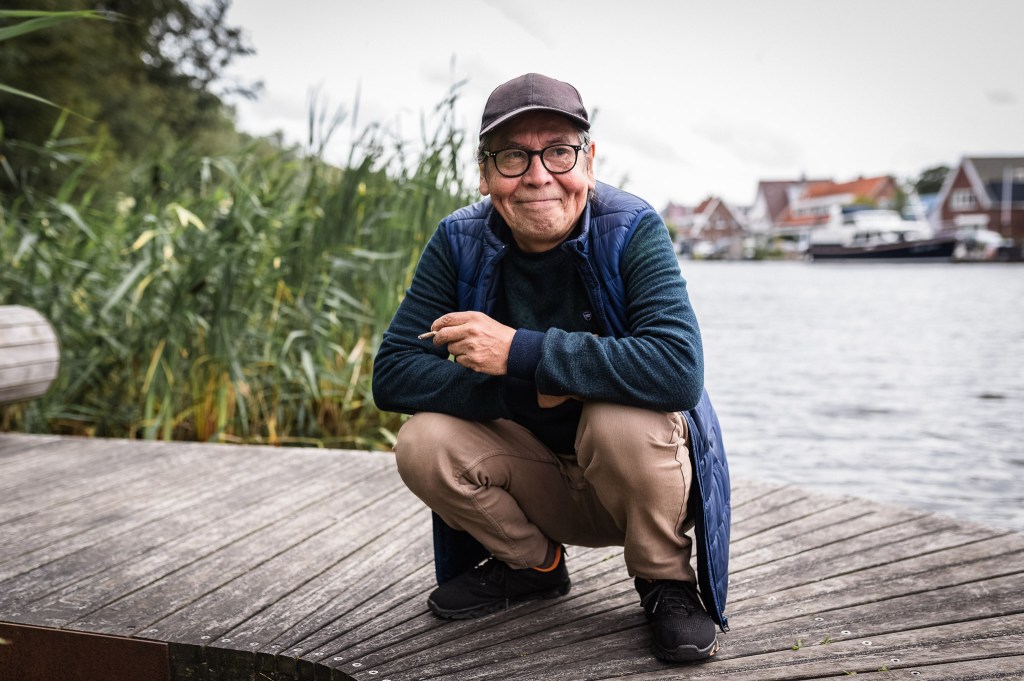
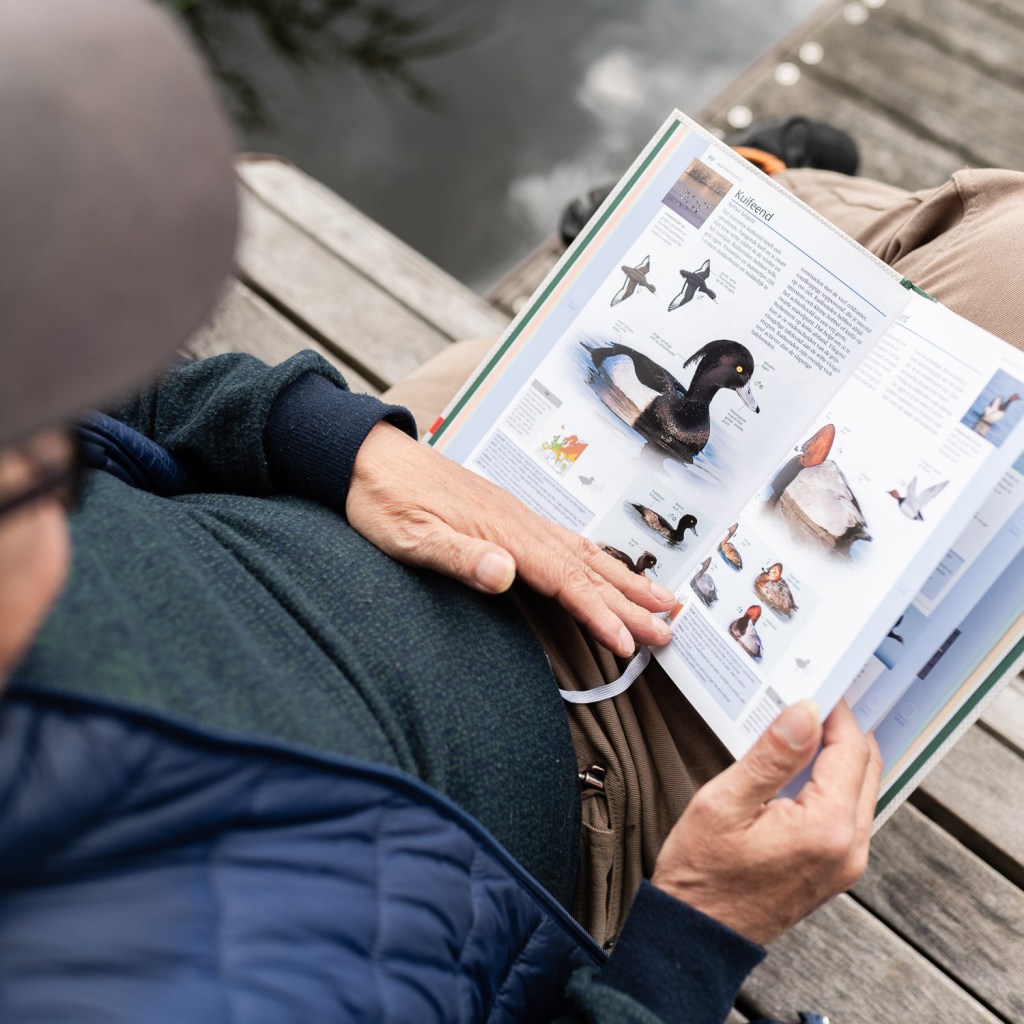
I did have some places in Chile. I had an apple tree. If there was no rain, I would sit in that tree. And if apples were ripe, I ate them. There were also birds. Here on the water in the Amsterdamse Bos I also come to watch birds. See the booklet with birds here. Look here at the coot and the moorhen and this… the grebe. They are here. But they have family in Chile. I will show you their family in Chile on my phone. This is the Taguita. My last name means condor. We have many birds in my country. When I came here, I saw the lapwing. And then I thought: that looks like a bird I know. That stuck with me. Five years ago I started looking up all the birds I saw as a small child in my country, with their names in Latin, the scientific names. You can find everything with Google. And then I found out: yes, they really are actually family.
What is your Indigenous dream that aids in waking up from the colonial nightmare?
As a child, one of my dreams was to become a pilot.
Like the condor?
Exactly. When I was thirteen, fourteen, fifteen, I made airplanes out of wood and cardboard. My own planes. I still have a few.
What is your dream based on your Mapuche identity? What I see is that we have lost a lot. By colonialism and internal colonialism of the Chileans. What I really miss is the language. I speak the language, the basics, but I don’t get much further. I cannot philosophize in the Mapuche language. You have to be there to actually speak to someone every day. Here, who can I speak to? With nobody. It is difficult for me. Because then the language in my head gradually disappears. What I do so I don’t forget my language is sing in the Mapuche language and listen to a lot of music. I now also listen to the news on video channels or YouTube. That’s nice for me. Then I can correct my language. This language is very important to me. I sort of lost my language when I went to school. That has happened to Indigenous people all over the world. We lose our mother tongue through education. Schooling is done in the language of the colonists. English, Spanish, French, but not the language of our land. I was beaten up by a nun. After that I wanted nothing more to do with nuns or language. That’s why I hated learning the Dutch language here and the English language. That was a kind of trauma for me. At a certain point I thought: I just have to continue with the Mapuche language. Take the word Mapu, which is often translated as earth. But it’s more than that.
It means ‘space’, and ‘reality’. The space that is reality. It also means ‘land’. Another term that we have had for a long time, and which is only newer in the West, is biodiversity; itro fill mongen. It means ‘everything that lives’, even us! But the stones are also alive for us. They have energy. Everything that has energy can create life. Maybe it’s quiet there. But you never know what’s in a stone. In any case, there is energy in it. We make verbs out of everything. For example, of a color. Kafu-un: I’m turning blue. If you put -un after it, it means ‘I become’.
Robin Wall Kimmerer, herself a Potawatomi, writes that in her Indigenous language 70% of the words are verbs. For example, a lake is a verb. It is mutable. A lake can also become a swamp or a stream. It’s animated. It denotes a process of becoming, not a dead thing that is static. That comes from a different sentiment and worldview. That leads me to the next question: What does sovereignty mean to you in relation to your Indigenous culture and worldview?
Our struggle began 120 years ago. Before that we were free in our own country. In 1881 the Chilean army invaded and committed mass murder. That war lasted until 1930. It actually started earlier in January 1861. We were then displaced from the land. And then the colonists came to take over. They took our lands, and we have been fighting to get our lands back ever since. We have the papers. In 1841, the Chileans signed that they would respect our country. The Spanish invaded our region in 1791. But then Chile’s independence came in 1810. Then neither the Spanish nor the Chileans did anything against us because they were afraid. They were in the minority. It was not possible to fight the Mapuche. Only later did they kill us and appropriate our lands. Sometimes they asked for a three-year lease, but then they wrote out a sales contract and since it was written in a different language, they stole land with lies. If, after three years, a Mapuche pointed out to the tenant that they had to move on, leave, they were laughed at and were told: “Now the land is mine”. And then they realized a bad contract had been made. We’re either killed or tricked.
And how does it translate to sovereignty?
We still have the papers, the original agreements. It clearly states where our lands are. Chile will never voluntarily give back the land. We are not recognized as Mapuche so they say our papers are not valid but that is a lie. So sovereignty is first and foremost land back! Chile stole our country. For us, everything starts with having land. They carry out paper genocide; declare us dead as if we don’t really exist. Sovereignty starts with the ground. Only then can we work with mental sovereignty. Women, children, the elderly, everyone belongs. We work as a community. We are not individuals. Our work is collective. Our land and our tools are collectively managed. That’s our way of doing things. For us, our women are also leaders. Sometimes better than a man. We have women’s sovereignty in our community. But Elisa Loncón, a Mapuche linguist chosen to lead the referendum on a new constitution in Chile, was not taken seriously. The old constitution states that there is one nation, one state. While the new constitution would recognize plurinationality. So that was a step towards sovereignty. The far right has waged a smear campaign against her, saying things like the Mapuche are children and incapable of governing. The right conducted a kind of boycott of the entire process and meanwhile the social democrats remained silent. My experience is that Chileans in the Netherlands also have a colonial mentality. Look, we have different laws. There is a difference. We prefer to exchange rather than work with money.
When we take back the land, food sovereignty will come. People from the mountains prefer to exchange potatoes for piñon, for example, which is a good edible product. Even the Incas ate that. We only need money to buy sports shoes or tools. Next, we can study our language. The knowledge, sembrar, cosechar, of sowing and harvesting is still very much present. With us, women’s sovereignty already exists.
Stealing Indigenous children is also undermining women. And the colonizer carried out both forced sterilization and the stealing of children at birth on a large scale. The church and legislation that steals children are also patriarchal. Right?
Yes, taking children has been happening en masse for a long time. In Chile to a lesser extent, but in Argentina they stole children and gave them away as little slaves to the rich families. They appeared in the newspapers: today we hand out children, today men, today women. Families have been torn apart and children have grown up with white families.
Many of them never knew they were Mapuche. Some, who were older and knew, later fled back to their lands. Many stories have been shared there. Some hid in the mountains. If they were found, they had to leave, because all the lands had been given to the settlers. That is our reality. We started living a landless existence, with a lot of poverty. Our women and men used to wear a lot of silver. They took it all away. We were rich. A rich, rich, rich people. Now we’re starting to take back our land. I’ve grown old. Even as a child I hoped that would happen, to take it back. Now it’s starting to become a bit of reality.
Photography: Mia Tengco
Artistic director/text editor: Chihiro Geuzebroek
 INDIGENOUS DREAMS
Leave a comment