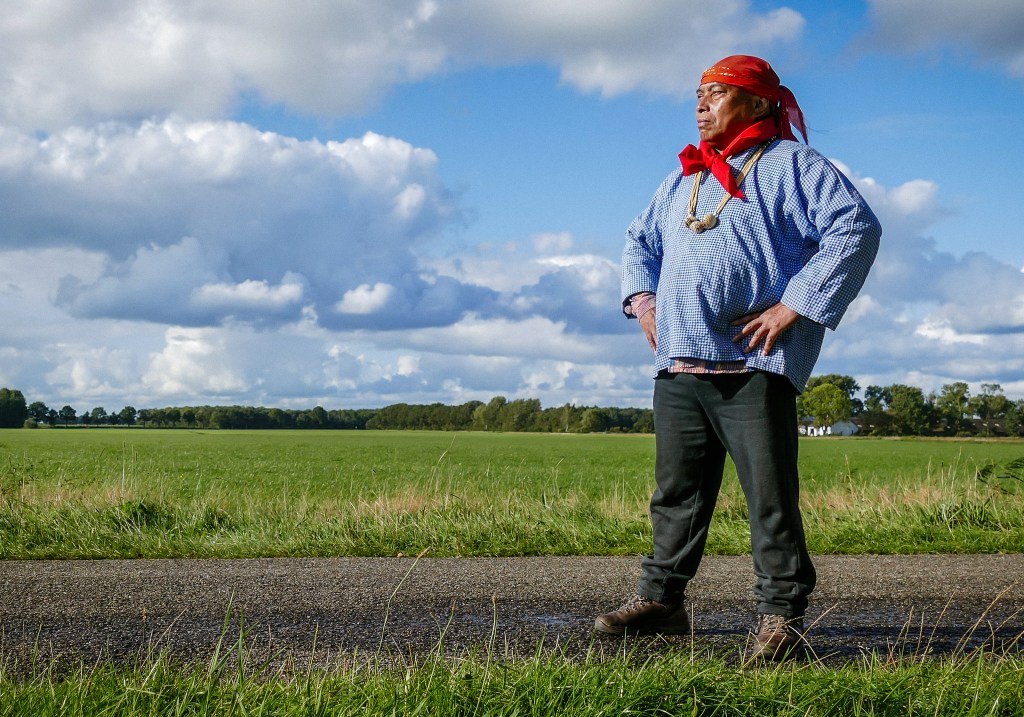
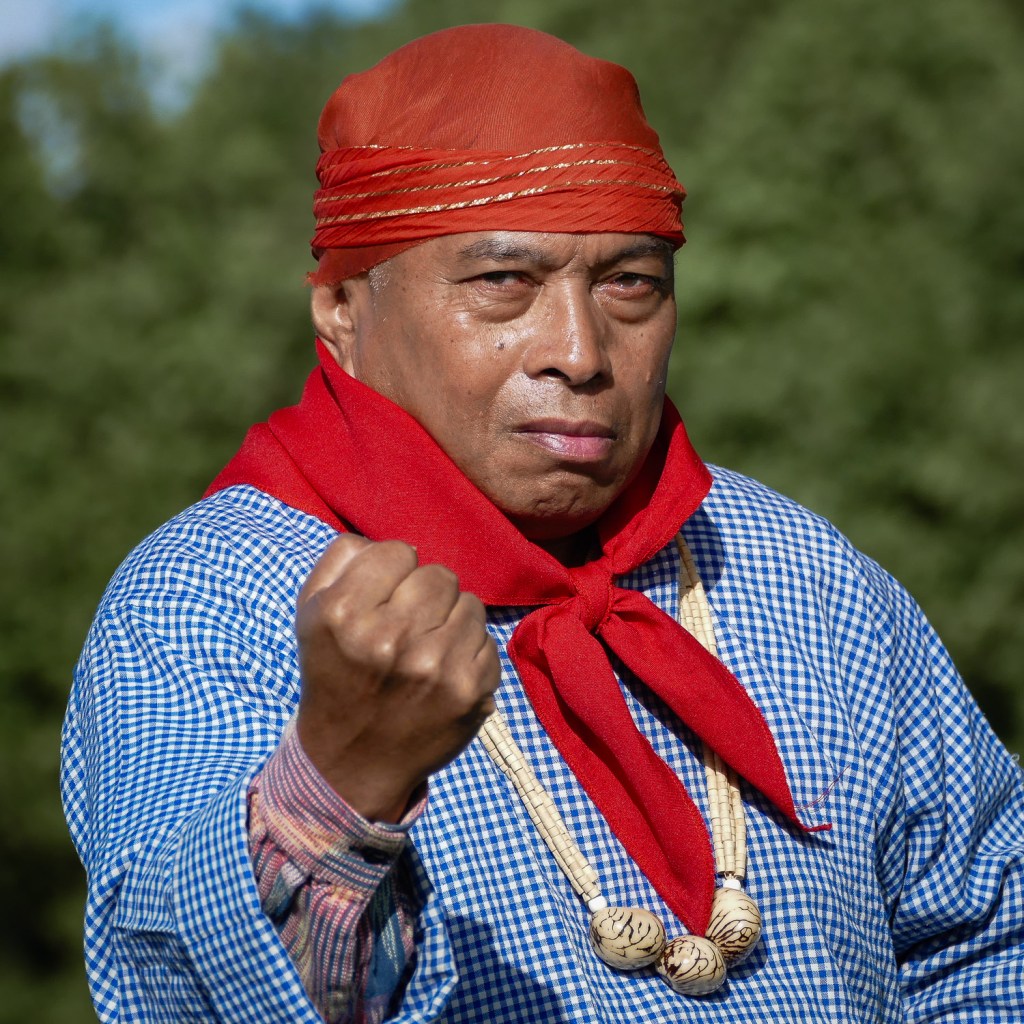
Can you introduce yourself?
I’m Sahureka, that’s my last name. And my first name is Semuel Julius. For the Dutch it is “Sahuureka”. If I were to say that in Dutch to Moluccans, they would shrug their shoulders; they don’t know that. But if I say ‘Saurèhkaa’ then people know who I am and which island I come from. I was born here in the Netherlands in 1956.
I now live in Amsterdam North. My first years of life up to the age of four, five, six were marked by police raids. Why? My father, together with other Ambonese KNIL soldiers (Royal Dutch colonial army), was transferred to the Netherlands under Dutch service orders. The Dutch government did this because the Republic of the South Moluccas was proclaimed in the South Moluccas on April 25, 1950. South Moluccas temporarily participated in the United States of Indonesia because sovereignty was transferred to the United States of Indonesia, consisting of sixteen states. South Moluccans have temporarily and conditionally participated in the state of East Indonesia at the insistence of the Dutch government. We wanted to have a separate status with regard to Indonesia and of course separate from the Netherlands. We had an independent state in mind. But at the insistence of the Netherlands, we temporarily joined East Indonesia.
One of the conditions was that if the state is unable to guarantee the interests, and in this case also the safety, of South Moluccas, we have the right to leave the state and the United States of Indonesia and have our own is able to bring into being. The Netherlands transferred sovereignty to the United States of Indonesia on December 27, 1949, which was co-signed by the predecessor of the United Nations, who were witnesses and co-signatories, culminating in the round table conference. The Netherlands had to adhere to those treaties and that final element. And they had to ensure that it was complied with. But shortly after the transfer of sovereignty in 1950, the Republic of Indonesia began to overthrow all other states with the intention of replacing the United States of Indonesia with a unitary state, the Republic of Indonesia, with Java as the center of power. Sukarno started by appropriating the neighboring states. When the South Moluccas saw this happening, they called the people together and in a meeting they asked the people: “What do you want?” The people then decided that the South Moluccas should leave the state of Indonesia and create their own state. And they did that on April 25, 1950 on the island of Ambon.
They proclaimed the Republic of the South Moluccas as a free and independent state. They then arranged everything a state needs between April 25 and June: citizenship and the army of the South Moluccas was established and its own flag was designed. In the meantime that the proclamation of the South Moluccas took place, there were still 4,000 Ambonese KNIL soldiers. The Netherlands had also signed the treaty that the KNIL had to be disbanded on May 26, 1950. But the Netherlands actually had trouble with the Ambonese KNIL soldiers because the Ambonese KNIL soldiers requested that the KNIL should be disbanded to be demobilized – thus being discharged from the army – on their own territory, their country of origin; in this case the South Moluccas on Ambon. The Netherlands has stopped that. They delayed it and at a certain point said that is no longer possible because “Sukarno has invaded the country”. Then Ambonese KNIL soldiers decided to actually be demobilized in New Guinea because they wanted to defend their country from there. But the Netherlands has also sabotaged that. And then the Netherlands decided to demobilize the Ambonese KNIL soldiers on the spot, even in an occupied area in the Moluccas.
A number of Ambonese people then traveled to the Netherlands and filed summary proceedings against the Dutch government and they won. The judge decided that the Netherlands could not demobilize the Ambonese KNIL soldiers in every area under the control of Sukarno. The Netherlands then temporarily gave them KL status from the army and transferred them to the Netherlands under military orders with the promise to stay in the Netherlands for six months and then return to Ambon. That didn’t happen. And when Ambonese were brought to the Netherlands, they were only allowed to take three children with them; a fourth or fifth child had to be left behind. This has created a situation where some children never saw their parents again. No one actually knows where those children have gone. No inventory has ever been made. On the way to Holland my brother Marcus Astorias was born, named after the ship that brought them here. My brother died less than six months old. Whooping cough. There was virtually no support in place.
Upon arrival, the promises made by the Netherlands turned out to be untrue. The Ambonese immediately received a letter of discharge, stating that they were dismissed from the army and a temporary residence became a permanent residence. My father and a group of others had then founded a political party: National Moluku Salata Party (PNMS). They always held the Dutch government responsible, and they continued to call on the Dutch government: “Take us back to a free Ambon! We do not want to participate in the labor process here in the Netherlands at all.” Their attitude was a thorn in the flesh of the Dutch government. The authorities tried to break these Ambonese organizations by transferring people under police guard to another place every time where these people are housed; another transit camp in the Netherlands where Jewish people and resistance fighters were recently held captive by Nazis. So from 1951 on arrival in the Netherlands until 1963, we were forced to move six or seven times. Always under police guard and always the same evening before, the parents were told: You have to leave tomorrow. And where they were taken, no one knew. It’s always uncertain. So that’s what I experienced as a child. I was born in West Kapelle in July and in August the Netherlands sent the Harde Bijstand, a kind of Mobile Unit, and they shot live ammunition at the Ambonese. This is because the Ambonese did not want to participate in the labor process.
A soup kitchen where everyone cooked together was also closed. The people were no longer given food. What did the Ambonese do? They went to the shops in West Kapelle and did their shopping there and said at the cash register: “Send the bill to Queen Wilhelmina”. That was not appreciated. Not long after, the Harde Bijstand was sent on us. I heard that they were armed with carbines, even had snipers ready on the dike and they immediately shot live ammunition at the Ambonese men who were playing football. There were nine injured, two of them seriously. All injured were taken to hospital. And all the men and boys were housed in a prison in Doetinchem and all the women and children were left behind. The camp was closed with barbed wire around it with four guard posts. And no one was allowed in and no one was allowed out. No food and no drink. For nine months. My eldest brother and eldest sister had to crawl under the barbed wire in the evening to ask for food from the residents of West Kapelle. And people were already ready with food parcels. They could take them back to the camp.
But being locked up for nine months without food and water is actually a death sentence. Was that the intention?
They wanted to break the will of my father and the resistance and for us to participate in the labor process. Many children were malnourished. My mother had to dilute her milk with water to feed me enough. I had just been born. That was my welcome to the Netherlands.
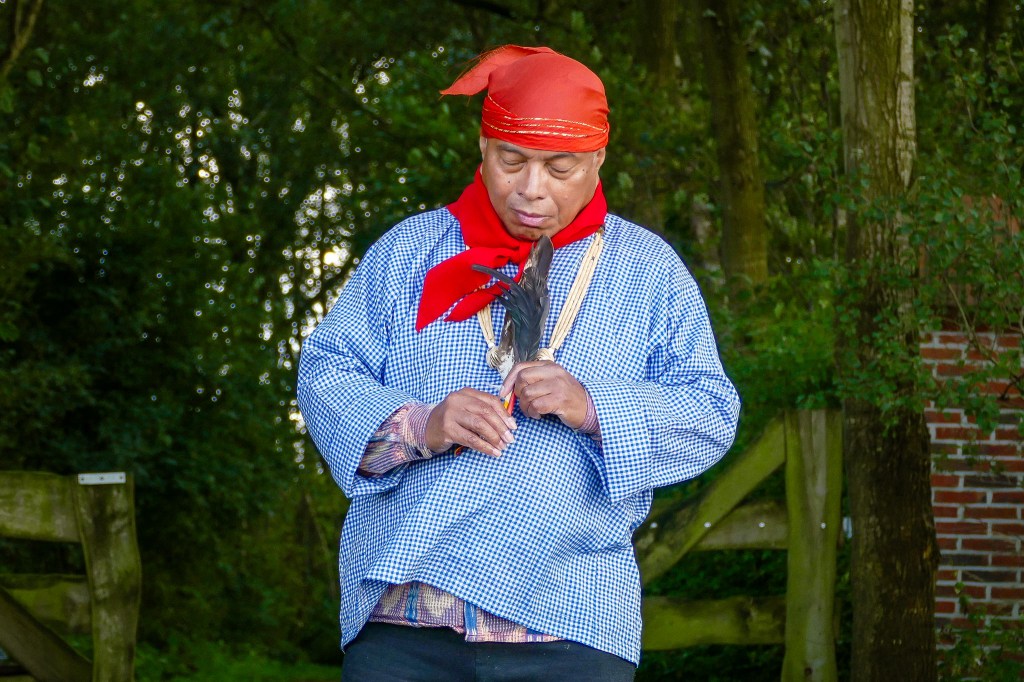
We are now standing at the place where you lived as a toddler. Why is this your dream place?
I experienced a very turbulent childhood with police raids and I only saw my father for the first time when I came to live here in Ybenheer, a Nazi transit camp where we Moluccans were housed. Here at the entrance I always had a bad feeling. I once saw someone hanging here. I may have felt the energy of what had happened here before. I often stood here as a little kid near this road and I would look out over the field and the trees and I would see a blue line just above those trees. I felt a certain feeling come over me: homelessness. I don’t belong here on this territory. From that moment on, I made a promise to myself: my home is far beyond that blue line. My home is somewhere over there. I’ll look for it someday. There lies my true self; who and what I am. That’s what I did in 1986. We call that bulan (going home). There, in Maluku, I actually brought my heart back to me, the inspiration and the person I am now… That is actually where my whole essence of my identity is, where my purpose lies; what I still have to fulfill in this world I live in. I was born in captivity. That promise to come home is my lifelong dream, and this is the place where I first felt it clearly. I have always decided: I will continue. My father passed away. But I have decided to continue fighting. I have learned to never give up. And every Indigenous people anywhere in the world must never give up. We are the guardians of this earth. We know how to live in harmony. Others can learn from us.
Can you share more about your Indigenous Dream?
I always have a higher purpose. That is related to what we call Nunasaku, which according to our tradition is the birthplace, the cradle of humanity. From there people moved to the four directions and populated the world. We are one big human family. My dream is based on that message. All people must come together again, together with everyone’s knowledge and wisdom so that we can realize a new society, a world like we have lived before. Then you had a living together, not a ‘civilization’. Back then, people still lived in harmony with the creator, fellow man and nature. That’s what I have as a dream. That people start talking to each other and create a society in which no person is too many and for every child, no matter where they come from, religion, origin, black, white, brown, small, large; there must be room for every child. It should never be the case that a child is considered superfluous. That is my dream. We must talk to each other in a circle, all peoples together.
You have 5,000 Indigenous tribes and peoples who are not currently represented in the UN or international bodies because they are not a nation state. I personally think that forcing them into a straitjacket in a nation state is not a good idea. How do you see the representation of the people in such a council?
That’s why I talk about peoples, not states. Just look at old world maps; Every area where a people lives must bear the name of the people. From our perspective you have four human children: Our black brothers and sisters, white, red and yellow. The four human children and grandchildren must come together and share knowledge and wisdom as peoples, not as states.
And what is your view on Indigenous sovereignty from your culture?We have the adat, that is our way of life. At the center of our adat is that everything is inextricably connected to everything else. Everything. And in all, you have to see the human and everything around the person. It’s all connected. The sun, the moon, the stars, the universe. Everything you see on the earth and in the earth is connected. The energy that comes into us from the universe goes back to the earth via our head, our hands, via the body. The energy of the earth also comes out through our feet, into our bodies, and then out into the universe. And all energy will bundle together. That is why we wear a cloth around our waist to maintain balance. To be able to balance the energy in the universe, the energy in the earth and also the energy within us. That is what we call human, you were born as a human. The name of an Indigenous people often has the word ‘Human’ in their name. For us, Alifuru people, Alif means ‘the first’ and Uru means ‘man’. The word human is a central concept in our way of life. Everything is actually about life. For Indigenous people, everything you see around you relates to life. Life is full of energy. As the energy is full of life. We make no distinction between ‘nature’. For a Western person, living in Amsterdam means you are not in nature. You are only in nature when you are in the Amsterdam forest. I remember when I was once talking to a forester and we were talking about ‘where nature begins and ends’. We were standing in the middle of Dam Square. A Surinamese man took a step back and made a very wide arc with his arms: ‘You are standing in the middle of it. Whether you are on the tram or in your flat in Amsterdam; you are in nature. You cannot separate nature.” I also asked my cousin: “Where does nature begin?” Do you know what he said: “Where does it end?” Nature begins nowhere and ends nowhere. Nature is present in us as we are in nature. And that is the freedom in which we were born as humans: all energy passes through you. As a human being you are free in nature.
What do you mean by free? Because the whole condition of colonialism and capitalism brings a lot of forced and bound lives. Whether it is the systemic murder of an Indigenous people for land or whether they cancel your identity on paper and systemically take away rights… This does not feel free. Where is freedom for you?
The freedom lies in the fact that I am connected to the ground. We believe that Mother Earth is entrusted to humanity. Entrusted means that you are connected to Mother Earth. And every people has a certain part of Mother Earth where they can develop as a people. That they can develop knowledge and wisdom there to live in harmony with everything around them. The adat, our way of life, says that you must maintain relationships in such a way that you live in harmony with your fellow man and the life around you. If you see that something is wrong, we have the freedom to leave nature alone. So that nature has the freedom to restore itself. If nature can restore itself, man can restore itself too. Because a healthy nature also means a healthy person. That is the freedom we must have to live in freedom with everything around us.
What are baby steps to realize that vision?
The first step is actually just like for a baby: walking on the floor. And feel that the land is there for you too. The land is mine.
Isn’t that a Western idea that the land is property? What I keep hearing from Indigenous cosmovisions is: “The land is not mine, but I belong to the land.” You belong to the mother, the mother is not your property. It’s a matter of belonging.
From my experience, every nation has been assigned a piece of Mother Earth. There they can say: This is ours. Why shouldn’t they say that? As long as you have that concept, but don’t apply it the way people do here in the West. As long as you don’t go to someone else’s land and say, “That’s mine.” If you have your house here next to me, then I can’t say: That’s mine. You don’t say: This belongs to everyone. You also want to say: This is my house, my rules apply here. What is wrong with that? The concept of ownership comes with responsibility. That you must handle this territory with care. If you don’t deal with it properly, if you pollute, it will also have an impact on other territory. It is your duty to handle it well.
And what word do you use for that in your own language?
We actually don’t have a word In our village, every family gets a piece of land. And we are taught to be self-sufficient. If you are independent in the basics, you are also independent in a bigger picture. If you are not independent at the grassroots level, you are not independent on a large scale either. If you sell your piece of land or sell it to someone else, you lose your freedom.
And how do you view the right to migration and nomadic peoples who do not settle?
There is forced migration and migration that is staged. They transfer people to our islands that are still uninhabited. Be careful with the word migration, because political games are being played. We have become victims of political games. If we are not careful, all those people who come from outside will be in the majority compared to us. Then that piece of land is no longer mine. Then I can no longer cry out sassi if I want to, the practice of leaving nature alone, let soil lie fallow. Just look at what’s happening in Papua. Thousands of Javanese have been transferred. I have seen this happening in the Moluccas for years. People are brought by truck in the evening. On Seran, the largest island, you have trans-migrant villages that have been built there, stone houses are being built there for them; everything modern. Better than the local houses. Streets are being built there and schools are being built.
That’s what you think of when I ask about migration and nomadic peoples? One thing that Indigenous peoples are sometimes accused of is that they adhere to an essentialist independence; another type of nationalism: one people, one nation. Of course you want to dismantle colonial takeover of a piece of land, but what about nomadic peoples or those who claim the right to roam?
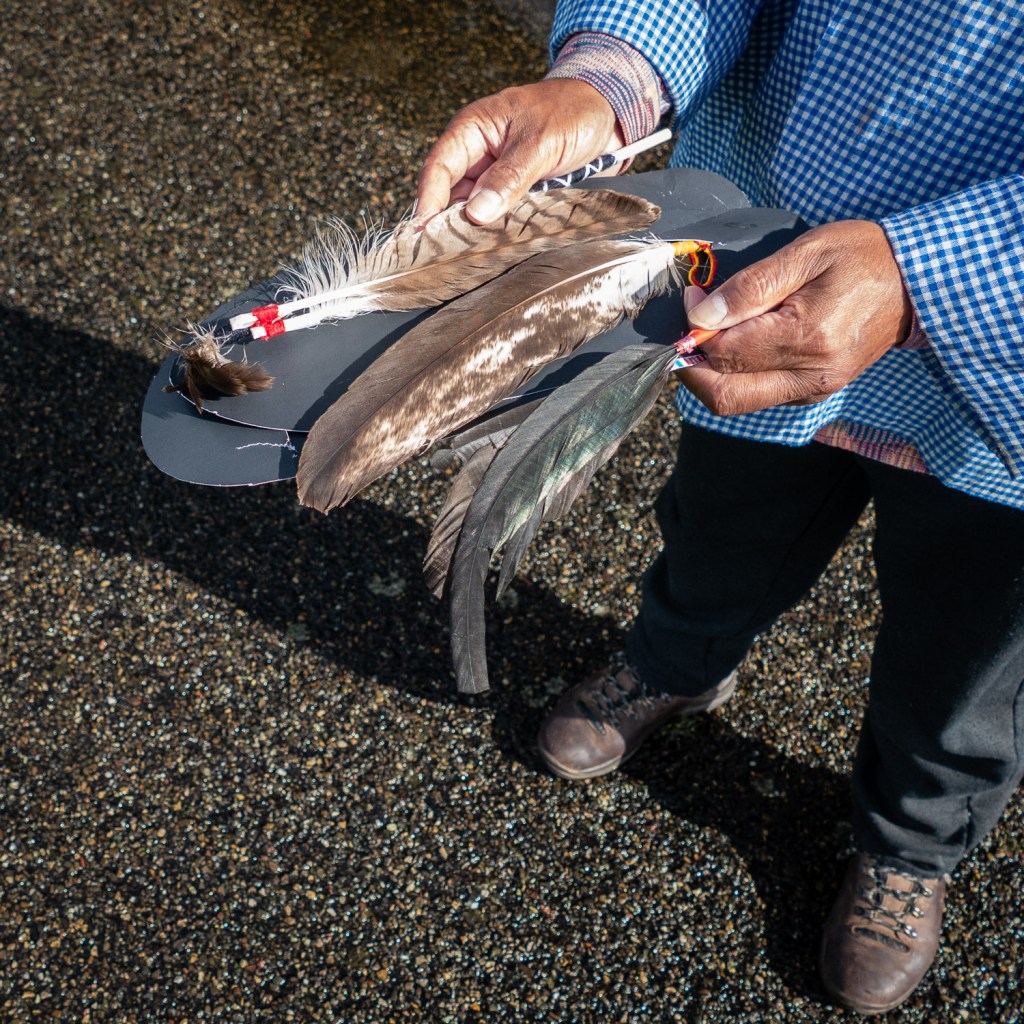
We must not allow ourselves to be captured by their language. There are many peoples who move from one area to another. We also have semi-nomadic clans that move from one area to another. So what? Those are not migrants! It’s always been this way.Now it is labeled as migration. Now it would be a threat.
No, the system is set up with borders that we do not want. We never defined the borders. That was done by colonialism and we are left with the mess. It is my right to stand up for our country, our freedom. Peace cannot exist without freedom and without justice. And what do we get now; they are going to define the term peace and impose it on us.
How does the definition of freedom as imposed differ from how you view freedom?
From the Western point of view, freedom and law are related. Freedom has to do with their international laws and international rules, so to speak. Within the sentences, the lines of all those treaties. If I want the word ‘freedom’ I have to submit and rely on all those laws. My Indigenousness says that I can live as a human being, in my country, in my territory. Our stories tell that when we left Nunusaku we promised the creator and each other that we would jointly watch over Mother Earth: Saka lede. ‘Saka‘ is watching over and ‘lede‘ is from the top of the mountain to the bottom of the ocean. And we humans are not alone on this planet. There are also trees and animals and life that we cannot see. They have just as much right to live here as we do. The word freedom should not be limited to only its Western definition. Sit at the table with all the Indigenous peoples of the world. Listen to them. Take them seriously and recognize their way of life. Recognize their adat. In the experience of freedom of Western regulations I am a prisoner. And do I want that? No! I’m never going to accept it.
Photography: Mia Tengco
Artistic director/Editor: Chihiro Geuzebroek
 INDIGENOUS DREAMS
Leave a comment