Can you introduce yourself?
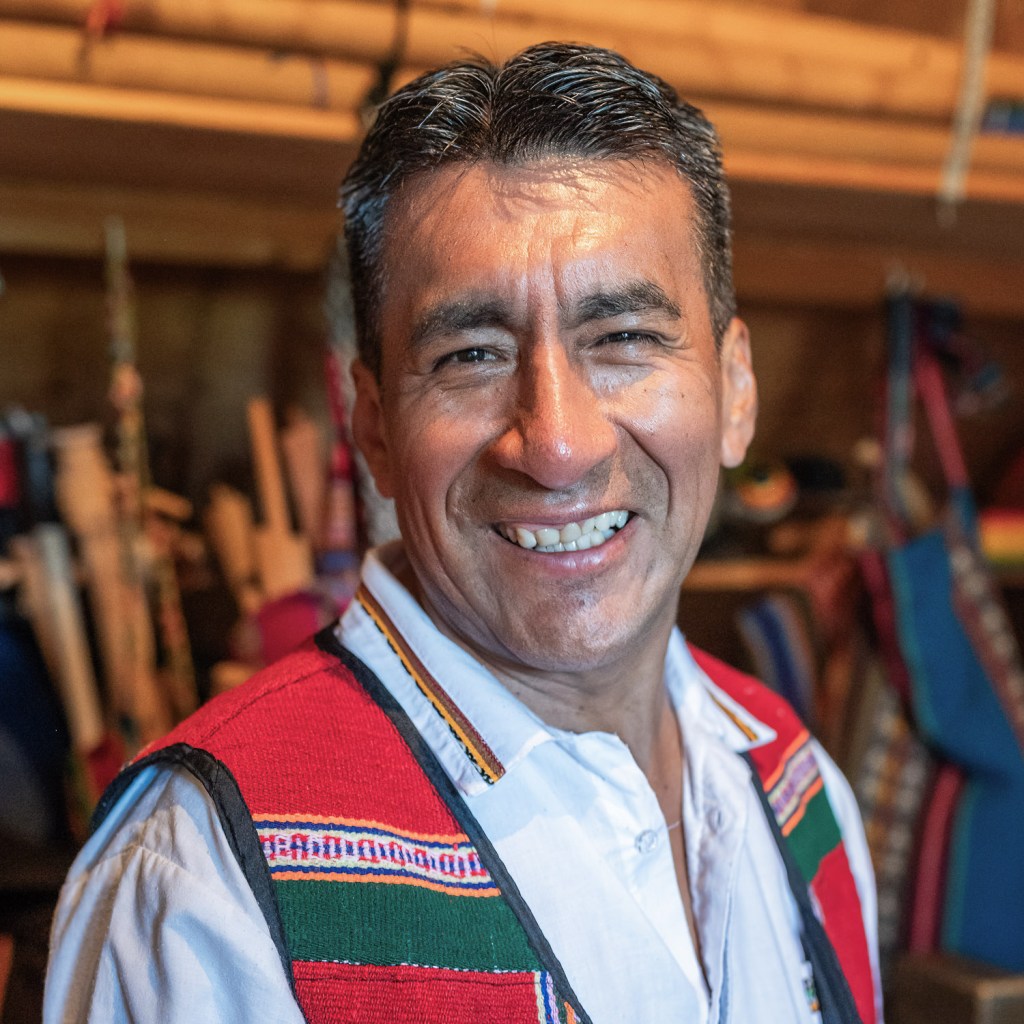
My name is Roberto Calisaya Hilara. I’m from Bolivia. I come from the Aymara community. I was born in San José de Chipo. That is an Aymara community 180 kilometers from the city of La Paz. I came here around 1990. I never thought I’d come here. It was el destino, fate brought me here.
I did know that Holland existed. I knew it from the leche holandesa; the milk.
It exists. It’s not a myth.
But I had no idea where the country was located. I grew up as a musician. I have been a musician since I was four years old. In my village it is tradition, and everyone passes it on. So I’m a traditional musician – not commercially. I left the village to go to school in the city and from there I went abroad. I had friends in Argentina and I met a lot of musicians there. They invited me, me propusieron, to play with them in a big theater. I don’t want to be boastful, but I was always good at traditional music. Those were really big concerts. I liked that then. And I even got money. That was my first time getting paid. I liked that. And immediately afterwards the boys said: ‘Do you want to play with us, we are going on a trip’. Thus began my adventure. I traveled throughout Latin America, Central America, the United States and all of Europe. And then I stayed here. I found my wife. I was alone all year round. Then I found someone; she was caring and stood by me. I thought that was special. And now I have two beautiful gifts for life: a boy and a girl. I’m still here and I’m working really hard. And of course I cannot forget my background, my tradition of my ancestors. The name of the group I founded, Yatiyana, means ‘what you have, you must pass on’.
Where can you dream?
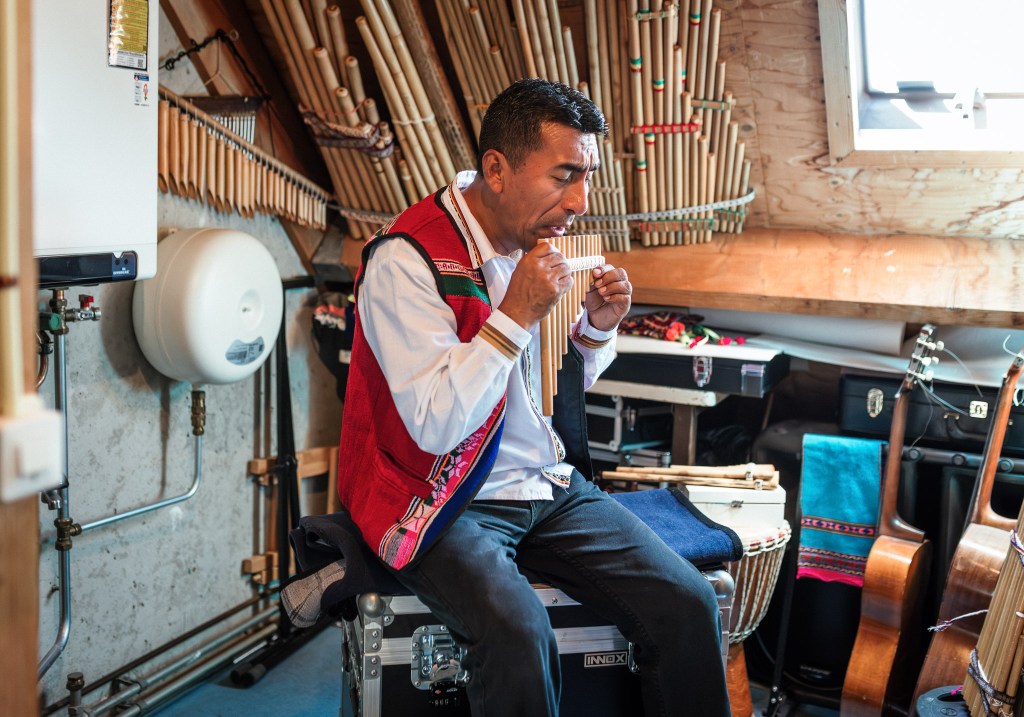
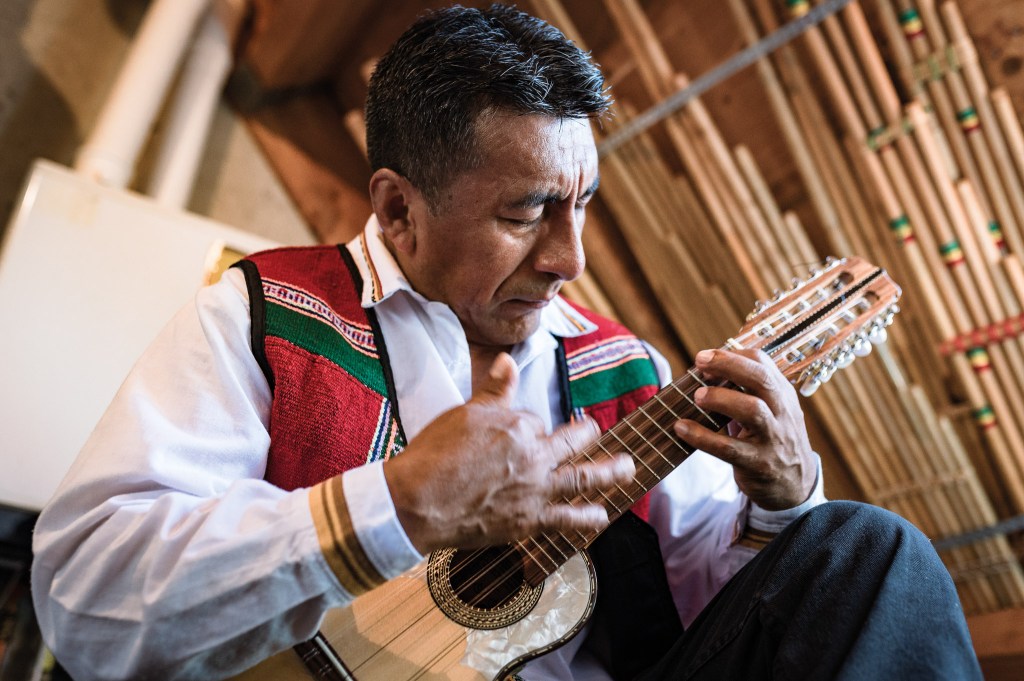
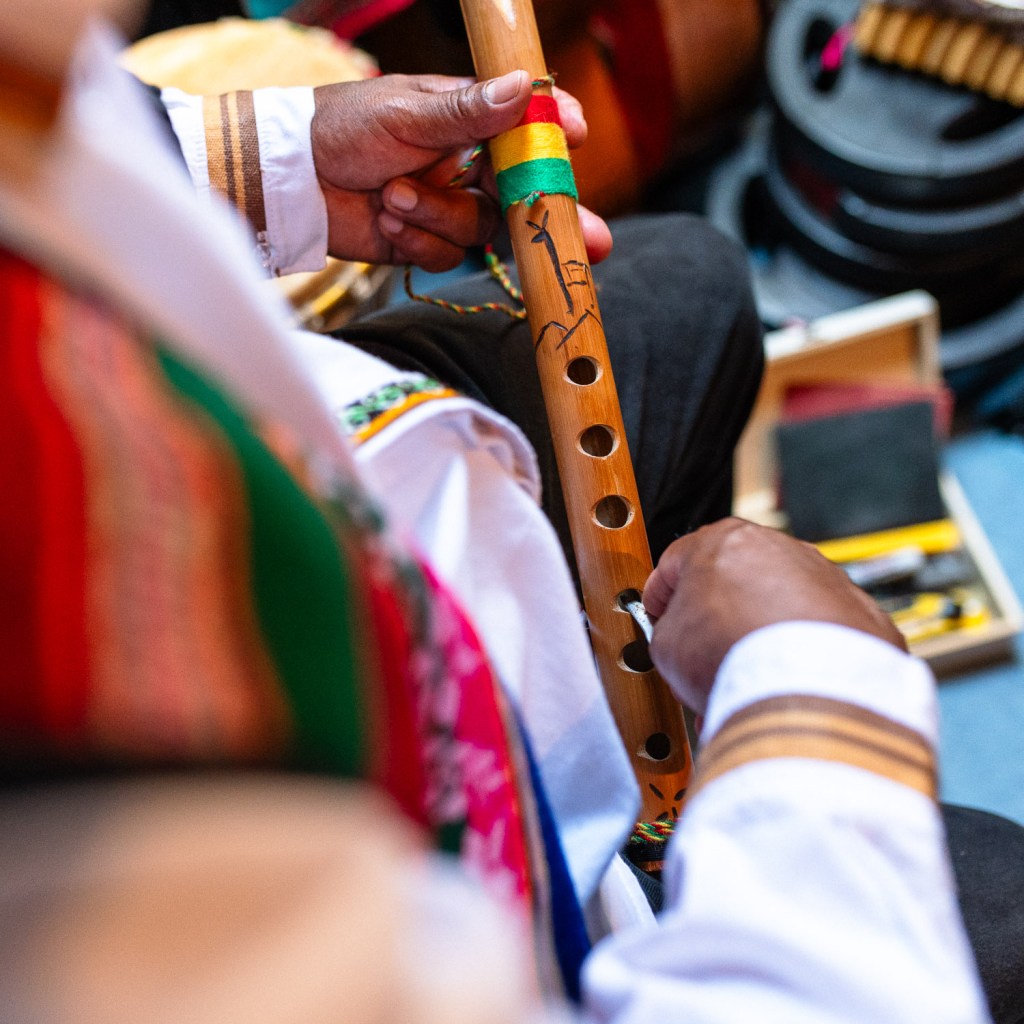
My ideal dream place is in my country, in the mountains with my flutes, and playing there, in the very high mountains, with the cows or sheep, like I used to do when I was a shepherd. But that is difficult to achieve. So I also have a place at home where I can always sit, close to all my instruments. There I feel grateful to the wind, the wind instruments that I have here. Those instruments, the wind, have been a bridge for me from South America to Europe to get to know a new world. That is a treasure to me. I have a thousand types of flutes upstairs, from this small to two meters. I always have dreams there in the attic. I also continue to make flutes. I used to have a bigger room, a special museum. A TV program, Klokhuis, also visited there. I had as many as 30 drums and a thousand instruments, both for the rainy season and for the dry season in Bolivia.
So you could create a museo de instrumentos here like in La Paz?
Yes. Easily. I plan to set up a foundation. So that my instruments can continue to live. Who knows, maybe I won’t be here tomorrow. When I was ill during the corona period, I realized: What will happen to the instruments? Those instruments must remain. There, upstairs in the attic, is a special place.
What is your Indigenous dream that helps you wake up from the colonial nightmare?
My dream is always focused on the Indian community, not just my Aymara community, but that all Indian people in the world have equal opportunities. That they are not discriminated against. I get emotional. I have experienced so much with colonialism. I also worked for those people and saw how they treated my parents. My dream is to have equal opportunities. My mother and father never went to school and I was only able to go for a few years. We are people too. We respect other people. According to our philosophy of life, we think horizontally; not selfish. With us, all jilacatas, leaders who are elected, have positions that rotate. Not just one person, everyone has a chance. I want the world to change. I also want it to be recognized that we as Aymara are also a nationality. In Bolivia people still talk about ‘indio’ when it comes to us – and ‘indio’ means that you don’t feel pain, you are just like a stone. Like you have no feelings. Fortunately, things have changed recently. But until recently we couldn’t go to the main square of a city. Indians were exiled. Even in 2019. Then there was a coup d’état. And they said, ‘The city is not for Indians. They have to go to the jungle or to the mountain. That’s where they belong. And with the elections they have no right to vote; “What do they want with voting rights?” I want that to change. I want equal rights. We are people. Whether someone is dark, white or Indian, we have the same color blood. I want equal opportunities for brothers and sisters in the world. And racism is really bad in Latin America. That is what colonialism has brought us. They say that slavery was abolished in Bolivia in 1851, but that only happened in the city. In the countryside it was business as usual. I always had to work, my father always had to work for those people’s grandchildren. I had to work myself when I was a little boy. Not so long ago – my father has been dead for twenty years now – my father paid those grandchildren with money for sheep. That land is ours. From the Indians, not from the colonists.
People often don’t know about red slavery; many Indigenous people were put to unpaid work under colonial rule. Often also by appropriating local community work, such as the mita, for colonial private interests. Can you share something about how you see that? It wasn’t just black people who were brought into slavery. The Native American people have also been abused into slavery. We also did slave work, but they don’t tell us that very often. They wanted to kill us too. Bolivia has also deployed doctors to sterilize the native population. They were not allowed to have children. And they didn’t want our children to go to school. When I went to school as a four-year-old, the teacher was from out of town. They didn’t want us to speak our native language. I didn’t know a word of Spanish. I really had to speak Spanish. If I didn’t, the teacher would put my head against the wall. They treated us children the same way they treat people in military service: they beat us to discipline us. That’s how it stays. They keep hurting people. That’s how we were raised. I remember when I first went to Bolivia with my wife. The children in the village were afraid of her. She has blond hair. The children were scared and cried. Why? Because they are afraid. That’s how we grew up. Why are we always timid? We are closed like a flower that does not want to bloom because we have been treated so violently and inhumanely for so long. With us there was the mita, which we call minka, it is a traditional way of working the land together. But the rulers also took advantage of this. Without pay, without food and drink, they made us work in the fields all day long. Work, work, work. We don’t live that long. Many succumb. Someone from the city who has a certain way of life still finds it strange that people in Indian communities do not adapt to their lives. But it’s different. It’s hard to understand, but without us Indians working the land, they can’t live.
The media plays an important role. Indian brothers have also been manipulated by all the stories that are not true. I’m not excited about the future. The media makes people want privileges; make everything for sale. Presents. They think with their money. They want to buy the world. That means fewer trees, fewer rivers. Appropriating more and more land where we live. In the city they don’t notice climate change, but in the village we notice it immediately. We live in a valley. It used to be neither hot nor cold there. It has become so warm in recent years. Products from the warm area can now grow there. Jungle animals are moving to higher ground, and there are now more and more venomous snakes, and a puma has also been spotted. Even a little boy was eaten. In the city they don’t mind it being a bit warmer yet, but on the other hand; we in the mountains depend on water; the milk of mother earth Pachamama. What are we going to do if there is no water? Everybody dies. The world must change. The people in the city need to get to know the country. Just go to the village, a place where there are no modern things. Then you will understand how beautiful living with nature is. I have always played with stones, clay and trees. I’ve played so much. That gives me strength. People always say: ‘Oh, the people in the countryside are so poor.’ Then I think: just come to the village with all your money. What are you going to do then? There are no shops there. What are you going to do with your money? When you go to the city, you need money for everything. But if you come to the countryside, your money is worth nothing. You have to have relationships. We have the tastiest treasures: corn, potatoes. We have land. My mother can only last a day in the city of La Paz, and then she has to return quickly. She has never been to the Netherlands. That would be a prison for her here.
What does sovereignty mean to you in relation to your Indigenous culture and struggle?
I think, for the Aymara community, we don’t want borders. I have brothers from different directions. Because of colonialism we have different colors of passports and papers: Colombian, Bolivian, Peruvian. I don’t want to see that. We have Tawantinsuyu, a country without borders. Now I am Bolivian, but I feel like a brother to people of the world. My dream is no boundaries. And about food sovereignty, I think we should grow well without the influence of Western countries with all the toxic things in agriculture. Pesticides destroy the earth. When you grow a plant, it just has to be done naturally. And for political sovereignty I see equal opportunities as important, that everyone decides.
Decision making is difficult. Because we are now stuck with nation states. And nation states oppress Indigenous peoples worldwide. Bolivia is plurinational on paper. But how could it become more plurinational in practice?
I hope for a new generation. Now it may be plurinational in name only. It is positive that the name has changed. It’s a start, but you need to get to know all 36 nationalities and communities. It would be great if we really learned from each other, from each other’s food and agriculture. Our ancestors know a lot. They know when the rain will come and how we can catch it. I hope for sumaq qamaña for the future. That means ‘living well’. To have that, you must live in harmony with the earth. Respect the trees as your brother, the animals, the river, help someone with ayni, paying-it-forward help that takes care of all needs. When you do something good for others there is sumaq qamaña. Good food, healthy. That’s the good life. Sovereignty is about the land. We use the land for three years and then we leave it fallow. We must serve the soil.
What are baby steps towards sovereignty?
More education in the service of knowledge of yourself, your roots, and to understand others. If that doesn’t happen, nothing will change. I always tell my children about my life. Bedtime stories. I told stories about my life as a sheep herder.
And then my children would ask, “One more time, one more time.” And then I would sometimes tell it three or four times. They also feel strongly like Aymara. I gave that to them.
Photography: Mia Tengco
Artistic director/Editor: Chihiro Geuzebroek
 INDIGENOUS DREAMS
Leave a comment