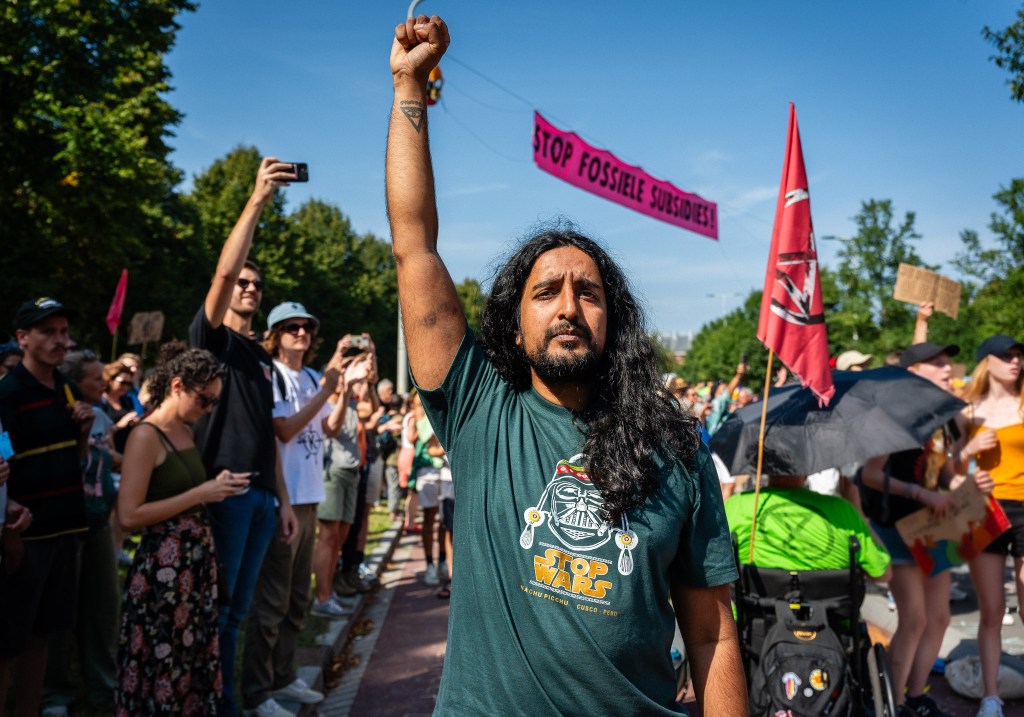
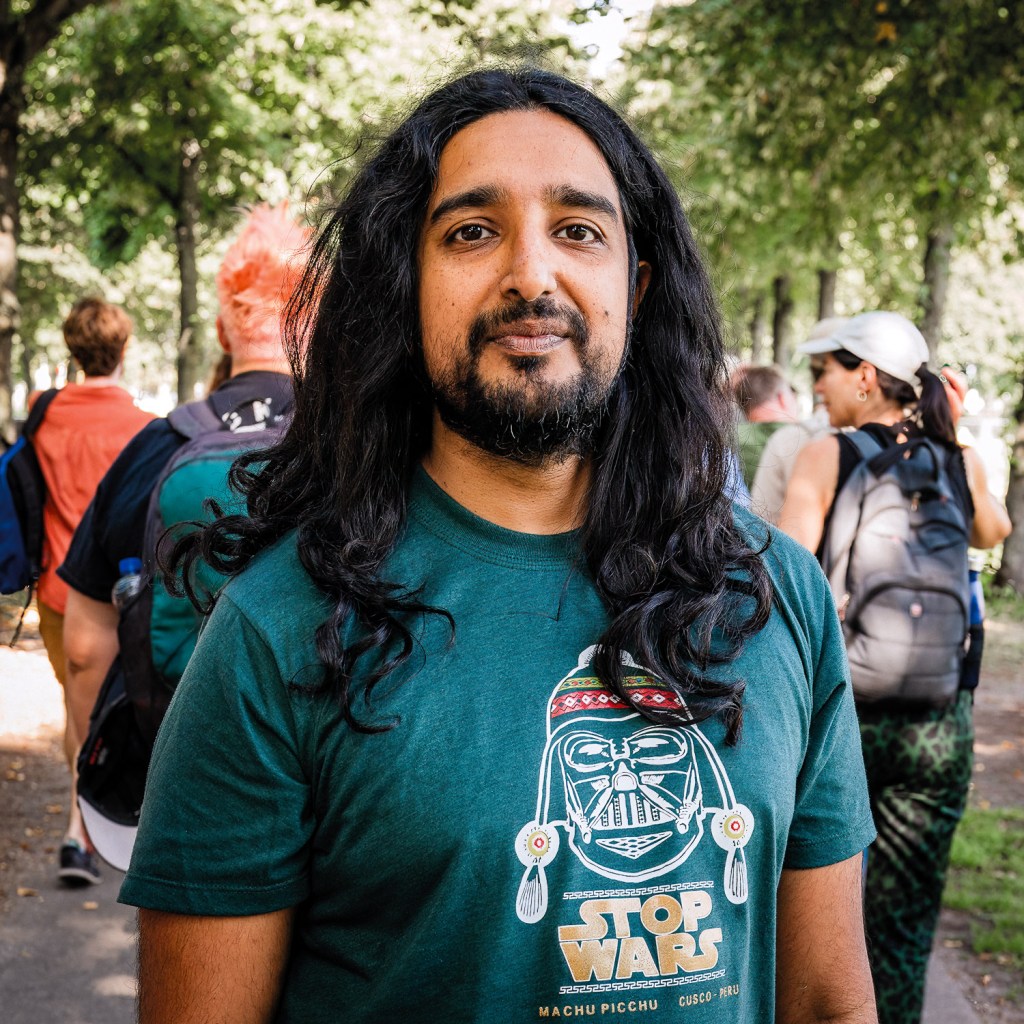
Can you introduce yourself?
My name is Shanthuru Premkumar and my pronouns are they/them. I am Tamil from today’s Sri Lanka. I’m at the moment living and working in Brussels. My relationship to this land has to do with my connection and the work I do within the climate movement at large.
I am regularly in the Netherlands for climate justice events, organizing etc.
Is there one particular group of people you belong to ? I know Indigenous peoples can come as nations, confederacy and many more structures.
So basically the Tamil people from the northeast of Sri Lanka united when the first colonizers came. The first colonists were the Portuguese, and then the second were the Dutch and the third were the British. So during the first time already, because of the new way of interaction of the colonial powers, the Tamil community came together and put aside some of the internal disagreements they had as clans and fought against Portuguese alongside the Jaffna kingdom, and came together and they further solidified after the British left because the Northeast province became similar to ZAD Zone,Autonomous, Decentralized, a resistance against the capitalist and the dominant people’s influence because they wanted to basically occupy the land and kind of erase our people. So there was a war which happened and during all these moments, the individual groups or communities, they became more together. So when I was saying that my one side of my family, or the lineage from my father’s side is from Valvettithurai today.
Well today these people are popularly known for land protection, fishing, and they used to move to other islands in the area for fishing purposes. So they were a nomadic seafaring tribe. But then when the British came, there was a sense of together to unite against those that enslaved us and tried to assimilate us. So my parents came to Europe in 1978 as political refugees because of the conflict. Because in Sri Lanka, there was this law imposed that people couldn’t speak any more Tamil freely by moving the administrative language from English to Sinhalese,, which is the majority language. A lot of Tamil people resisted that because they really identified themselves culturally with the language. They didn’t want just a single language to be the only language spoken throughout the space and that led to the conflict and therefore my parents came to Europe and I was born in Europe. My parents are both active during the conflict. So anyway, long story short, I lost my mother in the war.
And then my father was imprisoned for a long period of time and I lived in Sri Lanka, initially. After being born in Germany, I lived in Sri Lanka for a few years during the war, and then I went to Southern India as a refugee. I was for 10 years. And then I came back to Europe 10 years ago, so in 2013.
Where do you find the space to dream? What is your dreaming space?
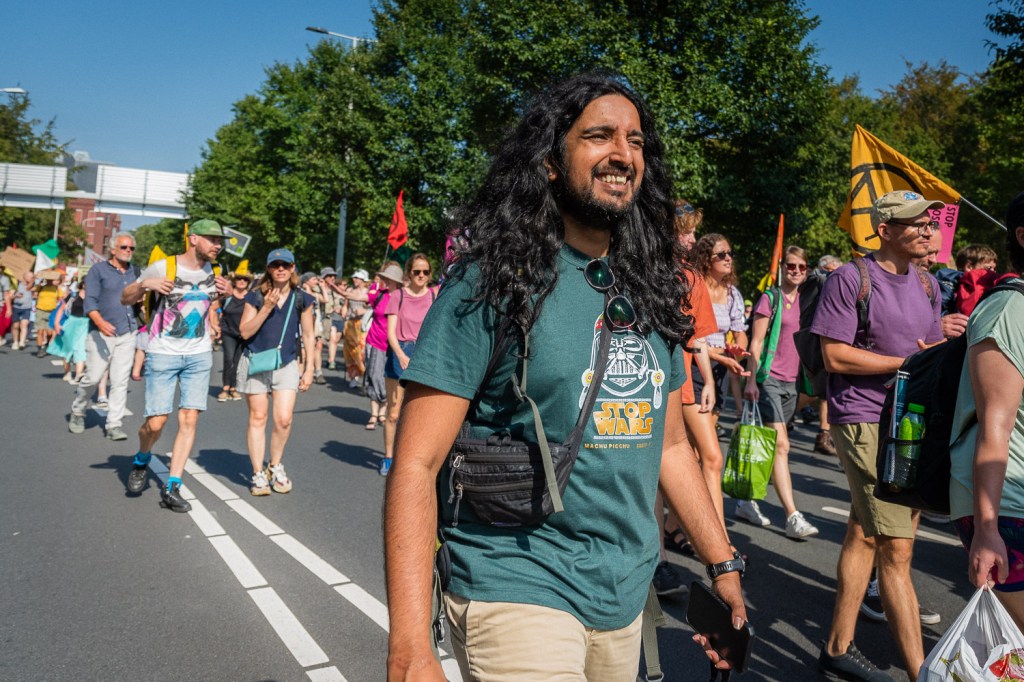
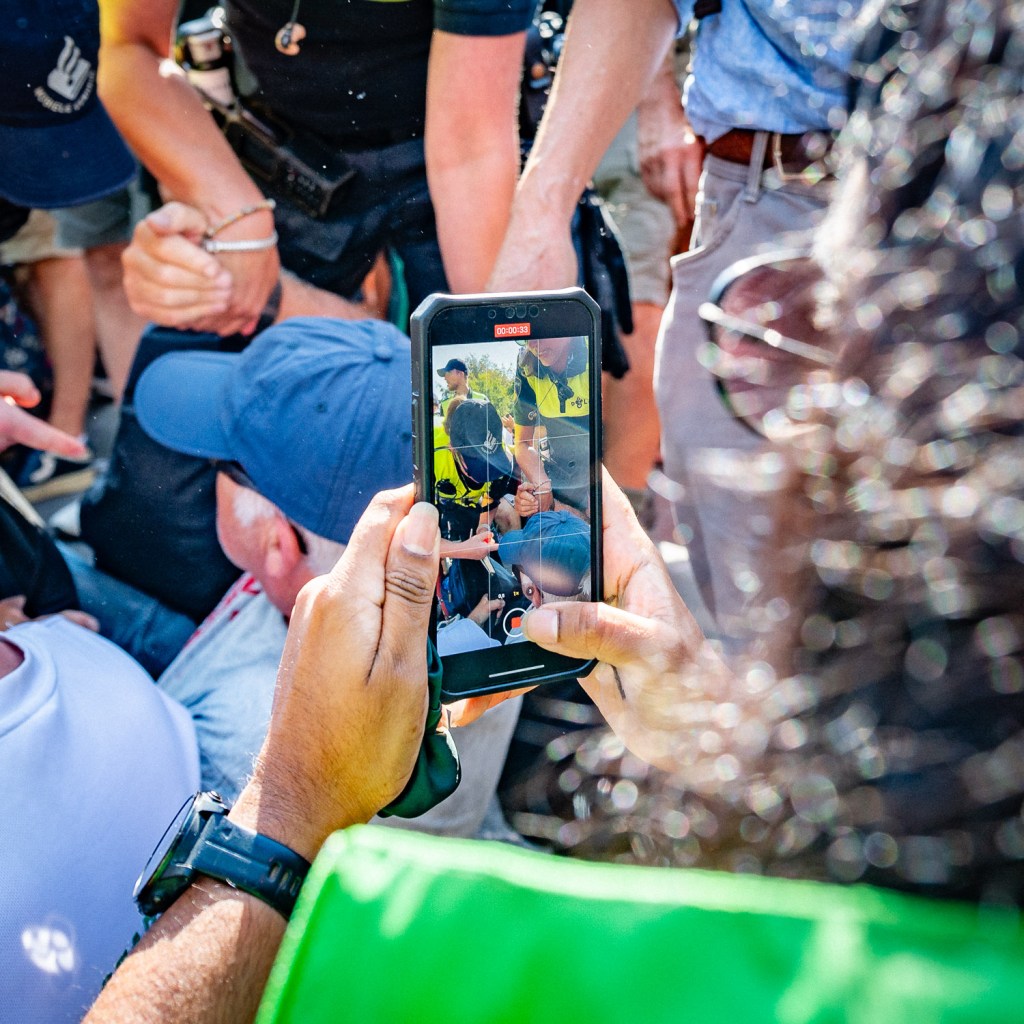
Yeah, this is a very difficult question, because I still do not. From the time I thought about this question, I thought it was such a profound question. But I really haven’t fully found a place which I find for myself as a safer place or a braver space yet. And at the same time, I think that the home where I live in, the plants there and looking out at the trees and that is a meaningful space to me. As long as there is the sense of non-human living being, which is alive and thriving, I think that’s where I find myself most able to dream. That’s where I think I belong and that’s why one of the things I usually do is I try my best to find ways of searching or seeking the European wild because I feel the most present and most nourished there in the European wild spaces, but it’s very hard to find those spaces. I feel like I’m told there are not a lot of European wild spaces so I think in spaces where these are social justice protests, are most wild and I am most free to dream. Here the system is being challenged. Here I feel most present and alive. Protest is also the biggest reason for me to come to the Netherlands. Once my psychologist asked me where I feel the safest? And I told her in the middle of a protest. They asked: Isn’t this the opposite of feeling safe? I said that at least in protest space, I know that even though there is police who are violent and might harm us, the people who are beside me holding hand in hand chanting songs, that gives me strength and that gives me the sense of being present.
And so I think those people, though they identify as humans, I feel like earth defenders transcend this binary of human non-human because most of those people are anti-speciest. And they believe that there is no separation between people and more than human environment, and that’s why they are fighting in the streets on behalf of the wild which is not represented within the European legal system.
What is your dream to wake from colonial nightmare?
I think in my Indigenous dream there is a place where there is no Othering.
There is a sense of togetherness and connection where being is enough. When I was younger and I was living in Sri Lanka it was very interesting because we do not have cages for our “others”, like in European culture and language, others beings. There was not this separation between them and us. We don’t even have doors for our our homes. We don’t lock them. It’s just a basic curtain. So the air comes in and all living beings come in and go out and there is a sense of harmony. And I remember I was sometimes scared because you know you we do have lots of poisonous snakes, but because of this harmony of living with them, that is the everybody knows they’re the space and everybody knows and the respect for one another and the dignity for one another and so when I say is me when I see a snake, or specifically a cobra and to to me a cobra is an ancient spirit of wisdom, but so much of knowledge that I instead of going into fear, I go into a sort of veneration or blessing and I tank the Cobra to be present. Because most of the time when you see a cobra in the Western world, there’s a fear of basically stinging you because they do not see the Cobra and the Cobra doesn’t see them but in our world, the Cobra sees me and I see the Cobra and and it knows what it sees. And I know what I see as well. I see this this powerful being and then through that looking at one another. We get to share a moment of of connectivity and an exchange. And then the snakes are showing itself.
In the western world when the snake goes up and does this dance, they interpret it as people will die or you get stung. I was never bitten and I have seen multiple times the snake the Cobra lifting up and opening itself up and then and then passing passing Yeah, it just goes away and yeah, and I think that is kind of like my dream where we can acknowledge all living beings and we can live in a sense of togetherness, harmony and in relationship with them. Rather than what we are today. I think my biggest dream would be stopping the education of the ideas of people like Descartes and many others who created so much dualism and separation. Before Enlightened thinkers there was also this idea of God that separated Us from the Other and created this idea of the Other.
There is a lot to dismantle. How does your people/culture understand sovereignty (different from western state Westfalia idea of sovereignty)?
We have had different cosmologies entering into our world. So first came India imposing Hinduism as a religion among all our people. And the only good thing about it was because it’s polytheistic the spirits we venerated, didn’t get removed. They were included into the Hindu cosmology instead. This happened around 1800 to 2000 years ago already, and it kept on happening. India keeps on pushing its territory. We always tried to fight. And we continue coming up with stories of emancipation and a sense of self emancipation.
Many people don’t even know what sovereignty is in a Western sense. And I’m going to push it a little bit further. Like what is the difference between the Western sense and your sense of sovereignty ? What does sovereignty even mean from an Indigenous perspective, from where you’re sitting?
It’s very interesting, because in the Tamil language, I’m not a Tamil language scholar, but I don’t think we have a word for sovereignty.
I think in Tamil we use the word Iraiyamai and to talk about sovereignty. I think it means a sort of collective truth.
Oh my god. Your facial expression!
Yeah, it’s like when people in the West use the word nature. In Tamil language we don’t have the word for a separated environmental space. In Tamil it is called Iyarkai which is translates to as things appear which is different from Latin Natura.
So a lot of Indigenous people fight for sovereignty. Right. It’s fighting for independence for a right to exist. Saying: I’m not in assimilation but we fight to exist as a sovereign body of people. I am interested in the ideation behind this restructuring of relations.
Sovereignty is the right to exist freely without being imposed on but because of all the complexity of the number of years of colonization and the fact that we had a civil war for so long this question is something we chant for but we don’t think about because we’ve been so busy fighting, that I never felt I even had time. I just knew that we needed to fight for our own independence, state or independent territory, but I never thought of what it meant. I want to practice my culture. Be able to be there in that culture without being discriminated against for not belonging to one group or the other. And be able to eat, listen to music and study about my culture and not be questioned. Why do I have to do this and then go into this politics of separation?
Whatever I’m saying now, will be considered against my right of being a Sri Lankan Tamil because of the citizenship I hold currently, and it’s basically a criminal offense because I criticize the Sri Lankan state government. That’s why we cannot freely speak about our own emancipation, the fact that we want to be free people, and the right to exist, and without discrimination.
What is a free people? Is it when you have this state? Like, what is the concept of freedom within the struggle?
Wow, that’s a difficult question. I think. To me, I think being free would mean being able to speak my language and be able to be and and move freely and not having to depend on any external source to tell me what I should do or not to. I don’t know if I’m answering… It’s such a good question, you know?
But it’s so hard you know, it’s like because all I can talk about is struggle. I don’t have answers to what lies beyond. It seems so unreal, unreachable.
Maybe we then start by imagining babysteps towards sovereignty?
I think I think the first step is to is to abolish borders is to first abolished is called this idea of nation state. And this will be the first step, I think, for having sovereignty like in the context of Ceylon, Sri Lanka, Eelam, Eelam, Ilangai or whatever you want to name that island. And I think that’s the first step and that means that other neighboring states should do the same. Because we cannot exist on our own as long as there are other bodies which identify themselves as nation states. Because they would just take our land or take our things. I think being sovereign is to have a right to roam, a right to move freely, a right to sleep wherever, eat whatever is in the land and not having to pay for it. It means that everybody has access to good quality water and the highest quality of water without having to pay for it. It makes me very sad. Now when I think about it. Because I don’t think I’m free. Even if Belgium or Europe is a so-called sovereign state. I don’t think I’m free. I feel like I’m monitored all the time, looked at all the time. Even though they say there is privacy. I don’t feel that. I don’t think I ever feel safe or free. This conversation makes me realize I still use all these labels to even identify myself. And I think the first step to what I want or what I’m dreaming of, is to drop all these labels to drop all these identities. I think being with other people who know that there is something that was before this that is still there, and it hasn’t gone and we can reconnect to it. I think that’s the first step.
Photography: Mia Tengco
Artistic director/Editor: Chihiro Geuzebroek
 INDIGENOUS DREAMS
Leave a comment