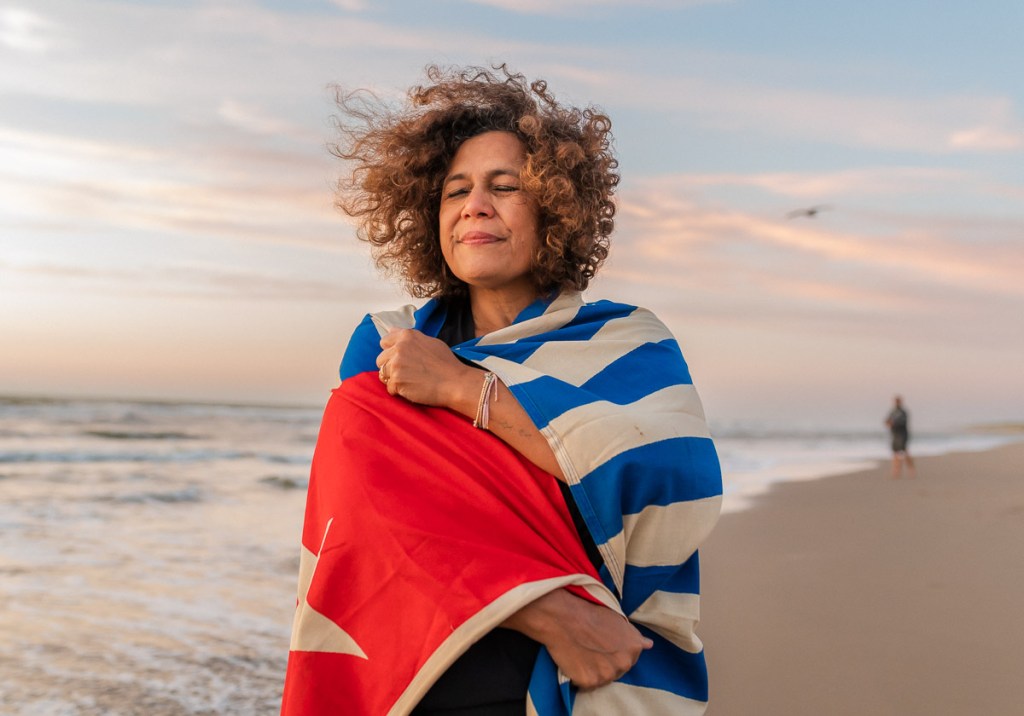
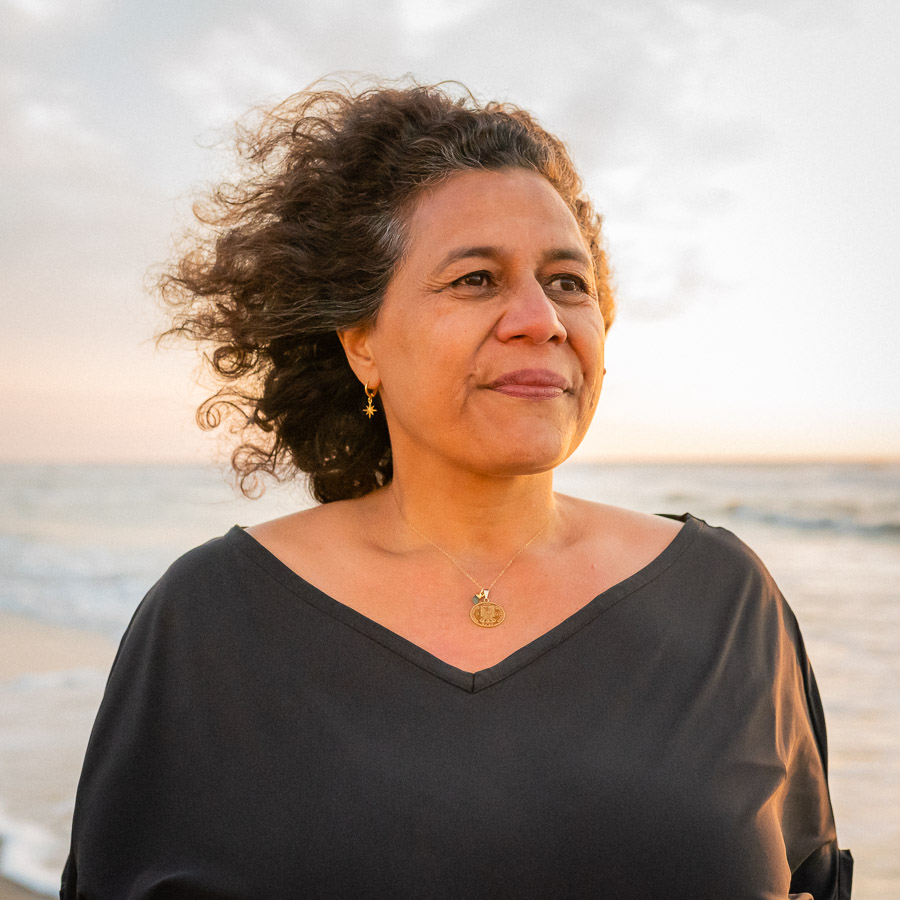
Can you Introduce yourself?
I am Fadjar. I am bicultural. I was born and raised in the Netherlands. My father is from West Papua, which is now an Indonesian province. He came to the Netherlands in 1962 because in that period the Dutch settlers handed over West Papua – under the auspices of the United Nations – to Indonesia.
Unfortunately, Indonesia has also since acted as a true colonizer. In fact, you can speak of an incomplete decolonization. My father went to the Netherlands when he was 24 and met my mother here. He was a political activist and advocated for an independent West Papua. My sister and I were raised from childhood with the ideal of a free West Papua. The Papuan community in the Netherlands is very small. It is estimated that there are about 3000 people here. While it is estimated that 2 million people in the Netherlands are connected to the former colonies in the archipelago. I studied international law and human rights in Leiden. I have been a lawyer since 2009.
Where can you dream?
At the beach, it takes me back to childhood. I grew up in a small village near Rotterdam. The beach is a place to be, to feel and to dream, without any worries. Our holidays are always at the beach. During the holidays – not at the turn of the year – I always think about what the purpose of life is and what my life goals are. I reflect here and look at the horizon. I also got married on the beach 26 years ago.
What is your Indigenous dream?
Professionally, my dream is to realize a new international forum in which Indigenous Nations, Peoples and States together find solutions to today’s problems. It is important that Indigenous peoples and states have an equal voice. Think of the United Nations, which strives for peace and sustainable development. But there you only have a working group for Indigenous peoples. I think there should be an international forum where you don’t just have a working group, but where we are seen at an international level as equal participants to face and solve the global problems. For example, when we talk about fighting the climate crisis, we need a global solution. The IPCC report 2022 states that traditional knowledge is very important. This is because Indigenous peoples, who represent only 5% of the world’s population, guarantee 80% of the biodiversity on their land. It is important that we learn from them. And we must not only learn, but also recognize the rights of Indigenous peoples to manage and use the land and its natural resources. A logical consequence of this is that Indigenous peoples actually have a say in finding solutions to the problems. That is why I am involved in the Congress of Nations and States (CNS). Also because I work from compassion and connection and CNS also aims to connect Indigenous peoples and states.
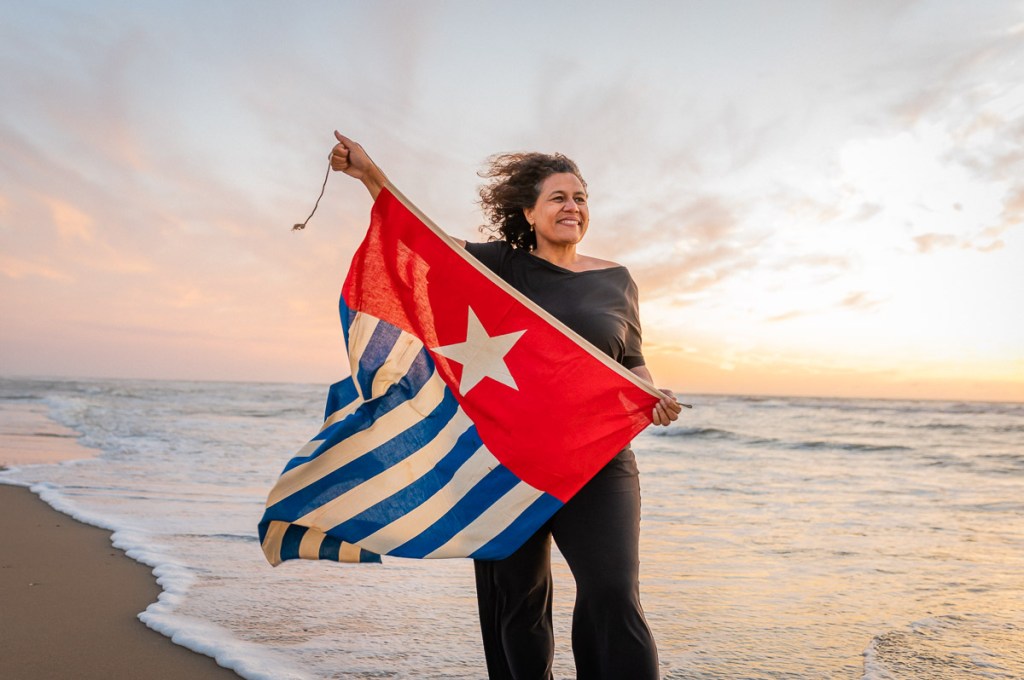
You work as a human rights lawyer?
In 2009 I became a lawyer. Initially the focus was on administrative law and employment law and in my spare time I did advocacy. I now focus on human rights and rights of Indigenous peoples. In 2016 I also met Polly Higgins of the Stop Ecocide campaign and since then I have also been involved in this campaign, first as a member of the Advisory Council and recently as a member of the foundation board.
Are you also involved in legal work for a free West Papua? For example, in the Green State Vision, a proposal for a new form of government?
The “Green State Vision” is the political strategy of the United Liberation Movement for West Papua. I work independently and am not affiliated with any political organization. Based on my legal expertise, I support the campaign for the free exercise of the right to self-determination where possible. When I was young, I wasn’t so concerned with my father’s struggles, because I could see him getting frustrated by it. He knocked on doors, but he was not heard and ignored by the Dutch government and everywhere else. I think it’s because there are so many natural resources (resources) in West Papua. The colonial regimes do not benefit from an independent West Papua. That was 60 years ago. Unfortunately, 60 years of oppression and struggle later, nothing has changed. Around the time I turned 40, I was asked to collaborate with my father on a photo book and exhibition. The book “Birds of Paradise in the polder”, compiled by Nancy Jouwe, portrays the generations of the Papuan community in the Netherlands. Bodil Anais is the photographer. It was only at that moment that I embraced this part – the Papuan roots – of my identity. Shortly afterwards I also participated in “Papua’s Got Talent”, an initiative of Nancy, and a LinkedIn group Papua and Professionals (now dormant) founded together with Vien Sawor. Now I am coordinator of the Cooperating Organizations for West Papua and pro bono legal advisor to the Papau Support Foundation (in Dutch: Stichting Hulp aan Papoea’s in Nood -HAPIN).
There are 700 languages in Papua, does everyone identify as Papua? Or are there different tribes? Is the tribal identity strong?
The tribal and/or community identity is very strong. I think that may be why it is difficult to achieve unity within Papua’s political realm. I identify myself as Papuan.
What do you see going wrong with misrepresentation?
In the Rijksmuseum’s exhibition ‘REVOLUSI’ (2021-2022) they give a wrong impression of colonial history by saying that colonialism in the so-called Dutch East Indies ended in 1949. After all, Dutch colonialism actually continued until 1962 when the Dutch left West Papua after handing it over to Indonesia.
Not only is there stolen land, but there are also stolen memories. In my opinion, contemporary language is like an open wound that needs to be healed. An example is that in the media and in the academy people talk about ‘Dutch East Indies’, which refers to the archipelago as legitimately stolen property. I learned that Indonesians themselves speak about Nusantara. This word means archipelago and denotes the state of Indonesia before it became a nation state. Just like Native Abya Yala say for the Americas.
How do you deal with historical loss?
In the work I do I try to raise awareness about the colonial history and the current situation in West Papua, because this history and situation in the Netherlands are completely lacking in public attention. Together with the Cooperating Organizations for West Papua (SOWP) I try to see how we can increase awareness, for example through art or campaigns. Such as the campaign “All the Birds are Gone” (September 2022), in which Papuan women will tour Europe. They tell their own story about the disastrous consequences of deforestation for themselves, their families and the climate. How palm oil companies are occupying more and more habitat, the deployment of the army and the associated human rights violations. Speaking for myself, I feel no loss, only enrichment. My father passed away in 2017 and I see everything he has imparted from his culture as an enrichment. That actually applies to everyone, getting to know each other’s culture can enrich you. For that reason, I still plan to write and tell my father’s story. Telling stories is very important to me, as is important in many Indigenous and Papuan cultures.
Do you speak the language?
No, and that is very unfortunate. Especially now. Biak is my father’s language, but it is only spoken in Biak, the island where he was born. Bahasa Indonesia is the general language of Indonesia. Many languages are spoken throughout Indonesia. But I don’t speak Indonesian myself. That’s partly because my father never taught me. Unfortunately he was too busy with everything.
How do we decolonize the law if we don’t know the laws of our ancestors? Especially because so much has been erased and lost?
That is an aspect that they are investigating further with the Green State Vision. My thought and focus is more on the question: how are we going to solve it? How are we going to ensure that there are no human rights violations in Papua? How do we give the Papuans a voice and a platform? In doing so, I put a lot of emphasis on the legal instruments that are now available and how to use them. I do think that the whole colonial structure is still operative, also in the current Indonesian law, which still oppresses the Papuans. The Dutch as former colonizers laid the foundation for today’s Indonesian legal system.
How do we heal all relationships now?
I think it is very important that there be an international forum, such as Congress of Nations and States, where you, as Indigenous people, really get an equal position and can consult and discuss with each other what is important and how you can solve problems. I also think it’s really important to keep telling stories. In this way we can get to know each other and learn from each other what is important. This is especially important because Indigenous peoples, and also Papuans, still have a close relationship with their environment and with nature. This bond is less maintained in the Western world. We are very far removed from the environment here, but we are also far removed from the product chains and the food chains. It is not for nothing that there is now global recognition for the importance of traditional ecological knowledge (TEK) of Indigenous people for ecological restoration. That’s why we have to keep talking about this. To learn from this and to remind each other of that bond with the earth and with each other.
Photography: Mia Tengco
Artistic director/text editor: Chihiro Geuzebroek
 INDIGENOUS DREAMS
Leave a comment