Can you introduce yourself?
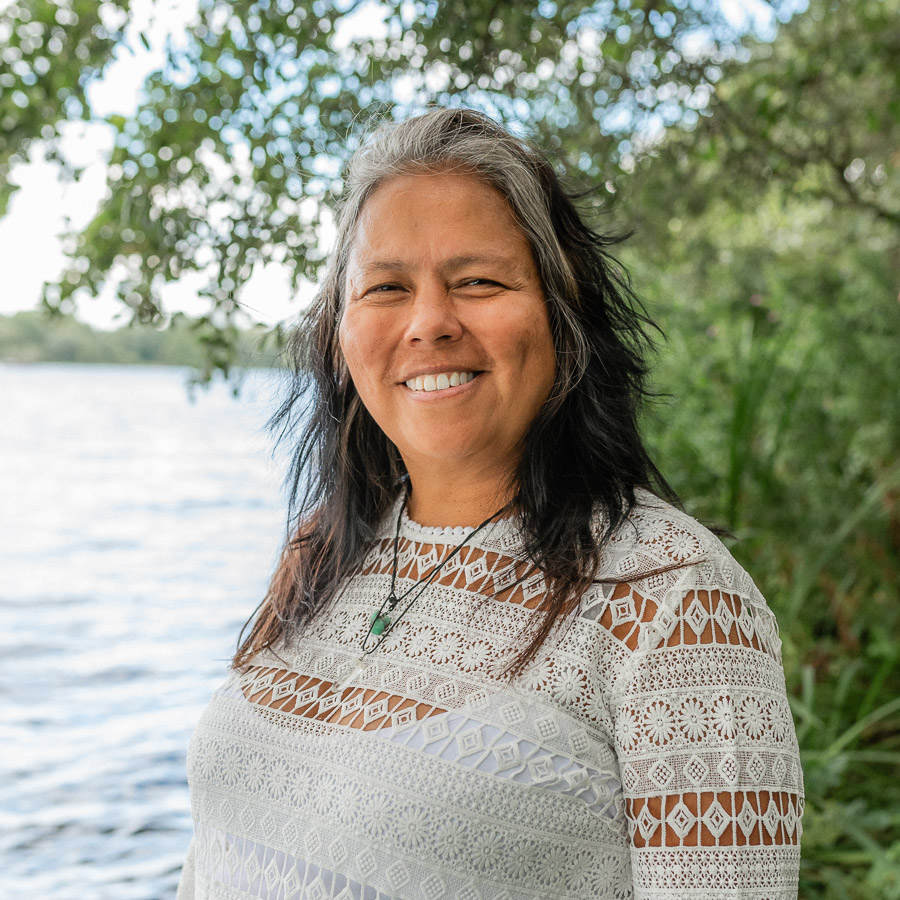
I am Yacqueline. I was born in Colombia. I was adopted and raised in Amsterdam.
I moved to Curacao when I was 14 for my fathers work. Before that I was raised white and I was ‘white’ not knowing other cultures or people of color. It was a big change. I loved it.
I felt more at home than in the Netherlands. From then on my parents promised me, if you are interested and almost 18, you want to go back to Colombia, where we took you from the orphanage house then we can bring you, show you and help you. I did that. I overstayed my visa of 30 days. So I couldn’t leave after three months. Waiting for the papers of immigration to leave led me to stay almost a year. I was like, oh my god I want I wasn’t concerned with my native heritage at all. My father did give me at Sinterklaas this LP music Indigenous peoples of South America. I liked it but wasn’t really into it. And my father would braid my hair and I was like: “don’t do that”. “But it is so beautiful. Such beautiful hair. You are Indigenous”.. When I was young I didn’t care about my native heritage because I was occasionally bullied and other kids said they thought I looked like a boy. I changed more quickly from girl to teenager, faster than my peers and was laughed at as well. That had the opposite effect and I wasn’t proud of the way I looked at all. Until I left the Netherlands for Curacao and then Curacao for Colombia and found out there were so many people like me. I was like ‘Wow!’
Where can you dream?
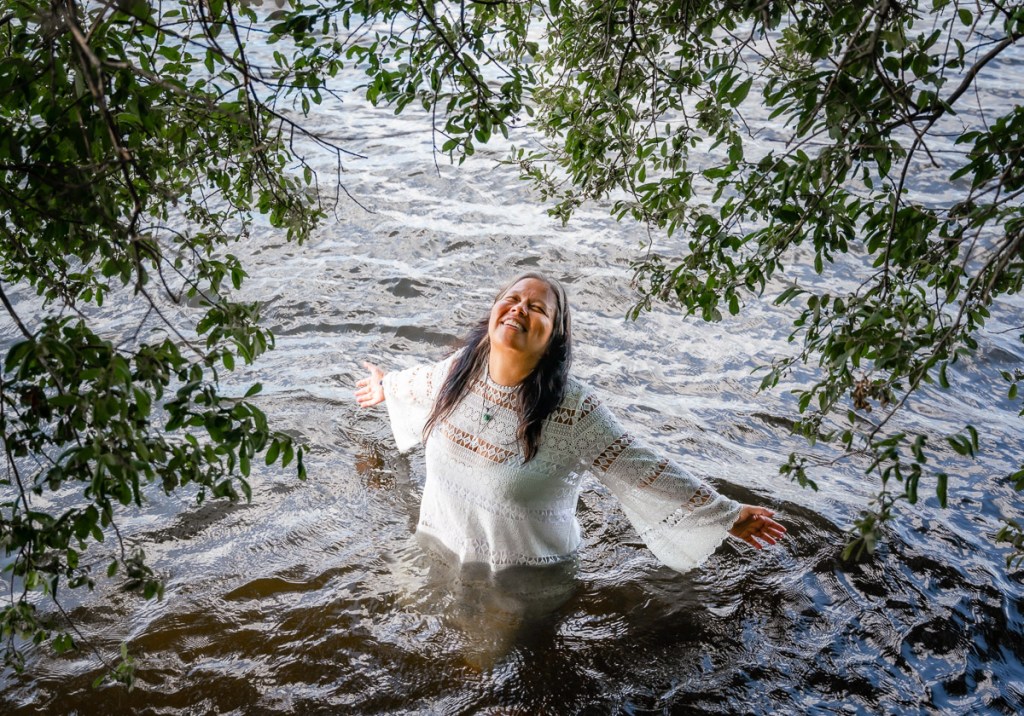
In and by the water. Water ceremonies helped me a lot. There is this place by Amsterdamse bos that is very dear to me.
The question really is what is your Indigenous dream. But before we go there: You grew up away from Indigenous community in a white Dutch adoption family. So maybe I start with: How has the colonial dream shaped your story?
Well I think I started 8 years ago discovering that it isn’t possible to find my biological family. I was curious. I have a son now who is 26. My adoption is corrupt. I was stolen. I can prove it more or less. But I didn’t know it. My parents didn’t know it either. They were told I was found by the orphanage in a rich area. I learned from an organization that helps adoptees find their biological families that you have to really push the orphanage and the raad van kinderbescherming in Colombia for your complete dossier. Cause I only had 5 papers. And there are much more papers. I started writing them every few months, after that every month and then every week. I did get some papers but that didn’t help me get any further. But then I got a card from the orphanage with a name on it. This card they use for the person who leaves you at the orphanage. And this organization that helped me has some volunteers who are able to get into the bevolkingsregistrasie. She could look up this name of this person on the card. I contacted that person who told me: I took you from the street. As I was on the bus and I saw that the man you were with was mistreating you. You were crying and you were covered with wounds. And the man was looking strange wearing a t-shirt when it was really cold. I didn’t feel comfortable. I had to do something she said. And she took me out of his hands and she says he didn’t respond to that. I don’t know if that is true.
She took me to her cousin. Who fed me and bathed me. The next day the husband came home and said you can not keep the child they will say you stole the child. So they brought me to the police. They send out some videos about a found child and nothing happened. I ended up in an orphanage. So at first I thought it was nice behavior of the woman and I am thankful cause she tried to save me from something horrible: an abusive man. But then I thought: She also took me away from a chance to grow up with my mother. You never know if my mother, if she was in an abusive relation, she would have run off with me. I started using plant medicine. Through Ayahuasca practice I got confirmation that this man is my father who abused me and my mother; a very violent alcoholic. I saw him touching me in places and doing things with me. I didn’t want to see everything so I stopped the vision. I am not finished. I still have to continue to break through this trauma.
How old were you when you were adopted?
Four. Stolen when I was three. A lot of people who were adopted at that age have a lot of memories but for me it was all blocked and now I understand why. I started connecting with other Iindigenous people online. I now see all the violence in the communities. I see on the one hand there is little work; a lack of a dignified source of income or livelihood. And on the other hand beer or alcohol being cheap. There is a lot of alcohol in these men. Not to say it’s fine that he was an alcoholic and he abused me. But I can understand how that works and how that starts. That dynamic. Also a lot of them run away from the countryside, mothers with the children to the cities. Then the problem cycle starts all over again. There is more prostitution when there is no work. There is no help from the government, there is another new start and children also get taken away, stolen, from their families. It continues. I could see that my line is also reproduced over again. I had my son and he doesn’t know his father. I want to break my line for myself, my son and future grandchildren.
So now; how does this tie into your Indigenous dream?
During Ayahuasca I met one of my best friends Franklin Landsman, also adopted partly Native American and part Dutch who was in an orphanage in the Netherlands. After taking Ayahuasca the whole group went into their tent to go into sleep. But both of us were like ‘No, we’re going to sit outside, under the trees and the night sky’. We talked for hours. I started sharing my true wish. I have been working my whole life with families and children. I love that. But I shared:”I don’t want this anymore. I don’t like the organizations. They are mean. They don’t treat you well. They treat you like a product. And even they make you treat the children I care about like products. That doesn’t feel healthy. But I do want to work with families and children. I love that part. And I love chocolate. I want to combine that. Through conversation I clarified my dream. I want to help homeless Colombian mothers (and Venezuelan mothers living in Colombia) to offer a home in a community where they can learn from Indigenous and local farmers how to grow cacao and make chocolate. To make themselves self-sufficient and have their own income. I imagine a school here as well. So the children go to school. So for this I would move to Colombia and get land there. Why cacao? Cacao is the biggest plant medicine that opens your heart. It is literally a heart medicine. To have Colombian women sell this you can offer the world a medicine that can open hearts. And Franklin is one of my associates in my social enterprise that I am setting up.
How do you deal with historical loss?
I don’t know. I am still getting to know about it; our pain and losses. Through my travel I have started to connect not with my biological family but with Indigenous knowledge and families.I start learning from them and I see what is happening to them. For me it is important to learn and find out what is missing in the history books and in schools. I want people to be more aware. I have to talk to a lot of people and study because I still do not know a lot. But by following for example events at Pakhuis de zwijger I start learning through lectures. Then I started connecting here in the Netherlands with Indigenous Liberation day and Climate March. Through that I am learning what happened and what is still happening. Through history at school or from my family: I didn’t know anything about it.
I believe that when you are adopted, and stolen and it is illegal it is also a part of colonialism. It is people with money who decide they can steal you. They can take your life and take you out of the country.
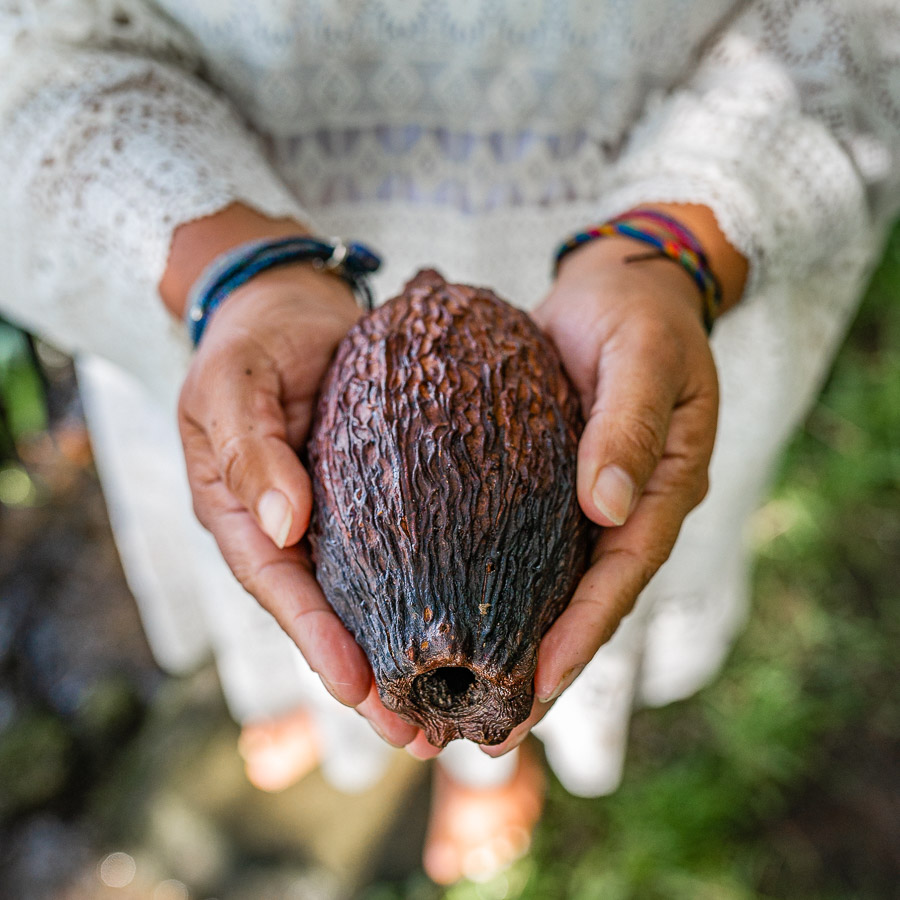
To heal my loss and disconnection I connect through ceremonies. I also connect with Indigenous communities worldwide but particularly from Colombia. This is how I can feel better when I started to feel down. I started connecting with the water, nature, pure cacao… opening up my own heart. And also connecting with other adoptees.
How do we heal relationships with earth and each other?
When I found out I was Indigenous through DNA tests I reached out to different Indigenous people online. Now I know more and more people. I learn a lot. Mostly about the activism. The struggle they are in with the government. They have to protect the land. Protect their children, their families. That is what I hear about most. And they share with me their struggle with unemployment. When I share my dream, my mission and ask what do you think? Do you have any advice? They tell me that they think it is great and want this for their community. I know that I need permission for my dream that includes buying land. I need permission from the Indigenous people there and the spirits and the medicine people. Then we will cooperate and see how it goes. With project plans and business plans you have calendars and such but when you work with the earth you have to listen to the earth – and then I have to listen to the Indigenous people who are more connected with the earth than I am. It takes time. To heal the earth takes respect. I will take action with a lot of meditation and prayer, put in the work, and work with the medicine people.
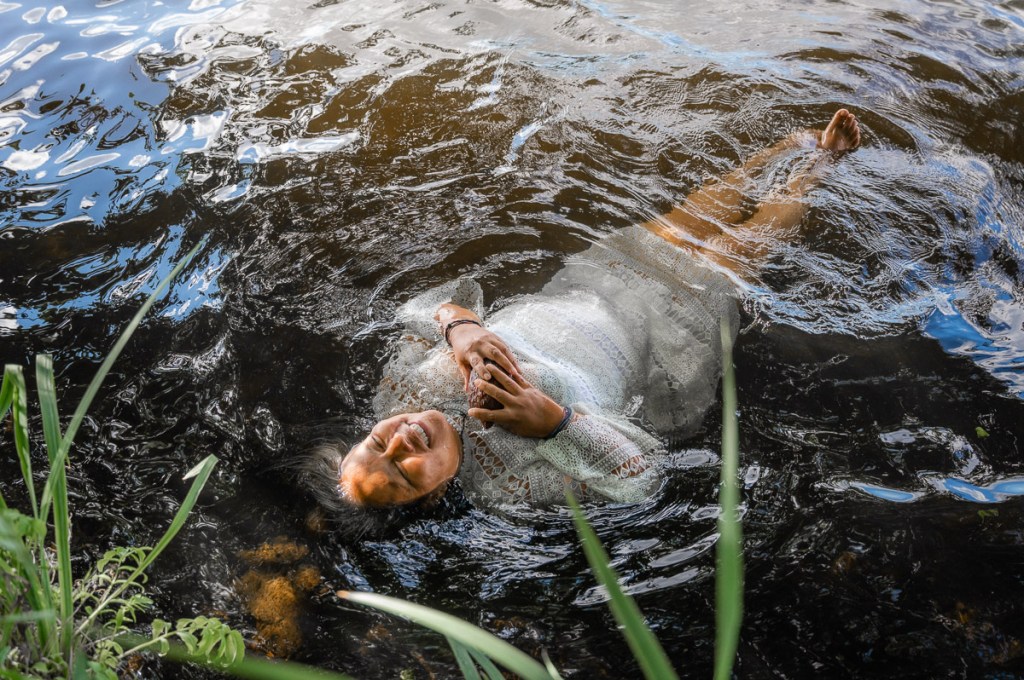
Next to Ayahuasca and cacao, the water is also a medicine. I do water ceremonies. It helps me. When I float in the water and even if I already hear, feel and smell the water, I come to complete rest. Everything literally falls away from me. It is the only place where I can completely relax, feel safe. And it recharges me.
Photography: Mia Tengco
Artistic director/text editor: Chihiro Geuzebroek
 INDIGENOUS DREAMS
Leave a comment