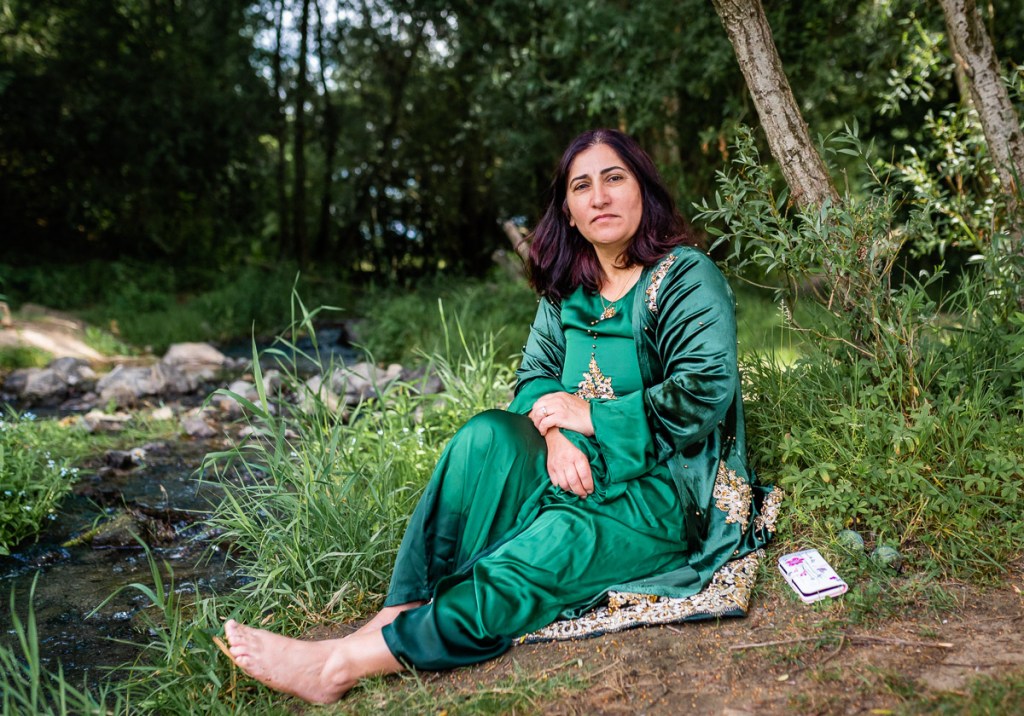
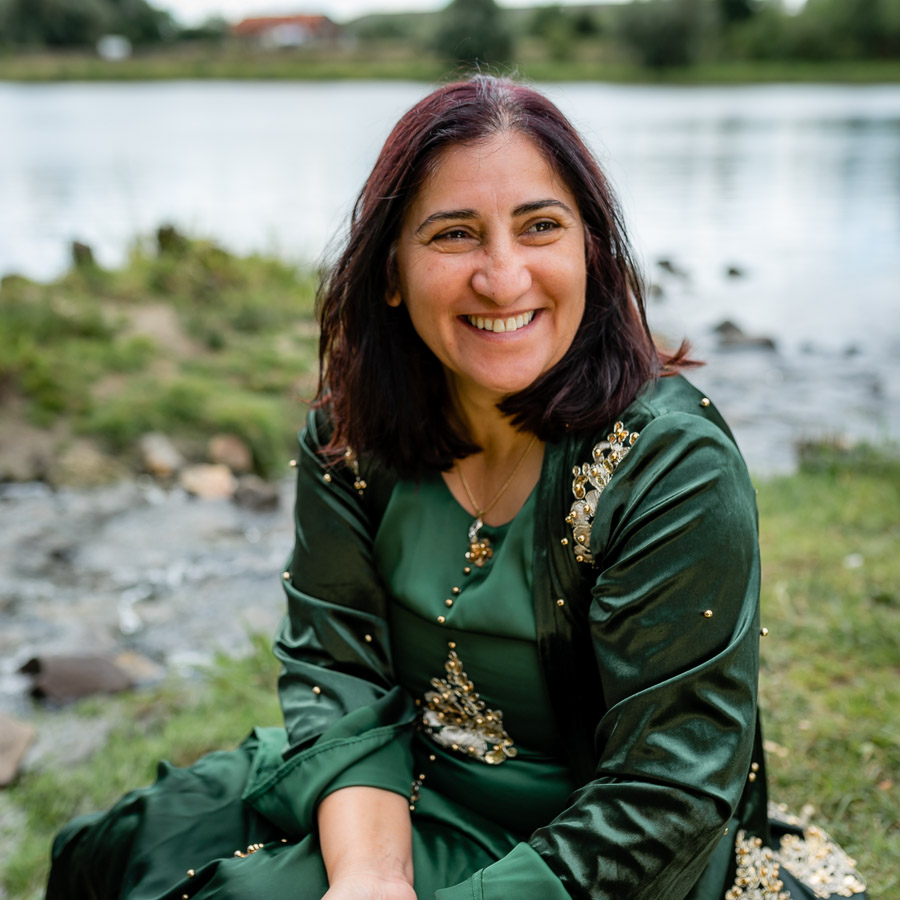
Can you introduce yourself?
I’m Mulise. I was born in Zaza community in so called Turkey. As a child I lived here in The Netherlands for a year when my father worked here. In Zaza community I grew up on a farm. We had animals and grew different crops ourselves. After a year in the Netherlands, me and my mother returned to Turkey.
Later I returned to the Netherlands again. I am now 49 years old, I have three children and it is important for me to have my own ideas. I don’t want to be told what to do by my father, a husband or any other family. I helped found the Kurdish women’s organization Helin 29 years ago. I am also a member of the Middle East Women Foundation. I pay my contribution. I’m just a childcare teacher. I am just that. But I do what I can because if we don’t make our voices heard, no one will know we exist.
Where can you dream?
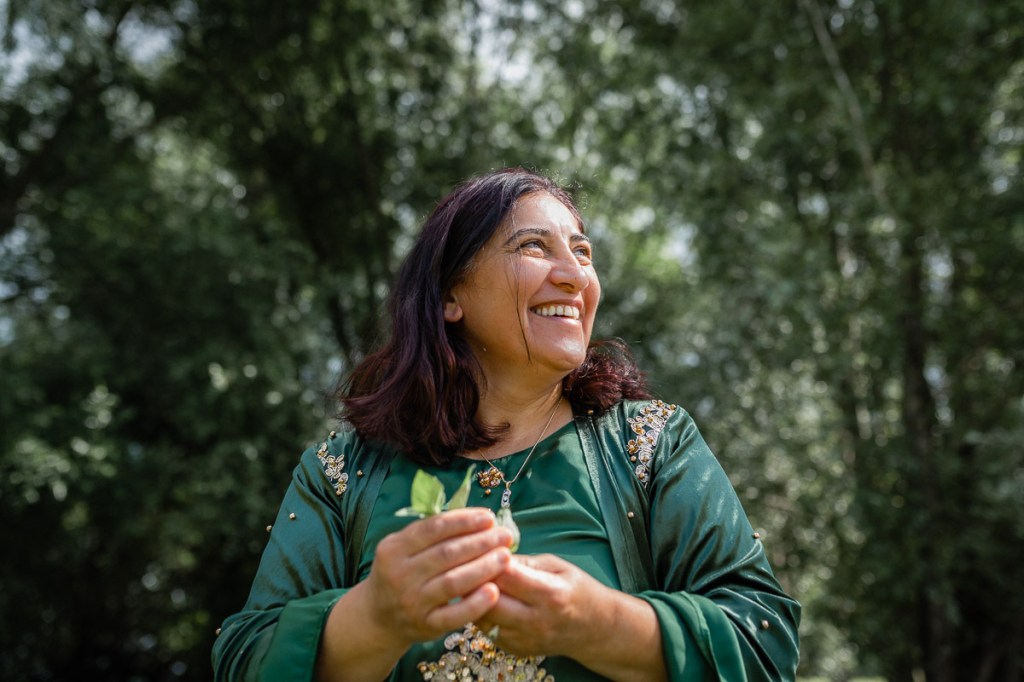
I like to walk by the water here in Heelsum where I live. Here two streams meet. This reminds me of my grandfather when I was a little girl when I would go with him out into the fields and then he would pray by the river and we would have an afternoon nap. Nothing makes me more relaxed than listening to the harmony of the water, the birds, the crickets.
What is your Indigenous dream?
I dream that I could experience nature again as in my youth: the smell and the sound. That made me feel free. Our daily life was not without danger, but we were more free than here and now. The food tasted better than here in the Netherlands. We had giant mulberries, apple trees, pear trees, and peaches. My grandfather took care of everything. We had a lot of food every year. And my grandmother had to make syrup from all the fruits. And she put all the fruits under the sun at our summer cottage and manually removed the seeds from each fruit.
What have you learned from the way of living on the land?
As a little girl you are free and you help with the household. For example going to the well to fetch water with my nieces. Later on I had regular tasks. When the animals come home we had to watch the animals and guide them into the enclosure and make sure that the animals did not enter the vegetable garden. Otherwise Grandpa would get very angry. And we had to chase all the chickens, geese and rabbits to their hutch before dark. Otherwise the fox or a wolf came. And sometimes there was noise at night. I remember being startled a few times when Grandpa had to shoot into the air to scare wild animals away. So that the wolves and foxes don’t come. Otherwise they could take the lambs or the chickens. It was not a life without danger, but I felt a lot of freedom and I do sometimes feel homesick for my homeland. Early in the morning with the sun coming up, the smell of bread my mother baked, bread baked on the fire, I can’t forget the smell and sound when I woke up. The animals were our best friends. We made tasty yogurt and butter, milk, buttermilk, had eggs; everything comes from our animals we take good care of them.
How do you call it; this homeland of the Zaza or the Kurds that we can find on googlemaps or forest atlas?
My homeland is on the side of the Firat River. It is very famous waterbody that runs from central Iran, Syria to Turkey. We were born there. We are one with that water. I hope I’m not wrong but I think our homeland is about 350 thousand km in size.
According to the Encyclopaedia of Islam, Kurdistan encompasses approximately 190,000 km² in Turkey, 125,000 km² in Iran, 65,000 km² in Iraq, and 12,000 km² in Syria, with a total area of approximately 392,000 km²
In that area do you have different peoples who identify as Kurdish of which Zaza is one?
Yes. But this particular side of Firat is only Zaza. Running from Iran’s border at the Ararat, the Ari, which is a famous mountain at the start of the Ararat. According to mythology, Noah built that ark there. From the Firat watership he descended to the area where me and my parents were born. The Firat then goes to the Amed – that’s where my mother was born – in the Ahmed city and he will merge there with the Dicle. That is also another water. In mythology, the Firat is a male figure and Dicle a female water that welcomes him. Dicle says: “Come on let’s go on together.” From the Ahmed they continue together.
And what makes this watery place here in Heelsum the dream location for you?
Firstly, the presence of water and also the sound of water has a nice effect. I have strong memories of my grandfather together on the land. He was a farmer. He had several gardens where he worked. On the mountain he made grape gardens. And by the side of the Firat he tended vegetable gardens to grow everything we needed. And it was hot in the afternoon. Then by the water he would make a space to pray near a stone by the river. There he took off his peasant clothes. He ritually washed himself with the water: doing abdest. He went to pray by the stone. I was a little girl. I was imitating him. And after praying he had an apple with him. Then we would eat. And then we would have an afternoon nap. Me too. And that sound of the water was wonderful. I went to sleep in that sound. I dream that one day I will feel that peace again.
What did you learn from this dream?
Rest with nature. My grandfather was my base. He said nothing but we experienced life together.
How do you deal with losing your dream?
It started when I went to school. Then I was forbidden to speak my language. They didn’t tell us that. Only by force; by hitting us. We were told in Turkish at school: “Here we speak Turkish”. How did I learn this lesson? Of course with sadness and tears. And I was thinking: I’m going home and I don’t come to school anymore. But I loved the pen and paper and writing and the books that challenged me. I thought if I don’t go to school I can’t read. Well then I guess I have to experience this violence to learn. While crying I told my niece about it. She said that it is very normal. They did that to us too, but when you learn Turkish you don’t get hit anymore. And in class the teacher told everything in Turkish. The following year I came to the Netherlands in the Schilderswijk, The Hague. I had to go to school by myself. That was the first time in my life I saw a traffic light. I didn’t know: what is a city? Everything was new. My father said: Your mother will not come with you. He wanted to keep her at home. I have to walk from home to school myself. I came to class. I sit. I have my own table and chair; that’s a luxury for me. It was the first time I saw people of a different skin color. During the break I saw a bicycle. Oh now there is no animal, now it is something of iron. I went to see how the other kids are doing that.
Sometimes I got slapped by boys on the way to school. They were waiting for me at the traffic light and they were there to hit me. I didn’t know why. I told my mother. Three boys beat me. She says: next time run fast. And then I throw the bread stick down through the window. And then you’re going to hit them back with that stick. The next day I started running very fast to my street.
And I called my mother. She threw her breadstick. And I beat the boys back with that stick. Since then they have left me alone. When I came back to Turkey I was placed in third grade in the city. During the break we were looked at weird by other children and scolded that we were Zaza (Kurdish). My nieces adapted but I didn’t want to hide who I am. I wanted to talk Zaza. My nieces said, When we go in, don’t talk Zaza. Surely they can’t know we’re Zaza. Then they won’t play with us anymore.”
My grandfather died when I was thirteen. My niece also died when I was a child. Later I was married off. I persevered for eleven years and then got divorced. My father forbade me to divorce and had certain ideas about obeying the tribe. I’m not like that. I told my father: “He is not setting a good example for my children. He smokes and lies. He goes out at night and comes home in the morning. I do not want that.”
And then you went your own way. How can we heal relationships with Earth and each other?
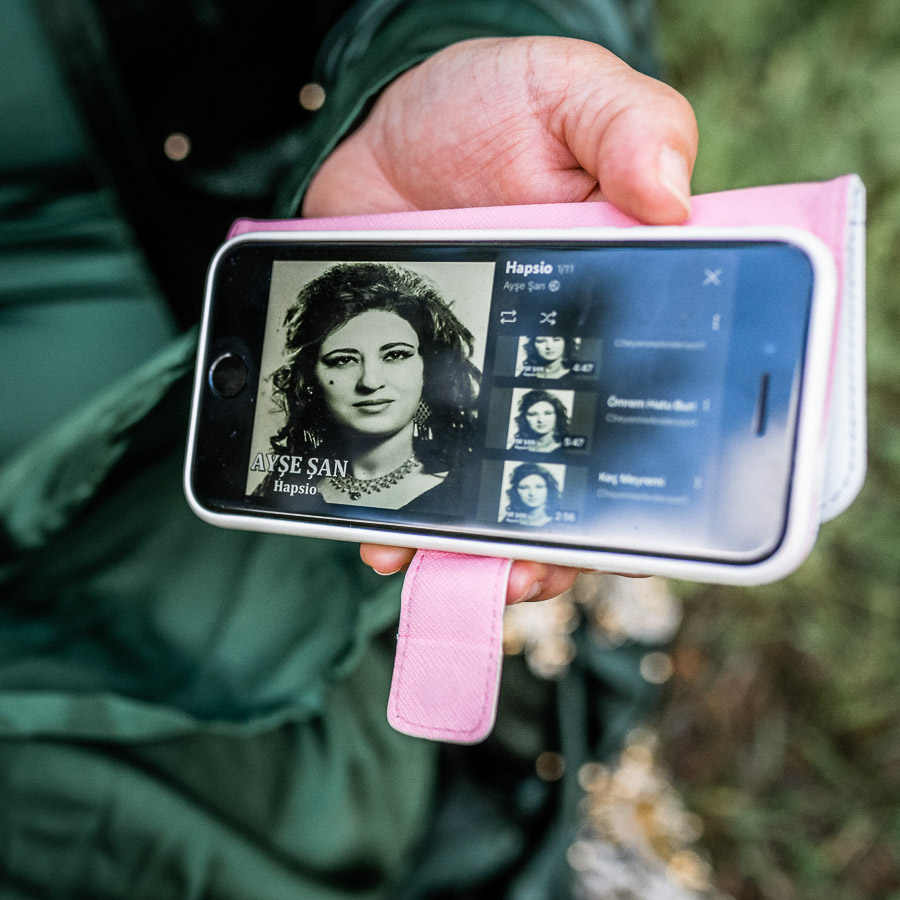
Freedom for me is everything; if I’m not free I don’t have to live. In Kurdish they say Hebbun o nebbun. Either it’s me or it’s not me. For me a Sakine Cansiz is a source of inspiration. Turkey says she is a terrorist. But she is not a terrorist. She lived on the mountain as a Kurdish and then fought for human rights. They secretly killed her. In Istanbul, mothers who have lost their children gather every Saturday. All they want is justice. The bullets are the ones that took down their sons and daughters. It is known. But the government says: We don’t know. I think it’s important that we spread our news with the Jin newspaper. Jin means both ‘woman’ and ‘life’. I keep our culture alive with food. I make yogurt and bread myself. I listen to our music and I was one of the founders of the first Kurdish women’s organization in the Netherlands: Helin.
Photography: Mia Tengco
Artistic director/ text editor: Chihiro Geuzebroek

 INDIGENOUS DREAMS
Leave a comment