Can you introduce yourself?
My name is Renijune Abaya. I Belong to the Indigenous People of the north of the Philippines called Igorot. I came to the Netherlands for work, eventually I got married with a Dutch man but sadly it did not work out well and we got divorced. Now I am raising my three children alone.
My father is from Benguet – it is where they plant the potatoes, cabbage carrots. But I did not grow up there. My mother come from Ifugao the part where they plant the rice. I grew up Baguio city. Sometimes we go to my fathers place or my mothers place. This is always exciting. If you go to the provinces it is always exciting. You see the Carabaos and you climb the fruit(trees).
Where can you dream?
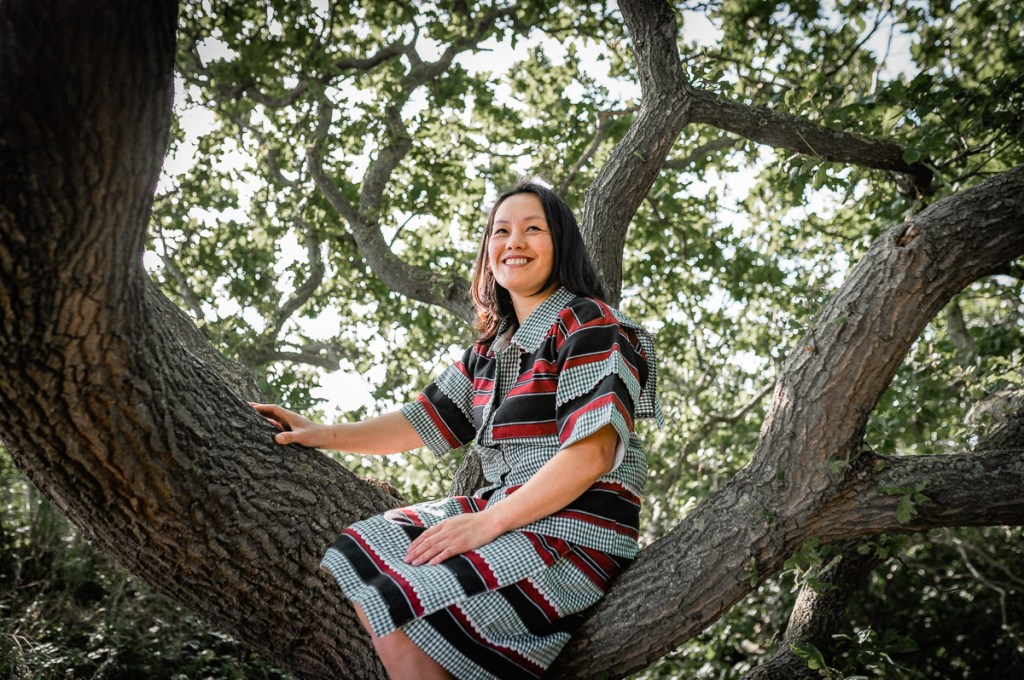
Mountains with rocks and trees. That makes me more relaxed and think clearer. We are mountain people and have our strong calves as trademark; strong for mountain hiking. When I lived in The Hague I used to come here to the dunes to train for the Dam to Dam walk. I like the slopes. I like it better than walking on flat surfaces. I am not a dreamer. I am practical. But this is where I feel good.
What is your Indigenous dream?
That I could learn more about my culture and someday pass to the next generation. I wish I could visit the beautiful province of Ifugao – my mothers land – that I thought I had been before when I was young. But recently I found out that these memories of a multi-day hike were to another countryside. I found out I have never visited my motherland. I want to learn about the people and culture, especially their values and traditions.
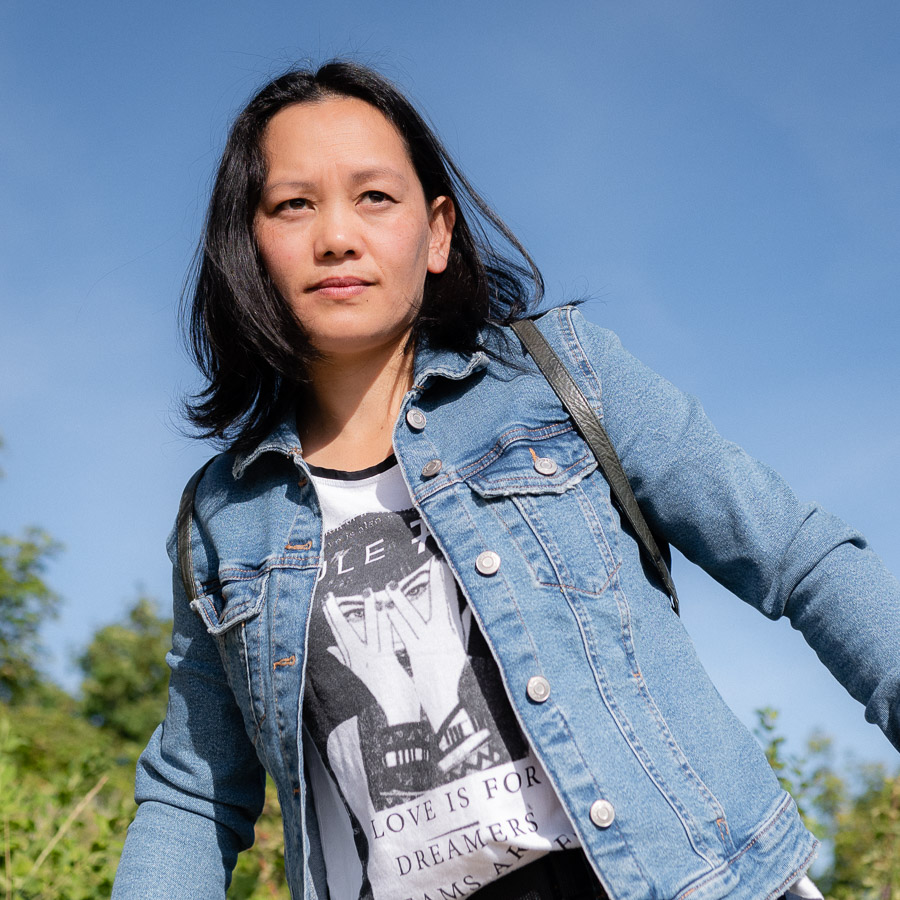
I am not a dreamer. I am practical. I live day by day. I really had to think about it. So as Indigenous person I like for my children to see where I come from. It is difficult. I am Igorot. How I am dressed is very Igorot. Like with jeans and a strong spirit. Very courageous I can say. We are shy actually. But in action we are strong. There are a lot of Indigenous people in the Philippines. I didn’t know that before.
I learned when we came to the city that I was Indigenous. I was bullied because of that. Because my mother came from another area: they chew the betel nut. It is like nutmeg. They chew the leaves and put powder in. And then they spit it. They are also known for wearing loincloths. They get bullied for that. But I think it is very nice. It is something to be proud of. It is part of your identity. But they bullied me at school and in the street. Who? By those who know my mother; she came from that area. So Indigenous people also bully each other. Nowadays there are not just people chewing betel nuts from my mothers area. Everybody is doing it in these other areas. In Baguio they prohibited smoking so people switched to betelnut.
In the Philippines itself they discriminate against Indigenous people. The lowland people still downgrade us Igorots.The colonizers said we are barbaric. And until now this is still the attitude.
Here in the Netherlands you joined and Indigenous foundation from the Philippines. Can you talk about MABIKAS foundation? What do you focus on?
In MABIKAs we focus on learning about our culture. We have different tribes and we hope to learn each other’s differences, values, dances, beliefs and maybe our music. MABIKAs Foundation envisions a world without prejudice against Indigenous people. Our mission to make that vision a reality is to preserve our Indigenous knowledge. Therefore, it is our goal to educate ourselves and strengthen our knowledge of our cultural heritage and indigenous identity in order for us to be able to preserve and transmit information that are accurate, reliable and true.
On the Mabikas website it says you enjoy making clothes.
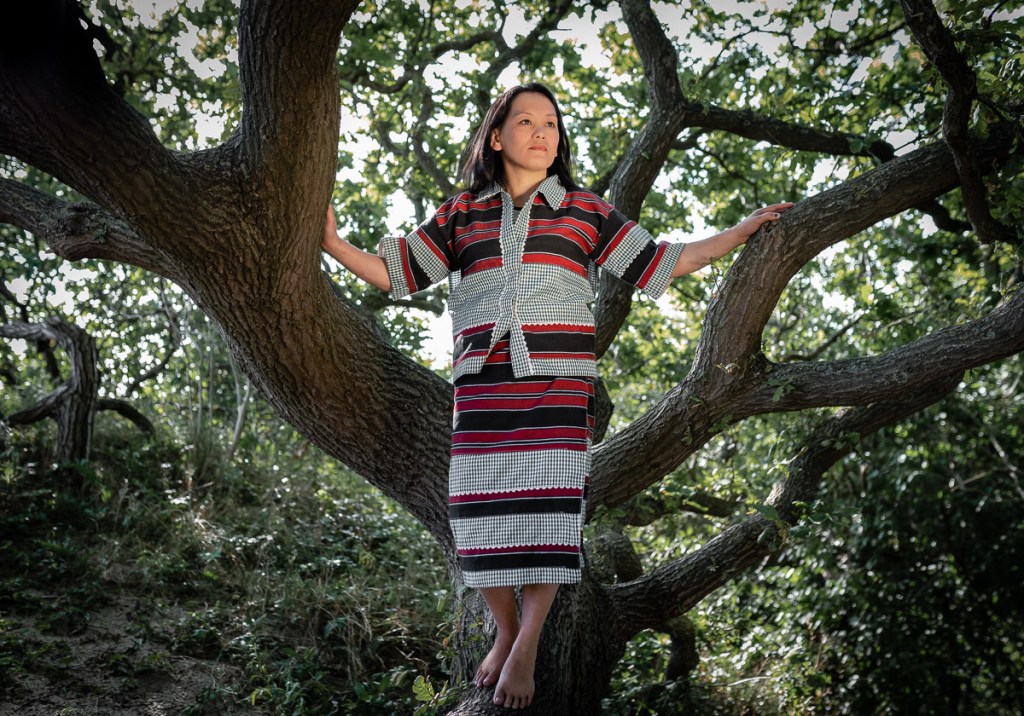
Yes. but it is just a hobby. This one is my Benguet attire. That is what my father came from, his tribe. This is Igorot fabric, I made a Filipiniana from it. This is like a national dress called the Filipiniana. It is made of pineapple fiber – but I made a parody with Igorot fabric. Because they said Igorot are not Filipinos. Again this is a colonial perspective persisting. Because the Philippines was named after Philip, king of Spain. Igorots were not colonized by Spain. That was later by the United States colonization. So Igorots they say are not Filipinos.
You see this same logic with the Americas. It was named after Amerigo Vespucci. But Amerigo never set foot in the United States. He came to the Northern part of South America. So then US is not America.
I made this dress to say: we are also Filipinos: mixing the design of dress linked to the nation and the fabric linked to our people; Igorot.
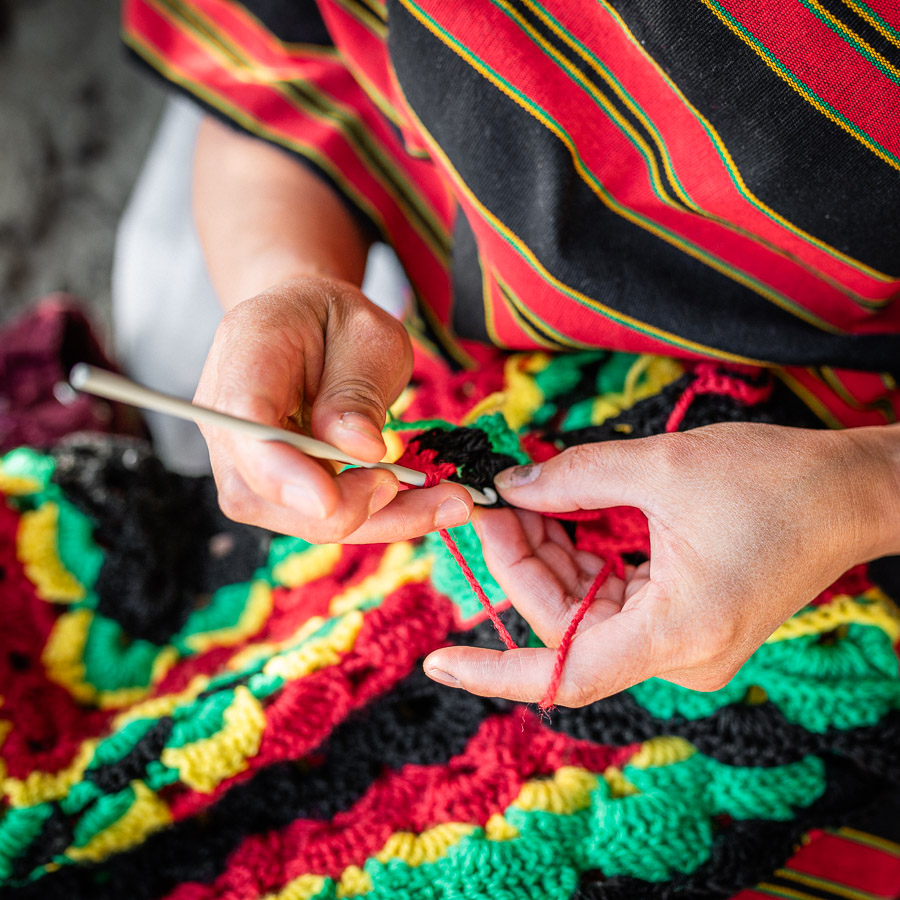
I learned by looking at my father before. He also crochet. He made a very big bedcover. He didn’t teach me but I just learned through trial and error. Looking at youtube. It is relaxing. When I make mistakes then I change. That is also why I can not dream; I just redo and make corrections.
There are many different ways of dreaming. Time is not linear. Our connection to place is very complex. So that is also a curiosity I have: How DO we dream?
How do I dream? What should I dream about? If I say; to have a good life, then when will i be content? i do not know? Maybe visiting the province of Ifugao someday.
How about a dream that is not just about you but for the world?
I dream for the world to have clean air for the future generations to breathe in. When the pandemic came and things slowed down and there was less pollution I was very happy. Not that I wanted people to be sick. But I think Manila saw blue sky for the first time in a long time. There is always smog. That was very nice. You should adjust to the nature. So that is my dream: the nature. In my work – I work in a very big house. They have a big area around it with forest and they cut a tree. I said: “NO!”. They said: “There are a lot of trees.” I said: ‘But Why?’. And they said: This tree does not belong here. It is from America.” They said. I think: The trees are very healthy. But they keep saying: it doesn’t belong here. And there are already many trees. It doesn’t matter.
Sometimes it can be good to remove an invasive species in an ecosystem. But in the Netherlands we have to lowest amount of forest of Europe (except Malta and Iceland). And Europe has less forest than other continents. And ‘Holland’ is actually getting its name of old Dutch for wood-land. So we really lost a lot of trees. So when they say there are many trees it is a bit subjective.
In the Philippines they burn the forest for planting rice. The people themselves do this. For their food. It is sad. I myself want to go back but I can’t. I already have a life here. I also work for the needs of my family there. If I go back to work on the land nobody is going to support them. We Filipinos always support our families. My mother and father have medication. It is not that they are asking for it. We all chip in. but some brothers and sisters are not financially stable so I try to do my part.
How do you deal with historical loss? How do we heal?
There is the loss of land, There are a lot of dumps that have been built. Now people live there because they were pushed out. One of the mines near my mothers land want to buy up land. It is a foreign company. My mother didn’t sell. Then we are losing the language: In schools we can not speak our language. If we do it then we get a fine. 25 cents. that was very big money in our time. In our place now they speak English to the baby. In my family now they are all English speaking. My family speaks the dialect. But the babies only learn just a few words.
My son who lives with me can understand a bit but he can not answer. My eldest can speak everywhere she goes. And the other one gets upset if I speak in the dialect when I get angry. I also don’t know how I learned the dialect. Because I grew up between different languages. Though I think it is a talent that we learn different languages. We become multilingual. What did I lose? I think I lost my whole identity. Or maybe just a little.
In our language I think the concept of INAYAN is important. It means if you do something bad to a person then surely it will come back to you. So better not do it. It is that word that is used to tell people to behave.
Photography: Mia Tengco
Artistic director/text editor: Chihiro Geuzebroek
 INDIGENOUS DREAMS
Leave a comment