Can you introduce yourself?
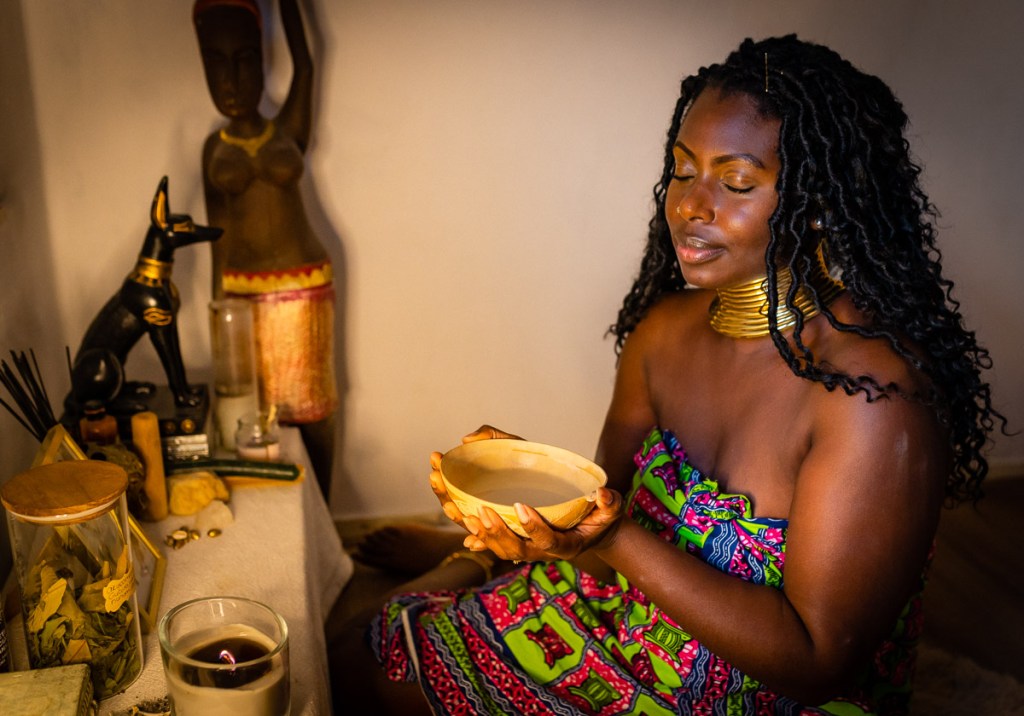
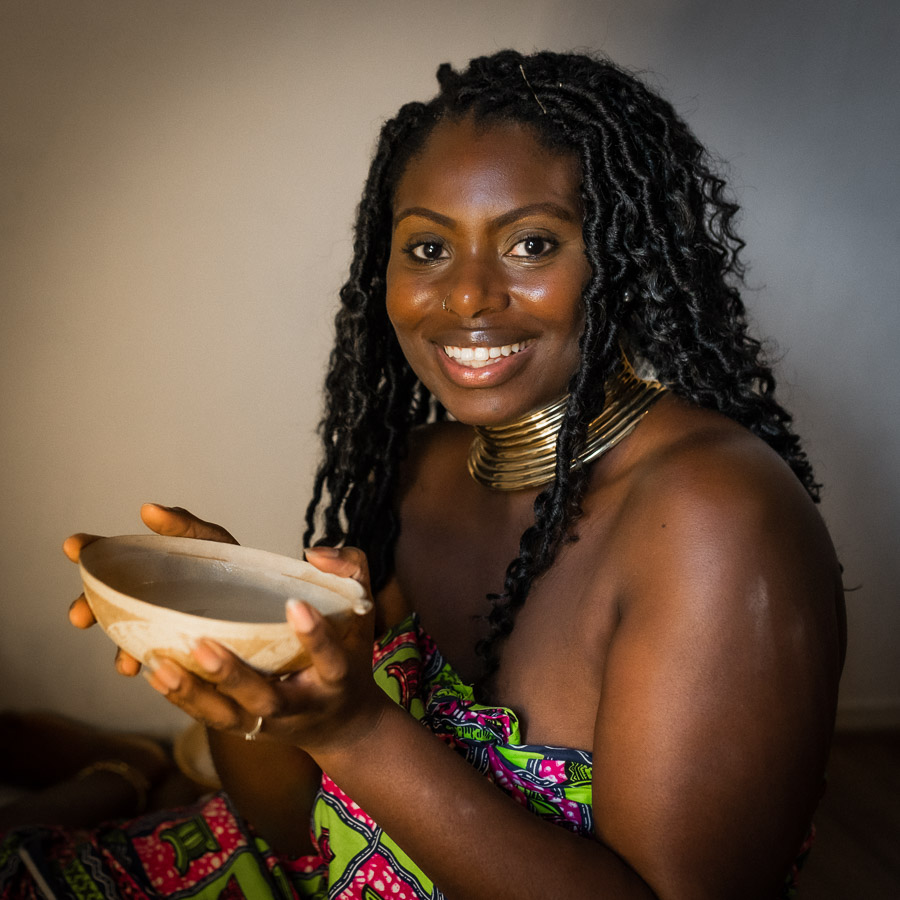
My name is Patience Owusu, that’s as we say my English name; my government name. My father is from a royal Ashanti bloodline. My mother is from the Akuapem and Fante. My traditional name is Maabena (girl born on Tuesday). In the Akan culture we are named after the day we were born. I was born in Ghana.
When I was 13 months we came to Europe. First in Germany, then back to Ghana and then to the Netherlands. My grandmother gave me the name Obenewaah which means someone who knows a lot. Smart. You already know everything. Unfortunately I never knew my grandmother on my father’s side so I don’t know why she gave me that name. As I get older I think I understand better. I am different from other family members. I walk a different path with my love for plant medicine, nature, science and understanding what life is all about. Why is this so? I pay attention to being able to find myself and not what I am presented through the media, school system or Christian family.
Where can you dream?
When I’m on the beach I feel more connected to my spiritual guides, to my ancestors. I can hear them better. Just another reality.
What is your Indigenous dream?
As a little girl I dreamed of becoming a surgeon. As a little girl I always watched programs where people are operated on. My mom was always like: “turn it off, all that blood looks gross”. But I was interested in that; healing people. I wanted to help people and become a surgeon. I was always interested in the human body. Unfortunately I did not become a surgeon. My personal and Indigenous dream now is to be able to return to Ghana. But then to a place in Ghana where my ancestors grew up: where my grandmother grew up, my great grandmother and my great great grandmother grew up. They come from the the Akuapem Mountains. I am already manifesting my dreams because I recently bought land there. Exactly in the area where my mother, grandmother and great-grandmother grew up. I dream of building a house there in the form of a Wellness place. Not only the physical aspect but also the spiritual.
I know you from the workshop tinctures and Indigenous knowledge of plants at Holland festival. So when you are talking about a wellness house do you also want to use plant medicine knowledge for people’s health?
Yes, mainly the African knowledge, how they apply plants there, I want to learn that from someone local.
How did you put yourself on this path?
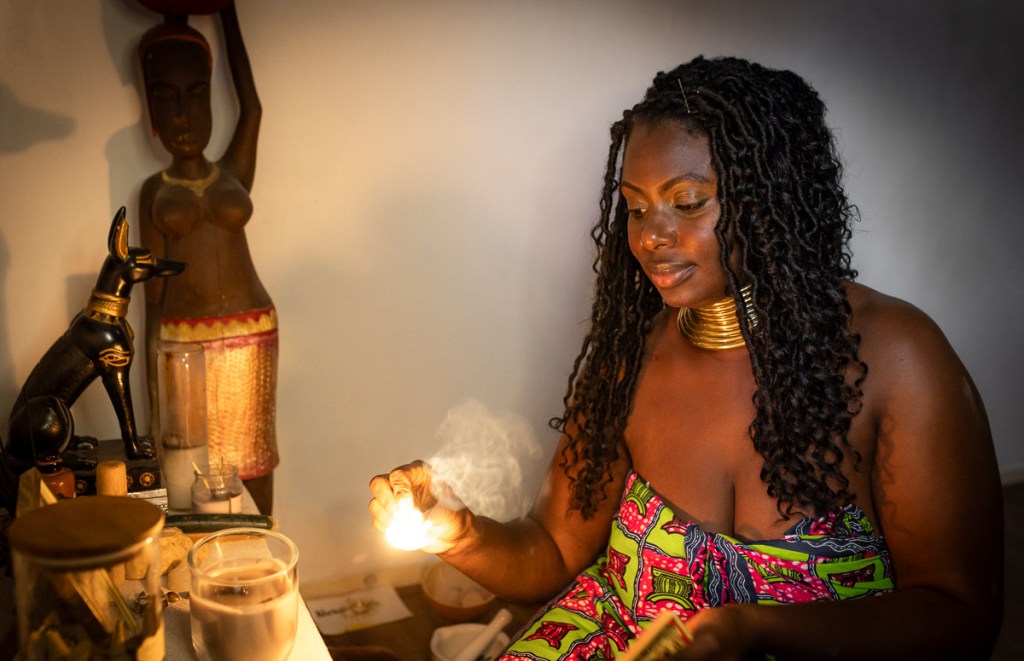
I am a mother of three children; two boys and a daughter. My first two deliveries unfortunately ended in cesarean sections. And I absolutely never wanted to experience that again. The drugs you are given such as morphine…. After my first delivery, I had to rehabilitate for at least a year. I couldn’t hold a pen for a year. It has had such an impact. The second time I had another cesarean section it was so disappointing. I had indicated I want absolutely no morphine, no anesthetic. They said you have a major operation that is going to hurt a lot. I say: “Yes, but it’s my body and I don’t want any more morphine injections”. So I only used paracetamol. And then I thought the pain wasn’t too bad. Not that I’m a fan of paracetamol. And at first I also felt fear… because doctors talk fear into you.
Here, pregnancy is treated as a disease rather than a spiritual moment, a very big friction of western medicine with the rest of the traditional world.
I am increasingly finding out that as a mother here in the Netherlands you think you have rights, but that is not the case. For example, I cannot say I am now taking my child to my home country. I have to ask permission. From school. I get that they have to go to school but I’m also shocked that they can stop you at the airport. That you are not allowed to take your child that you have carried for nine months to your family. To get back to the point of childbirth. I got pregnant again shortly after I gave birth. But if you’ve had a c-section, you can’t give birth for a year. It was such a mysterious pregnancy because I only found out after 16 weeks. I was shocked. She just had to be born. I then went to a gynecologist and indicated that I absolutely did not want a c-section. She didn’t want to hear about it: No, you’re coming at 37 weeks. We are going to schedule a planned c-section. You may not give birth naturally, according to the statistics you can die. I said ‘Madam I am not a number I am a human being’. She didn’t want to hear about it. It had to be scheduled for week 37 and she didn’t want me to come there with contractions. So I was really like, ‘Oh so before my child even announced that it wants to be born, now you set a timer because you want it based on statistics’
I never returned. I found a holistic midwife. She referred me to OLVG west in Amsterdam. There they guided me through a natural birth. And now comes the part of plant medicine: The father of my children is Surinamese and comes from the countryside. They are still very much connected to their Indigenous culture and plant medicines. I then got herbs from my former mother-in-law that I had to drink starting when I was 8 months pregnant. I was only allowed to drink that. That was my water and tea. And I wasn’t allowed to eat pepper. That was difficult because I like pepper and spicy food. From the beginning she prepared that for me and I had to eat boiled green banana and an egg and she went with her husband to pray for me. And from then on I had to drink that. And from the moment I had to give birth, they also prayed for me in Suriname on the floor of the great grandmother of my children. At the moment I was in labor there was more prayer and that also gave me the strength to give birth naturally which would supposedly be impossible according to the statistics. And here I am totally Alive!
How do you process historical losses?
The forms of loss I see in our people is our culture. I think Christianity masks that. That they write off our rituals because they see it as idolatry. I do miss our culture. Fortunately, there are still people who still have knowledge. I can also find a lot on youtube but that is thanks to the fact that I speak the language Twi. Thanks to my mother I have the language. We have special positions: akonyadan (that means chair). For example, abusuapanin an elder who ensures that there is unity in the family and who does amammre, rituals to ensure that our family remains stable. If you neglect that, a curse can come. Often you see that because akonya is neglected because, yes, now we are Christian. Then they say ya fan nyame which means ‘Now we have god. We serve Jesus.” My father told me that during the war between Europeans and Africans among the Ashanti there was a clan and they had received a certain power through traditional means. That is through an Okomfo priest who works with traditional rituals. When you get that power, you have to do something in return. Someone in that clan has to sacrifice himself. They have been able to win certain battles with the acquired power. But my father called it idolatry, evil and devilish. But how is it accepted that Jesus died for our sins. But when a man dies for his people it is not accepted? What makes that devilish?
Good question: did you ask that when you still had to go to church?
I never liked it there. I never took off my coat, I also went to sleep in church. And at one point my mother said: Well Maabena you give me so much shame. You don’t have to come to church anymore. That was one of the happiest days of my life.
How do we heal relationships with the Earth and each other?
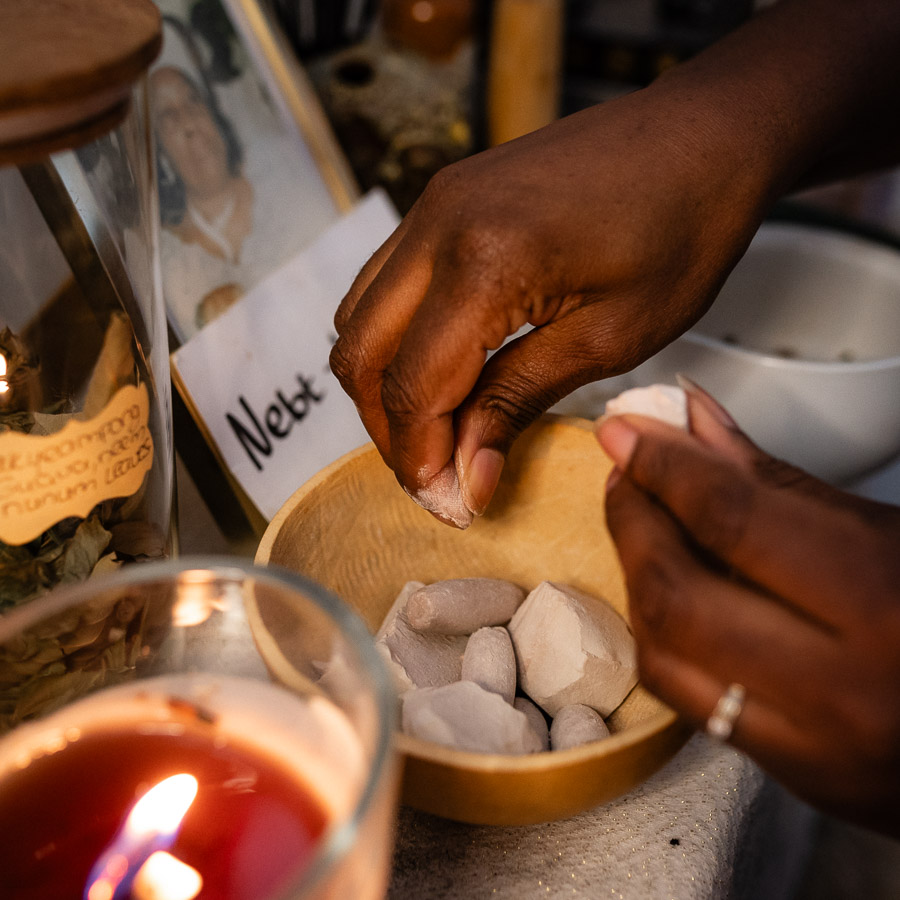
By connecting with nature. By learning about how our ancestors lived. I feel like it was a better place when they were alive. I’m talking about the times of my grandmother and great-grandmother. Look maybe materially and money wise it was less. But they were healthier. They ate naturally from their own soil.
And they gave as much as they got. My aunt is very frugal with water. I see that with the grandmother of my children. They are very careful with water. We must not waste water. We believe that water has a tumi – a consciousness. We must not waste her. We need to be mindful about using water. We believe that the plant, aduro, has a tumi. You can’t just pick plants. If you pick them, you apologize. Then you say “kafra“. Because we believe that they also have a consciousness. You must also ask permission. We do amammre. Can I pick you? This is how we maintain a good relationship.
Photography: Mia Tengco
Artistic director/text editor: Chihiro Geuzebroek
 INDIGENOUS DREAMS
Leave a comment