Can you introduce yourself?
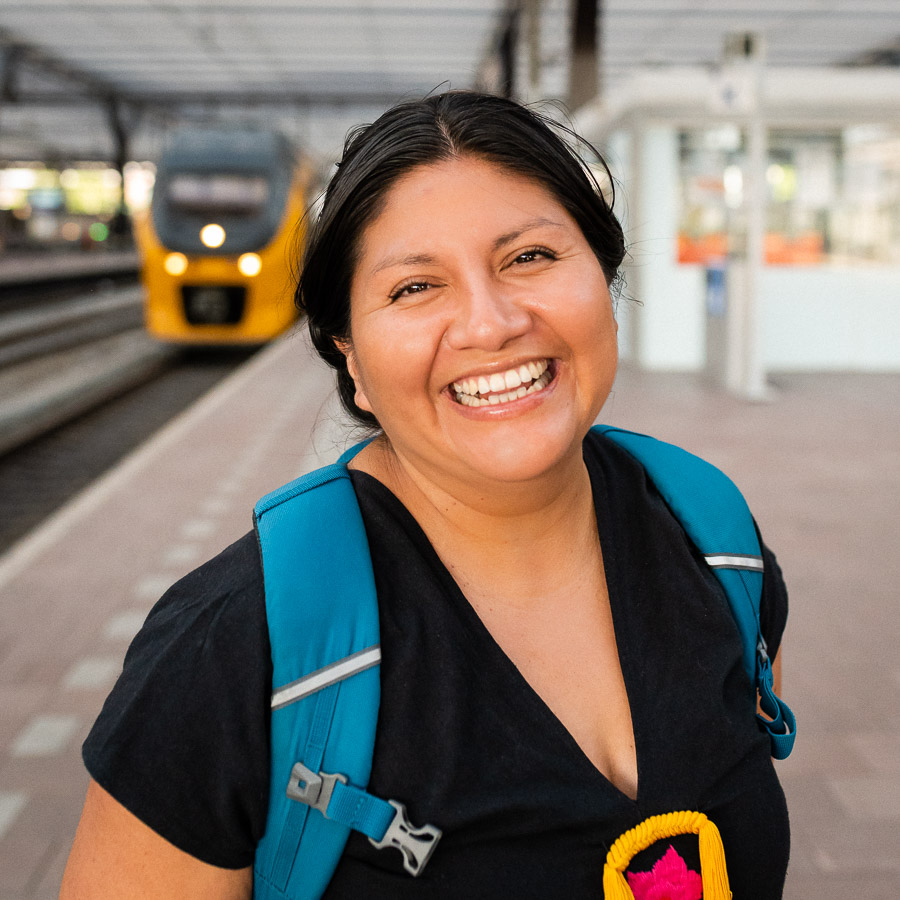
I am Itandehui Olivera – I like to be called Ita cause it is easy. I am Mexican Indigenous; half Zapotec, half Mixtec. I am an economist by formal education. I have been working in development for many years. And by heart I am a poet. And here in the Netherlands I have been for 6 years. I came to study.
Then I tried to find a job here. I did. It was very hard. But I found a job first in Amsterdam, then in the Hague. Then I have been trying to find my network here. It has been really, not difficult but weird, because I don’t know the people and have seen a lot of movements but I don’t feel comfortable there. So I have been slow to find my own network here. More than a network it is a care-environment in which I want to be part of and where I can be me. The people I found all of them are older and with migration history. They helped me grieve. I felt not enough intellectually and then also society didn’t show no people like me in any place. Not in the art or even in the metro station campaigns… so I was also not the pretty woman. Now recently you start seeing people in Mexico in poetry in movies, Indigenous women going against the government or speaking out against racism. I am really proud of them: wow we needed this.

Where can you dream?

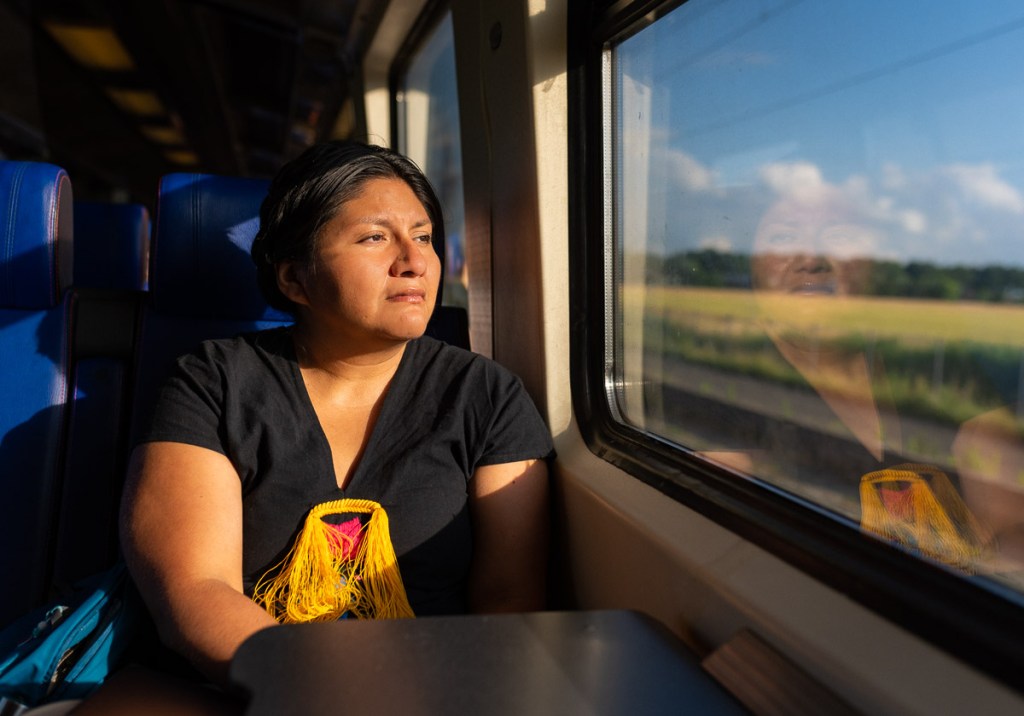
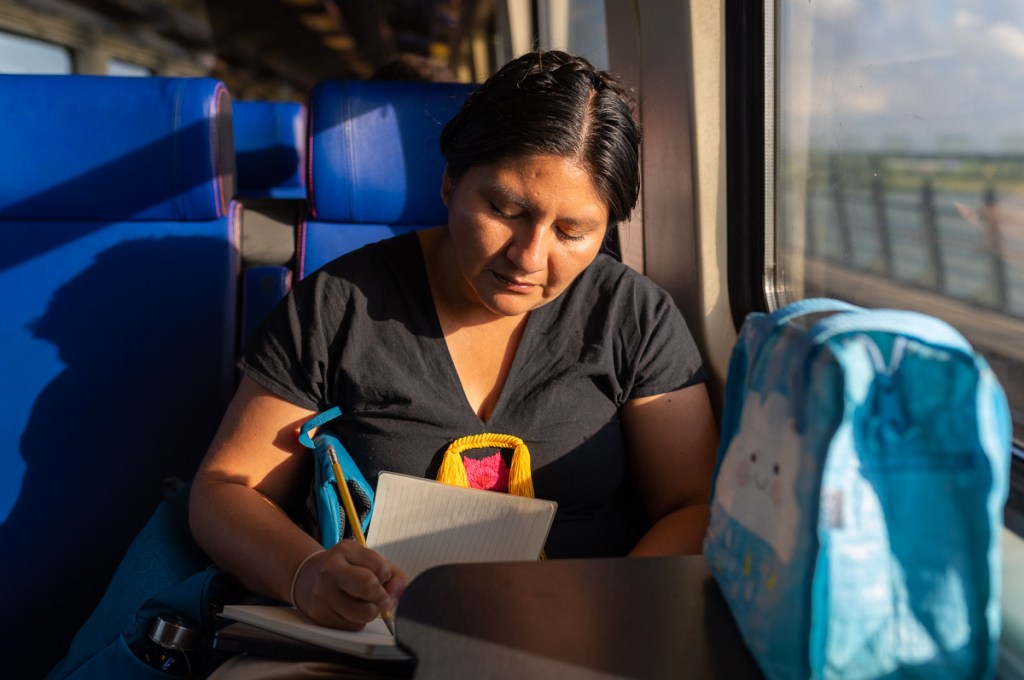
In the train looking out the window. Watching my surroundings. I see others on their phone or with headphones on. I like to be present. Talk to people or write in my notebook.
What is your Indigenous dream?
I think it is impossible to say I am not influenced by the American dream. If you think of the context of Oaxaca where I was born and where I grew up. A lot of my family migrated to the United States. Because they were looking for the dream… and the dream was connected…not just to the ancestors… but the dream was more connected to ‘find a better life’. But when I try to reflect about what is my dream. My dream is to be a poet. When you are born they put the cordon umbilical (umbilical cord) beneath the earth. That is your connection with the earth. This is a Mixtec tradition in the community of my mother. When I was six years old I discovered mine in an old book of my mom. But I didn’t know what it was. I was like “waah, what is this?” Is it an animal? It looks very weird and I tried to throw away the book and then my mother explained to me that in her tradition the umbilical cord of men is put in a book. Then you ensure that they will develop well in school. With girls they put it in the kitchen. Then you ensure they become a good wife. So my mother put mine in the book. We believe you come here with a mission. but they said my soul is a bit different – they said I was born as a fly soul… like a free soul…
The old woman said – don’t expect a regular trajectory for me.
Old woman? Like a curandera (healer)?
We don’t call her a curandera but she is. We believe she can see our soul.My dream was to go out and see what is out… mas alla de los libros… beyond the books. Thats what I want. And you know what I dream? And this is still my dream. My mother had this book las mil y un noches (1001 nights) . I wanted to know the Arabs. This was my dream. So my dream was always to go out of this small community that I grew up in. But I also felt bad because it was not a good idea to say I want to leave. And be a poet. But if I said that to my parents my parents wont be able to afford a study for me. The only way to study is going through a scholarship. I did win a competition for poetry for my mom… when I was 11 years old. I always liked to write. But I knew… also my parents said: “You won’t survive, especially in Mexico”.
I went to school for economics because there were these recruiters all over the country and they came to Oaxaca where I lived. They gave a speech and they said: “We have people from all over the country. if you are accepted you will have everything”. They gave you a scholarship, school everything. I struggled a lot because the study was very very – the most – neoliberal school that you can imagine. All was mathematics and they believed in the idea that we were rational and all the individualism think, production…
Profit, grow, more more more
They had their way to explain poverty. I was the person who raised their hand in the class saying “this is not happening like your theory. We don’t resolve things like that.
But they didn’t like me too much. They tried to kick me because I didn’t get the higher scores. One of the struggles was: I didn’t know English. And when I entered this school all of the classmates came from really rich families. Yes I am the son of the ambassador of Mexico in South Africa. So people were speaking German and English. And I was with my Spanish. Education in English.
I missed my community and my parents. But then another dream I had is having a career that can help support the struggles I see in my communities. And I saw for us a huge problem was poverty and access to education. Quality education. So I studied that because I hoped at some point I can contribute. I was trying to say this is not how it works. And the only way I could do it is by doing my thesis about the land. And as they want me to do an economic model or whatever I apply a theory of change explaining why Indigenous people in Chiapas fight for their land. Because for the economist there is no reason for fighting for the land. You just explain a model and if this is more profitable than that then you fight otherwise no.
It’s a cosmovision without a heart; it only knows measurements
Exactly and then I proved it is not possible to impose that model. I even used phrases that I found in my research like:”We will die for our land”. That’s what the community said to me. And also the research I did conveyed there is no logic in this neoliberal economic model because Indigenous people really have a connection with the land and that’s why they fight. So that’s how I finished economics. I felt like an outsider. I was always asserting: ”You present data data data. And every year it is the same data. We know from the poverty percentage that you are not doing anything. This has been happening since my mothers time’. My mother was more of a fighter than me. She was a teacher. In Oaxaca teachers are known from the resistance movement. She was part of the movement in the seventies. I grew up in this context where I saw my parents fighting for rights: for labor rights. My father was also part of a union.
After finishing school I spent 10 years in therapy. Looking what is the path here because i dont want to be here anymore. No people like me. No spaces for me. Everybody from my school got placed at work. But there was nowhere for me. No help. Just knocking doors. And they said: you can be the assistant of the assistant of the assistant what else do you want? So that was the kind of discrimination I faced.
I came to the Netherlands where I did my masters thesis on sexual violence against Indigenous children in Oaxaca. So Unicef is saying we should do ‘protection’ or ‘process like this’. But our communities don’t resolve problems like that. And I said we are seeing this sexual violence of children through a colonial gaze. I also wrote what I have seen romanticizing Indigeneity in academia and also in the development organizations in which I worked. I also had a colleague saying to me: “Oh you should see this adolescent fighting for their rights and saying this”. Like they were surprised. Why are they surprised? We have been doing activism for a very long time in our communities. I want the justice system between Global North and South to change. And to end tokenization.
How do you deal with historical loss(es)?
The main loss is that we don’t speak our Indigenous languages.
The language encompasses cosmovision, a way of relating to the world.
Yes, my mother would never say “How are you?” she would ask “What is your heart saying?” In my parents time it was not ok to be Indgenous and it is still a source of discrimination. So my grandparents spoke Mixtec and zapotec – but they didn’t want their kids to be discriminated against. My grandfather from mothers side he took seven Mixtec children from in Oaxaca walking walking like three or four days to the coast where they had offered him be a teacher. In exchange he could have a piece of land – not to have but he could use it. Then the kids can go to school. Lots of my family are teachers. There was the idea that all of Mexico needs to read and learn in Spanish. And they want a homogenous state where Indigenous are erased in a way.
And my mother was in boarding school. Now I have a lot of conversations with my mother about the losses. And she didn’t previously realize how many losses she had: Like being a part of the family, like not speaking her language anymore. And now we realize she passed on some of these losses to me without intention.
How do we heal all our relations?
First I try to be aware of what is surrounding me. We don’t realize what is surrounding us. When I go to the train I love to see that some minutes out of the city there are a lot of cows and trees. And I like to see the moon and the cycle of the moon and the rain. I like to feel it. I like to get wet of the rain.

In my community everyone talks to everyone. My parents talk to everyone and collect stories from everyone even without intention. Cause they are always interested in the stories of the others. I lost all of that when I went to study.To deal with this loss I write. I write in my diary. I call my friends back home, women of color, we were the poorest of the school literally and we share together. That is how I digest.
Photography: Mia Tengco
Artistic director/text editor: Chihiro Geuzebroek
 INDIGENOUS DREAMS
Leave a comment