1492 Tribunal | Archive
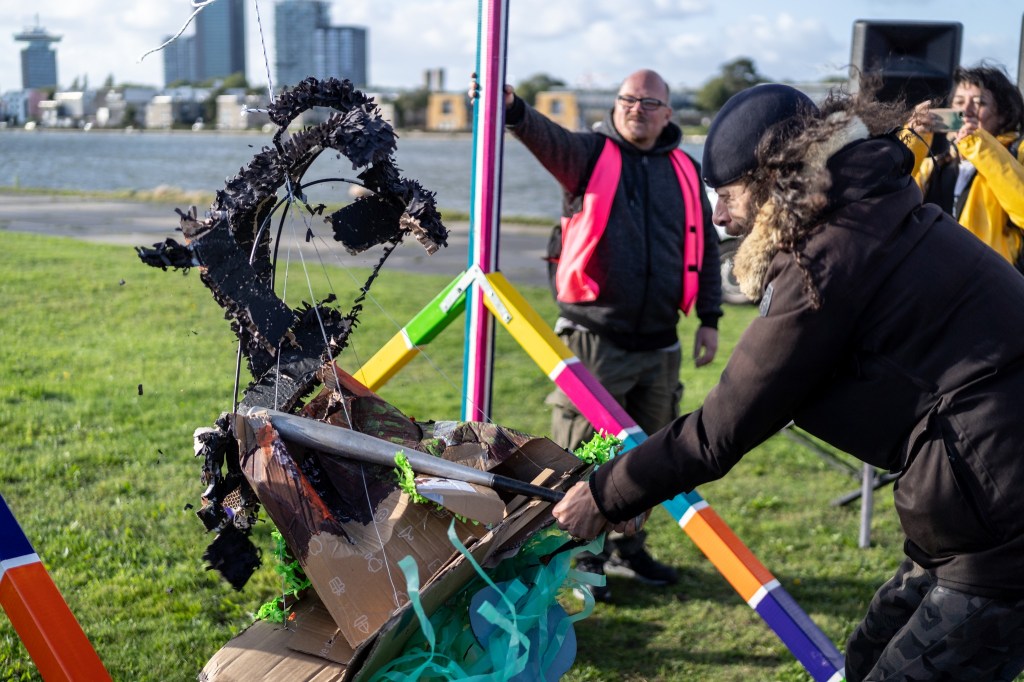
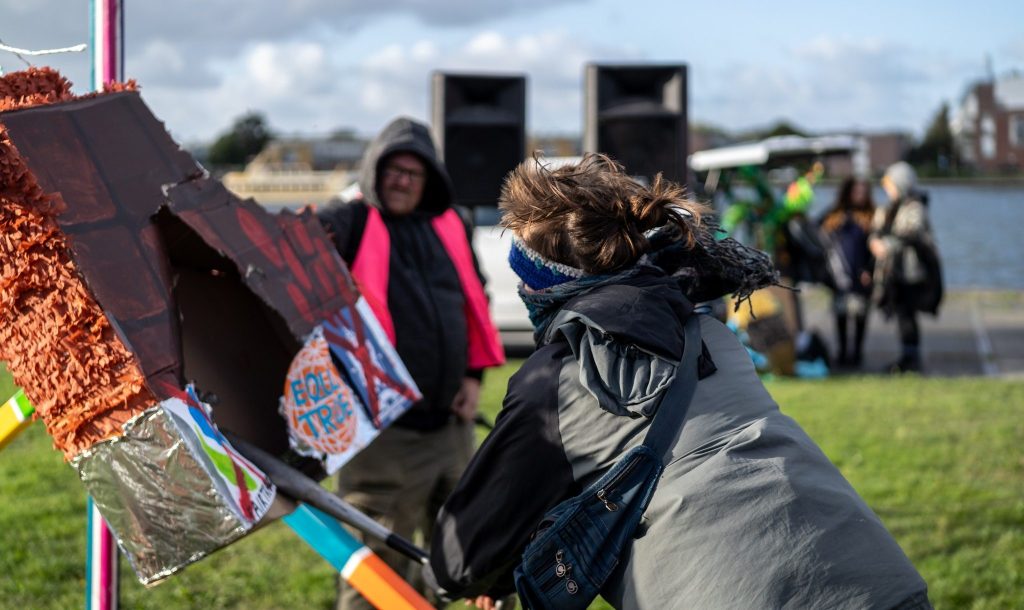
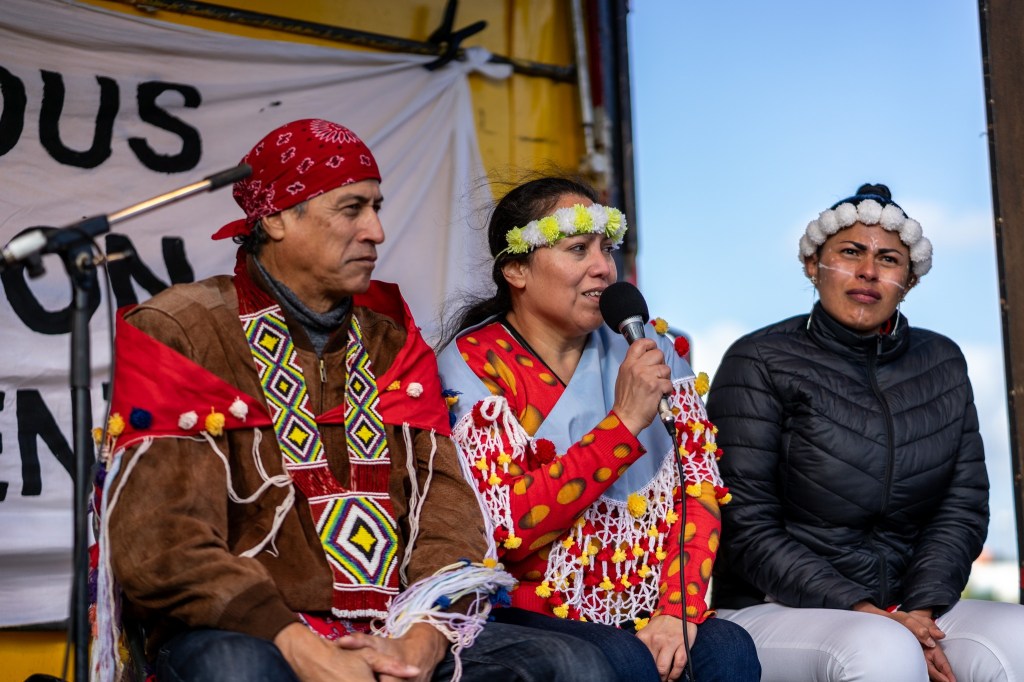
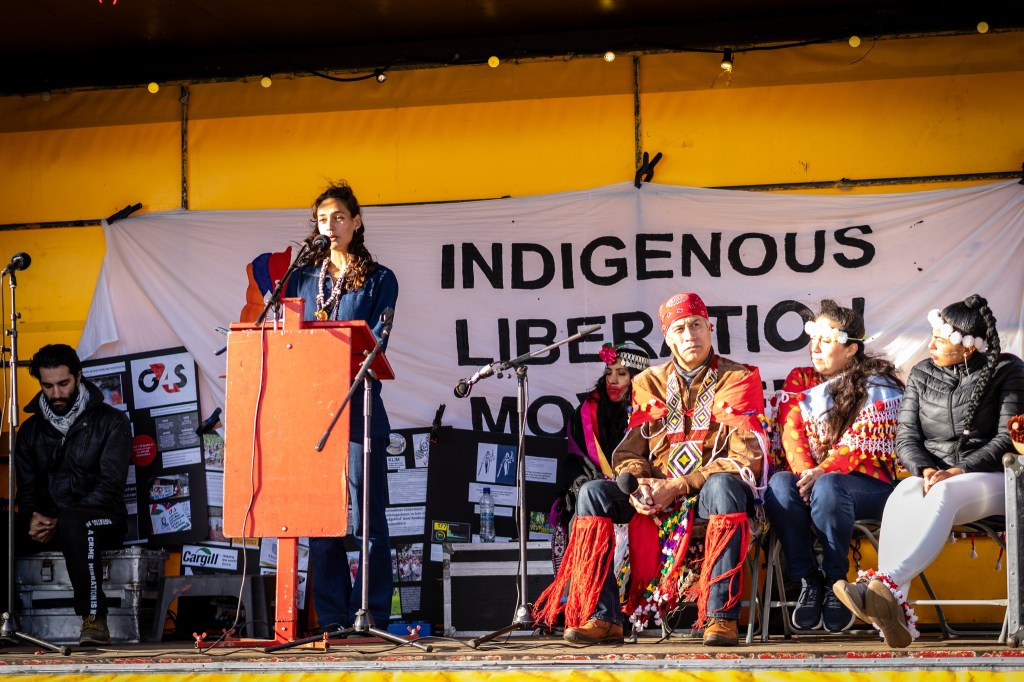
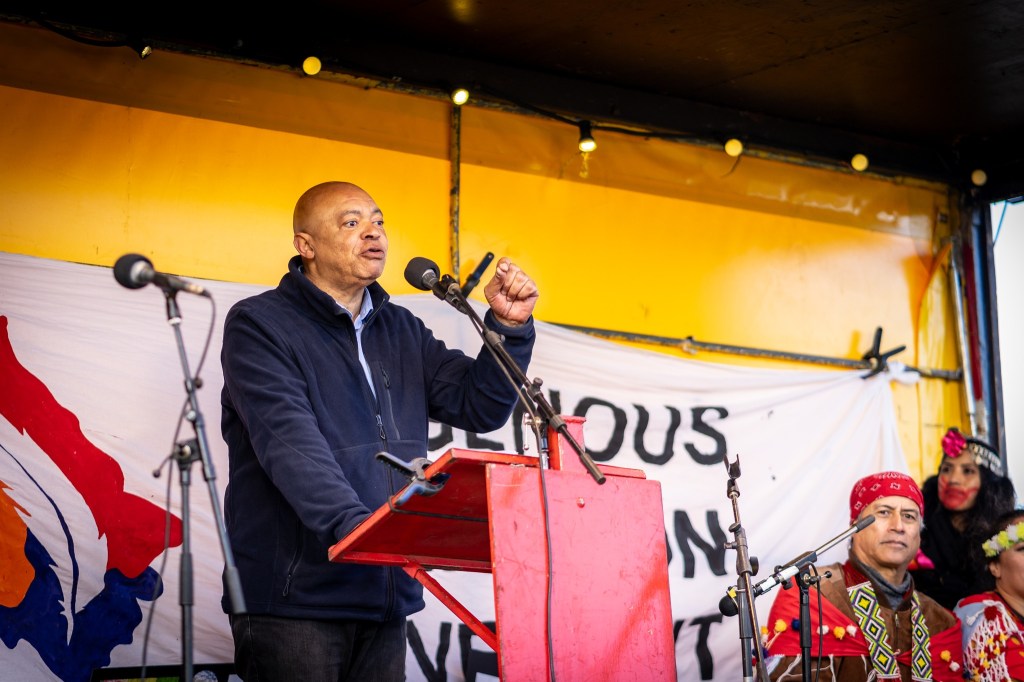
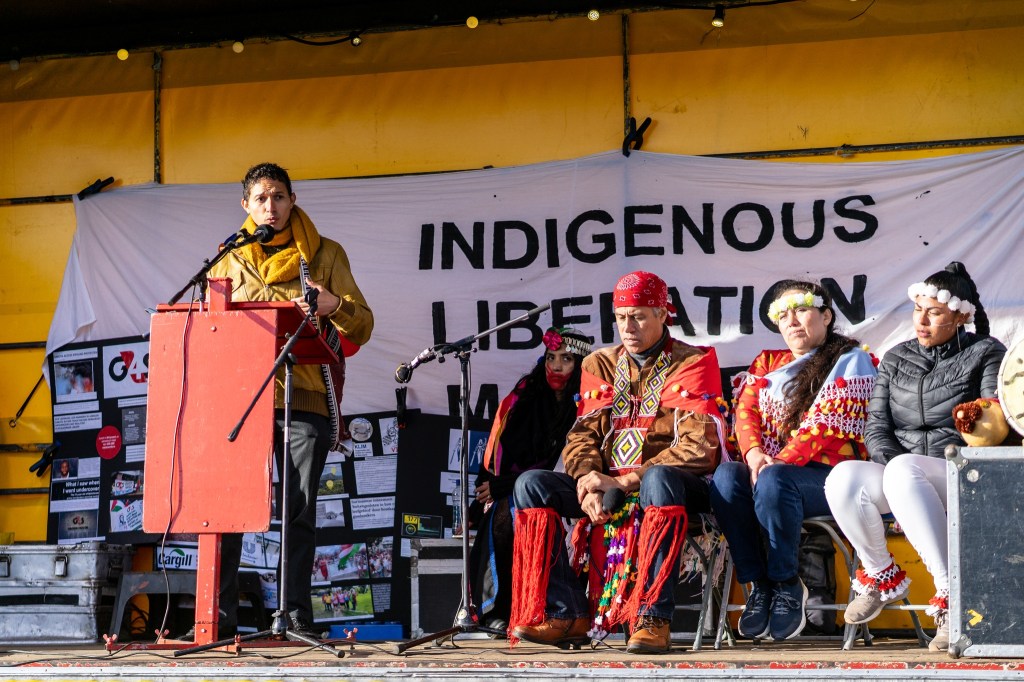
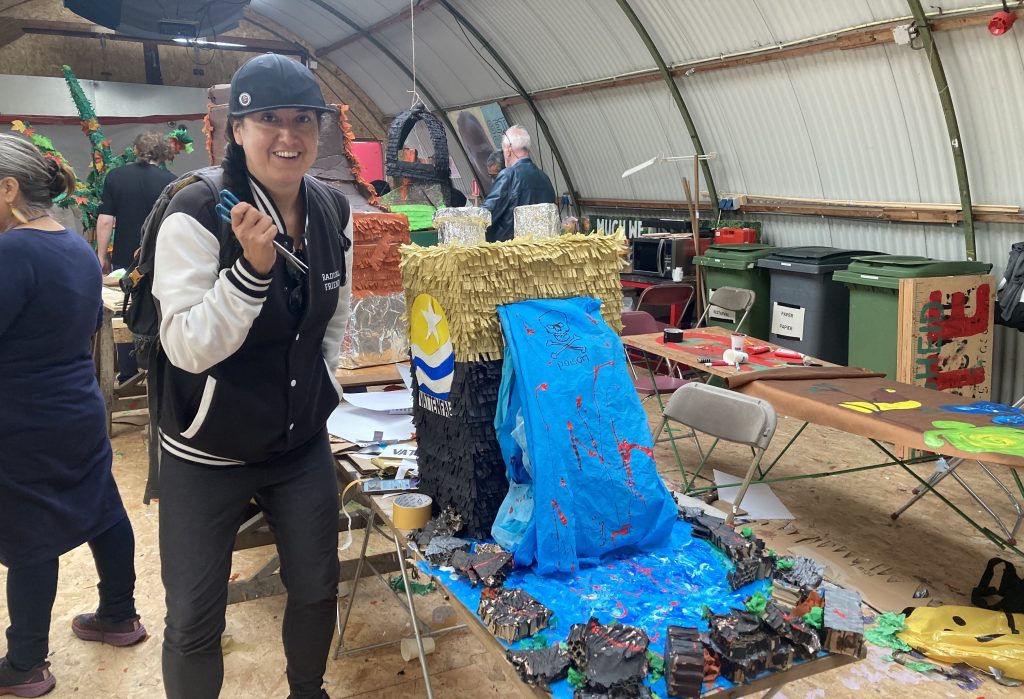
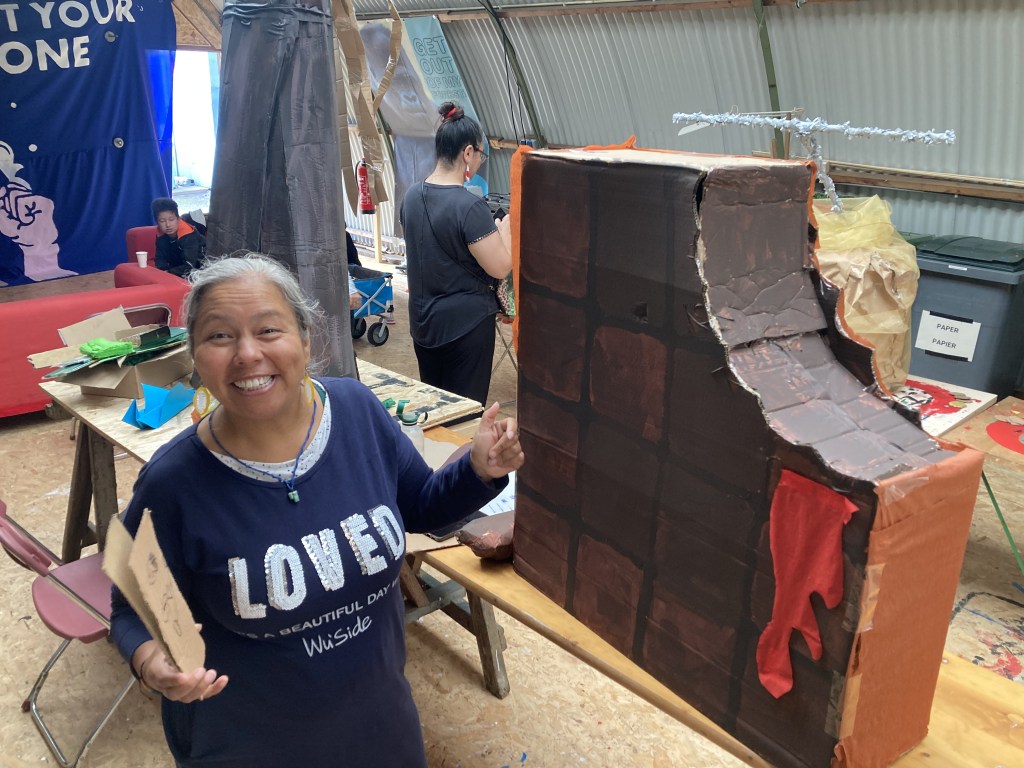
On this page, you find 12 cases brought to the 1492 Tribunal where Indigenous judges and decolonial protesters hear about institutional, corporate, individual and/or state crimes against Indigenous Peoples around the world. Some cases are very present, others further in the past; in the 1492 Tribunal it is about remembering, understanding and upon finding guilty, people smash the mascot of this perpetrator. When the piñata-mascot bursts seeds come falling out so the land may be replenished with new life and possibility.
Below you are able to read about the cases people presented at the 1492 Tribunal of 2023 and see who else we put on trial in 2022 and 2021 through pictures.
2023 – Kop van Java Manifestation
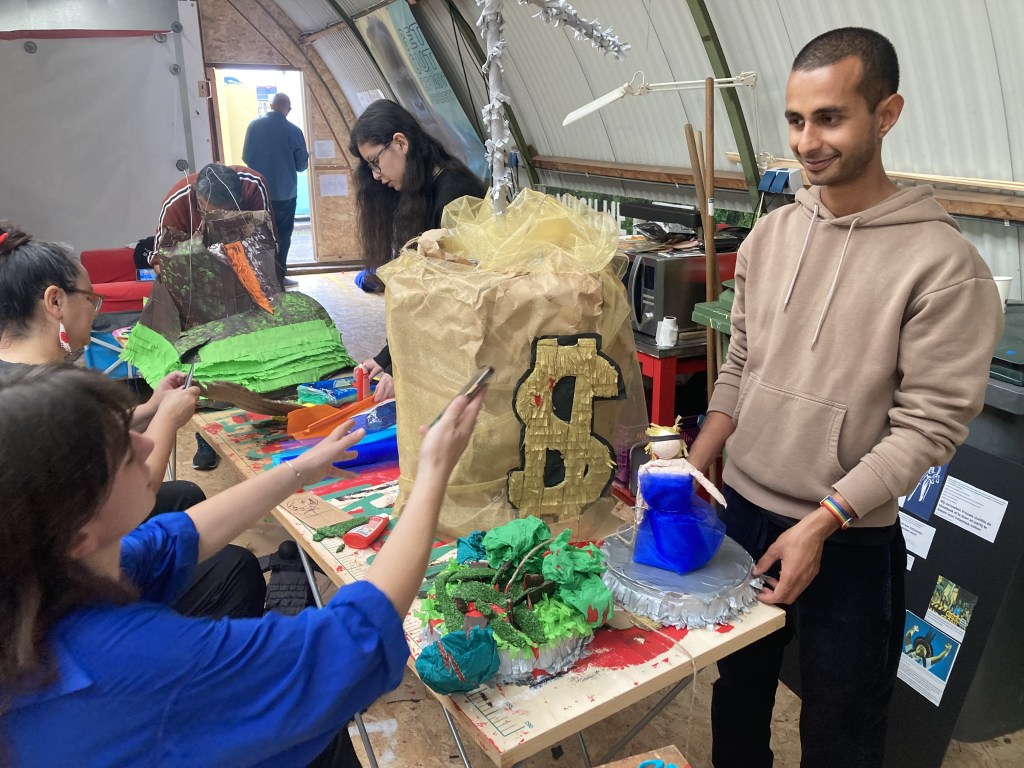
Cases Presented:
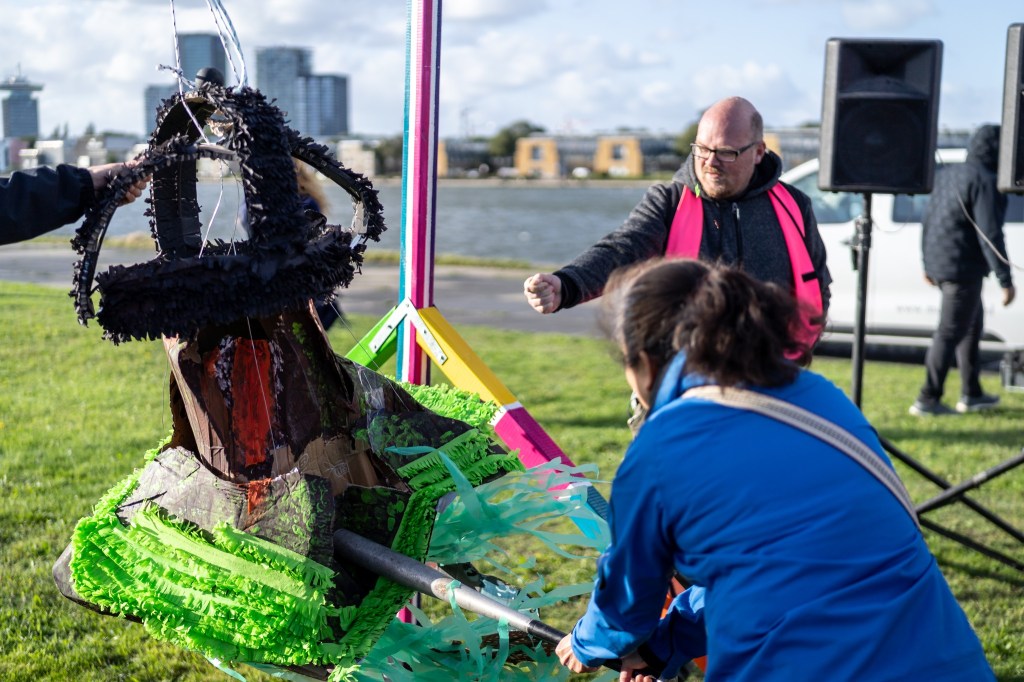
Boskalis: Impunity, pollution, human rights violations
More about this case
The Boskalis Case: A Call for Reparation
By Myra Colis (MABIKAs Foundation)
In recent years, the global discourse on corporate responsibility and accountability has gained momentum, wherein companies are increasingly expected to account for the social, environmental, and ethical impacts of their operations. In the Netherlands, the Dutch government has taken various measures, including proposing legislation (i.e. International Corporate Social Responsibility Act), setting conditions, offering financial incentives, and promoting sector-wide agreements, to promote responsible business conduct among Dutch companies operating abroad. These efforts aim to ensure that businesses consider the impact of their operations on human rights, working conditions, and the environment. One company that has recently found itself at the center of this discourse is Royal Boskalis Westminster N.V. (Boskalis), one of the world’s largest dredging companies, employing over 10,000 experts and generating an annual revenue of 3.58 billion euros in 2022.
Operating in 90 countries with its corporate headquarters in Papendrecht, the Netherlands, Boskalis has come under increasing scrutiny for its international operations. In 2020, Boskalis faced criticism and a legal battle with Both ENDS, an environment and human rights organization, over a sand extraction project in South Sulawesi, Indonesia (See court ruling). Notably, Indonesia is a former colony of the Netherlands. Now Boskalis is once again under the spotlight for its biggest project so far in the history of the company– i.e. the land development, design, and construction of the Manila International Airport (MIA) in the Philippines. Contracted in December 2020, this project covers 1,700 hectares of land in Manila Bay and is worth 1.5 billion euros. While these mega dredging projects promise economic growth and modernization in the respective regions where they operate, beneath the surface is a complex web of environmental destruction, human rights violation, and a legacy of colonialism that continues to haunt us today.
The Colonial Connection & Environmental Damage
First and foremost, colonialism is characterized by the exploitation of resources, land, and labor in colonized territories. This exploitation often came at the expense of local populations, leading to economic and social injustices. Such legacy of colonialism has left a lasting impact on many countries, contributing to poverty, inequality, and environmental degradation in former colonies. The Philippines, once colonized by both Spanish and American powers, endured centuries of ruthless exploitation, where land and resources were shamelessly plundered for profit. Today, corporations like Boskalis carry forward this dark colonial legacy of exploitation and environmental devastation through their unrelenting dredging activities, particularly in developing countries like the Philippines and Indonesia.
When dredging giants like Boskalis undertake reclamation projects such as the Manila International Airport (MIA), they knowingly unleash their powerful dredging fleets into delicate marine ecosystems. This wreak havoc on these ecosystems as dredging activities disrupts the seabed and marine habitats, including crucial fishery zones. When this happens, the water quality and aquatic life are jeopardized. The MIA project also involves clearing mangrove forests, which are vital coastal ecosystems. Here it is important to understand that mangroves provide protection against coastal erosion, serve as fish breeding grounds, and help maintain water quality. Their removal can harm coastal ecology and impact nearby agricultural areas. Furthermore, the project site (i.e. Manila Bay) is prone to soil liquefaction, which can be exacerbated by construction activities. Again, it is vital to understand that soil liquefaction poses risks to infrastructure stability and can lead to subsidence, potentially affecting nearby agricultural land. Isn’t this an undeniable fact?
Can’t corporations like Boskalis recognize that the air we breathe and the stability of our climate depend on the well-being of these ecosystems? Can they not see that coastal wonders like mangrove forests shield our communities from storms and erosion, while also purifying our water? Their destruction places everyone at risk from severe storms, rising sea levels, and food shortages, among other perils. Isn’t this glaringly evident? Certainly, these truths are not hard to discern. Yet, under the pretext of economic growth and progress, profit-driven corporations prioritize monetary gains, even when these gains come at the expense of not only the environment but also that of our human and indigenous peoples’ rights.
Boskalis’ dredging activities and its connection to indigenous liberation
While there may not be a specific indigenous group directly impacted by Boskalis’ dredging activities in Manila Bay, it’s crucial to recognize the broader implications for indigenous peoples’ rights and the global fight for environmental justice. Indigenous communities around the world have long been at the forefront of advocating for the protection of natural ecosystems and the rights of all inhabitants, human and non-human alike. Their wisdom and cosmovision emphasize the interconnectedness of all life and the need to safeguard our environment.
In this context, the destruction of marine ecosystems and food sources along Manila Bay serves as a stark reminder that environmental degradation knows no boundaries. It affects not only local citizens but also resonates with indigenous struggles for land, water, and resource rights worldwide. Thus, the fight for sustainable living and the protection of our shared natural environment transcends distinctions between indigenous and non-indigenous. It’s a fight for life itself, where the well-being of all living beings is at stake. For corporations like Boskalis, this broader perspective underscores the urgency of responsible corporate conduct, especially that their actions impact not only the immediate communities but also contribute to global environmental challenges.
Economic growth at the expense of human lives & human rights
The environmental devastation caused by massive reclamation projects, exemplified by Boskalis’ largest operation, is widely known. These companies conduct their own impact assessments, making it known to them that the disruption of fishing grounds not only harms the mangroves, aquatic life, and local fishing communities but also endangers the lives and livelihoods of people in affected coastal areas. Predictably, local citizens, mostly fishermen, have been forcibly displaced without proper relocation plans and prospects for alternative jobs. Some felt intimidated or pressured to demolish their own homes and leave, a blatant violation of international human rights conventions. This recurring pattern, seen each time companies like Boskalis undertake million and billion-euro dredging projects abroad, underscores a historical legacy of oppression, ecological devastation, and the relentless pursuit of profit at the expense of both the land and its people. It also raises serious questions about Boskalis’ commitment to responsible corporate conduct vis-a-vis respect to international and customary laws and its willingness to prioritize the well-being of affected regions and communities.
Furthermore, what foreign-owned corporations like Boskalis may overlook as they undertake billion-euro projects in the Philippines is the threat they pose to human lives. Apparently, this is not only about ecological harm. Alarmingly, the lives of individuals who advocate for the preservation of mangrove forests, aquatic ecosystems, and the livelihoods of local fishermen are also at risk. Notably, the Philippines remains as the deadliest countries in Asia for land and environmental defenders. In the 2021 Global Witness Report, at least 270 land defenders were killed in the past decade, with the majority of the recorded killings in the Philippines being linked to individuals defending their rights and protesting against corporate operations. Thus, it comes as no surprise that those who openly oppose these reclamation projects become targets for abduction or even extrajudicial killings. These shadowy forces, often suspected of having connections to individuals in positions of power, operate with impunity.
A striking and most recent illustration of this issue is the reported abduction of two young female activists who serve as community organizers working with fishermen opposing reclamation projects in Manila Bay. In broad daylight of September 2, 2023, armed men seized 21-year-old Jonila Castro and 22-year-old Jhed Tamano, instilling fear in witnesses who were sternly warned not to intervene, under the threat of serious repercussions. Castro is affiliated with the anti-reclamation network AKAP KA Manila Bay, one of the signatories of the letter of concern addressed to Boskalis CEO Berdowski in July 2021. Their disappearance underscores a deeply troubling pattern of attacks targeting advocates against reclamation. With Boskalis’ involvement in extensive projects that yield dire consequences like this, it is our duty to demand accountability from corporations for their actions.
The power of solidarity amongst and for the oppressed
Following the reported abduction of the two environmental activists, numerous groups have expressed their support by organizing rallies to demand their safe return, providing legal assistance to their families during the search, and releasing statements denouncing their abduction. The Asia Pacific Network of Environment Defenders (APNED) even took the lead in issuing a statement, urging fellow organizations and individuals to join in a collective call for the release of the two activists. In a show of solidarity, this petition garnered support from 36 international organizations, 31 Filipino organizations, and 155 individuals. On September 19, a surprising turn of events unfolded as the two activists resurfaced, now under the custody of the military. During a press conference arranged by the military, it was stated that Tamano and Castro had willingly surrendered to the authorities. Remarkably, the two activists vehemently contradicted this official statement during the press conference itself, raising profound questions about the authenticity of the authorities’ account of events.
Boskalis running away from its corporate responsibility?
The Dutch corporate responsibility legislation and proposals call upon corporations engaged in such activities abroad to be more accountable. Boskalis and similar entities bear the responsibility of preventing these atrocities. Intriguingly, upon learning of the proposed legislation, Boskalis’ CEO Peter Berdowski made a startling announcement to relocate the company away from the Netherlands should such legislation become law. In an interview on the radio program Sven op 1, Berdowski expressed his worries on the potential duty of care requirement under the proposed law on corporate responsibility, where companies must prevent their activities from negatively impacting human rights, labor rights, or the environment, with the possibility of judicial scrutiny. This begs the question: Is Boskalis attempting to evade responsibility? Or is there another motive at play? What remains conspicuously absent in this discourse is a robust commitment from Boskalis and similar corporations to proactively uphold ethical conduct, prioritize the welfare of affected regions and communities, and truly take responsibility for their actions. The proposed legislation, therefore, presents a pivotal moment for corporations like Boskalis to prove their dedication to responsible corporate behavior and make reparations for the damage they have inflicted on both the environment and human lives.
Meanwhile, Philippine President Ferdinand Marcos Jr. has recently taken a significant step by ordering the suspension of nearly 22 land reclamation projects in Manila Bay, but this primarily concerns the projects associated with a Chinese company that is blacklisted by the U.S. for its role in constructing militarized artificial islands in the South China Sea. What is particularly noteworthy about this action is the response from local residents directly impacted by these reclamation projects. They express a sentiment that mere suspension of operations falls short of addressing their concerns. Notably, a fisher group is leading the call for the government to go beyond project suspensions and demand accountability from companies responsible for the displacement of hundreds of fisherfolk due to these reclamation activities. As the vice president of the group spearheading this initiative, Pambansang Lakas ng Kilusang Mamamalakaya ng Pilipinas (PAMALAKAYA), said in Filipino language: “The suspension of projects alone is not enough; there should be accompanying accountability for the companies responsible for the destruction of our fisheries and the forced displacement of fishermen.”
Additionally, PAMALAKAYA calls for the restoration of damaged mangroves and the provision of fair compensation to affected individuals. Environmental group Oceana also calls for the Philippine government to put an end to reclamation projects, citing severe environmental degradation and fisheries destruction.
A Call for Boskalis to Set Positive Precedence
The Manila International Airport project, once seen as a beacon of progress, now stands as a stark reminder of the historical injustice over our world. It is time to face our colonial legacy, to seek reparation for the damage inflicted on our environment, our communities, and our shared humanity. Together, we can rewrite this narrative, one that respects the land, upholds human rights, and paves the way for a more just and sustainable future. This is not merely a project; it’s a call for change, reparation, and justice.
In seeking for reparation, the Dutch government is right in calling for responsible business conduct among Dutch companies operating abroad. Given that this proposal is also progressing at the EU-level, the law places accountability on Boskalis. The Boskalis case presents an opportunity for the company to set a positive precedent. By prioritizing environmental restoration and community engagement, this call urges Boskalis to demonstrate that corporate responsibility goes beyond profits. It encompasses genuine care for the environment and the well-being of local communities.
To Royal Boskalis, the call is clear and the world is watching. In the face of mounting legal battles and public scrutiny, either you can continue to resist transparency and accountability, or you can step up and take responsibility for your actions. While the call for reparation means a multitude of possibilities, there is one concrete action to begin with. You can lead the way in showing that corporations can be forces for good. A part of addressing the direct impacts caused by your dredging activities could also be engaging in broader advocacy efforts such as urging European governments to cancel odious debts in colonized countries like the Philippines. It’s time to embrace responsible corporate conduct, make reparations to affected communities, and set a true example for the industry and beyond. The choice is yours.
ABOUT THE AUTHOR
Myra Colis is the Founding Chairperson of MABIKAs Foundation- The Netherlands, a civic organization dedicated to eradicating prejudice against indigenous peoples through awareness and education. As an indigenous individual with an academic background in technology law, she passionately advocates for the rights of women and indigenous peoples. Particularly in the face of today’s widening gap of inequality caused by the rapid modernization and technological advancements in society, her commitment is towards addressing the gaps in the intersection of law, technology, and well-being.

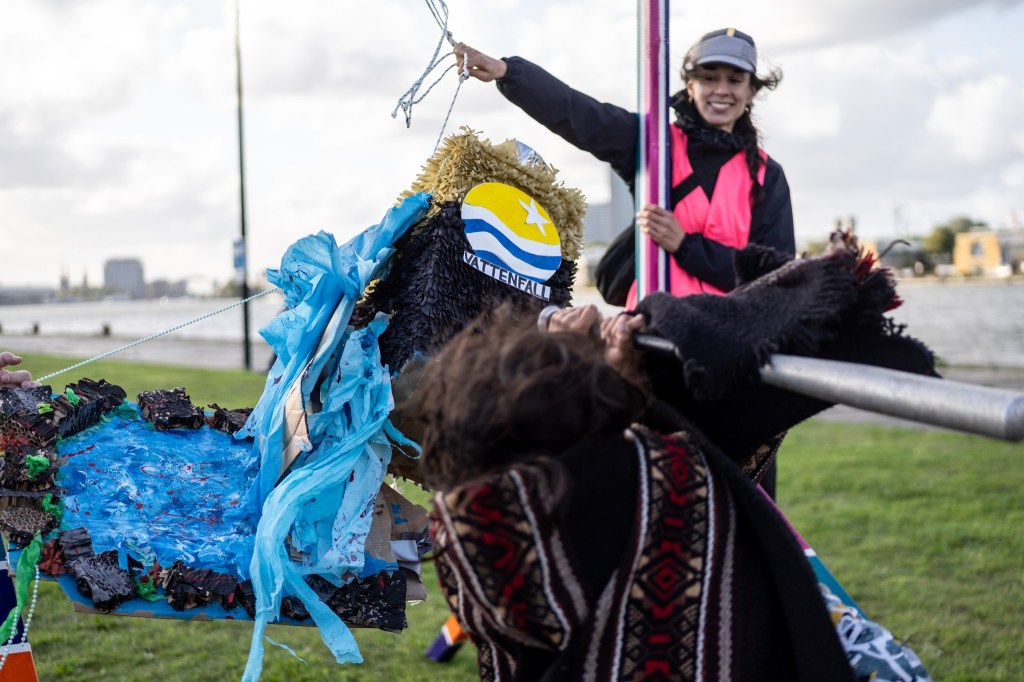
Vattenfall: Colonial crimes against Indigenous people
More about this case
De Neokoloniale Erfenis van Vattenfall
Geschreven door Luis Anibal Villegas Hernandez , met ondersteuning van tribesmovement.org voor het onderzoek
Ooit hebben Europese koloniale missies geleid tot het onteigenen van Inheemse landen, kolonisatie en handelskapitalisme. Vandaag de dag worden koloniale verhoudingen gereproduceerd, dit keer niet in de naam van ‘beschaving’, maar in de naam van groene energie. Net zoals de contradictie in het idee dat beschaving aan Inheemse volken moest worden aangeleerd door hun grondgebied en culturen te vernietigen, proberen grote (Europese) energiebedrijven nu duurzaamheid te bevorderen door de aarde te plunderen. Een van die bedrijven is Vattenfall, sinds 2009 gezeteld in Nederland.
Vattenfall heeft grote voornemens om hun energie-uitstoot te verminderen. Groots op hun website staat hun missie “fossielvrij leven binnen één generatie mogelijk maken”. En al blijkt zo’n belofte gênant, ergens zou je het bedrijf moeten geloven, gezien dat zij een van de leiders zijn geweest in het kritisch analyseren van hun eigen energie-inkopen. Vattenfall heeft namelijk na veel actie vanuit lokale groeperingen zoals Asamblea Campesina en Nederlandse organisaties zoals Pax for Peace in 2017 mensenrechten beoordelingen uitgevoerd in het Cesar-mijngebied en in La Guajira en identificeerde dat steenkolen uit deze regio’s gelinkt zijn aan gedwongen ontheemding. Vattenfall beschouwde zichzelf als rechtstreeks verband houdend met deze mensenrechtenschendingen.
Wat houden deze mensenrechtenschendingen in? Voornamelijk gaat het om de ontheemding door het decennialange interne gewapende conflict en een vaak niet erkend verband met mijnbouwbedrijven, en milieueffecten van de mijnen op de bevolking in de departementen van Cesar en La Guajira. Eerst over de gedwongen verplaatsingen…
Wat is de koloniale schade?
Ontheemding
In een documentaire uit 2020 getiteld ‘Carbon con Sangre’ (Kolen met Bloed) nemen een moeder en haar twee dochters journalisten van de Deutsche Welle mee naar de ruïnes van hun voormalige huis in El Prado, departement Cesar, Colombia. Ze verloren het eigendom van hun huis aan paramilitairen van de Autodefensa Unidades Colombianas (AUC).
Een van de kinderen van het gezin, Nellys Flórez, die destijds minderjarig was, zag vanuit het huis van een buurman hoe paramilitairen haar broers bij hen thuis executeerden. Haar moeder, doña Margot, zegt dat ze na het bloedbad alles moest laten vallen. In de documentaire zijn enkele overblijfselen van pantoffels en een muur van het huis te zien. “Sindsdien zijn we niet meer naar die plek teruggegaan. We zijn gewoon weggegaan en hebben alles achtergelaten. We zijn die gronden kwijtgeraakt, en nu zijn ze eigendom van de mijn.”, zegt Nellys. Hoe raakten ze het eigendom van hun huizen kwijt, en hoe kwam dat in handen van bedrijven als Drummond en Prodeco/Glencore?
Ex-paramilitair Alcides Manuel Mattos Tabares (alias Samario), geeft toe talloze moorden te hebben gepleegd voor de paramilitairen. Samario getuigde voor een Colombiaanse rechtbank over de vermeende deelname van leidinggevenden van Drummond aan de moord op vakbondsleiders. Drummond ontkent tot op de dag van vandaag elke beschuldiging van samenwerking met paramilitairen, daarbij aanvoerend dat daar geen bewijs voor zou zijn, en dat een zaak die bij een Amerikaanse rechtbank is aangespannen de beschuldigingen ontkent. Dit is echter onjuist, aangezien de zaak werd afgewezen omdat Amerikaanse rechtbanken eisen dat mensenrechtenschendingen in het buitenland sterk verband houden met de Amerikaanse tak van het bedrijf. Bovendien werd de getuigenis niet op inhoudelijke gronden afgewezen. De Colombiaanse openbare aanklager heeft daarentegen voldoende bewijs gevonden om de beschuldigingen te staven en een zaak tegen de leiding van Drummond te starten.
Samario vertelt in de documentaire dat de paramilitairen in regio’s als Cesar aanvankelijk niet werden gefinancierd door drugshandel, maar door multinationale energiebedrijven. “Na alle bloedbaden, verdwijningen en ontheemding komt het land in handen van familie van ex-commandanten van de AUC. Ze verschijnen als legitieme eigenaren van de gronden. Vervolgens verkopen die familieleden de gronden aan bedrijven als Prodeco en Drummond.” Het Amerikaanse mijnbouwbedrijf Drummond en het Zwitserse mijnbouwbedrijf Prodeco/Glencore hebben in samenwerking met – en door beweerde financiering van – paramilitaire groepen tussen 1996 en 2006 bewoners van hun land ontheemd. Ze zouden ontheemd zijn omdat bekend was dat de gronden rijk aan kooladers waren. Het gaat om een schatting van ruim 59.000 ontheemde mensen, alleen al in het departement Cesar volgens Asamblea Campesina, een beweging van boeren in Cesar.
Inheemse rechten
Colombia heeft op het moment van schrijven van dit artikel het grootste aantal intern ontheemden ter wereld. In 2022 ging het om 4.8 miljoen mensen, volgens het Internal Displacement Monitoring Centre. Maar families die worden ontheemd door grote mijnbouwprojecten worden niet officieel erkend. Dat komt waarschijnlijk omdat de overheid mijnbouwprojecten de status van publiek belang heeft toegekend. Het is dan legaal om families van hun land te onteigenen ten behoeve van grote (mijnbouw)projecten. Dus al zijn families zoals die van Nellys van hun huizen verdreven, wordt dat niet altijd erkend als onrechtmatig, omdat het niet zuiver conflict gerelateerde ontheemding betreft, maar wordt samengevlochten met mijnbouw gerelateerde ontheemding.
Tegelijkertijd heeft Colombia het ILO-verdrag nr. 169 geratificeerd in 1992, ook wel genaamd de ‘Indigenous and Tribal Peoples Convention’. In dit verdrag staat o.a. dat Inheemse volken vrije, voorafgaande en geïnformeerde toestemming moeten geven voordat er projecten in hun landen uitgevoerd mogen worden. In vele gevallen kregen de Inheemse volken, zoals de Wayuu, nooit inspraak in de verkoop van hun land.
Milieu
Mensen werden en worden uit hun omgeving gedreven door paramilitair geweld, maar ook door de vernietiging van het milieu door de mijnbouwsector in Cesar en La Guajira. Door de stijl van open mijnbouw die in deze regio’s wordt bedreven, komt stof in de lucht die schadelijk is voor de gezondheid van omwonenden. Dit heeft zelfs in Cesar geleid tot het moeten repatriëren van grote groepen uit de bevolking in Boquerón, Plan Bonito en El Hatillo. In het geval van El Hatillo, moesten de lokale gemeenschappen 10 jaar vechten om tot een plan van repatriëring te komen, wat heeft geleid tot een bevel van de autoriteiten aan de mijnbouwbedrijven. Op 4 februari 2021, heeft Prodeco/Glencore besloten om de rechten voor de exploitatie van hun steenkoolmijnen op te geven, vanwege economische redenen. Hiertegen heeft de lokale organisatie Pensamiento y Accion Social (PAS) zich verzet, omdat zij vreesden dat de bedrijven makkelijk zouden ontsnappen van hun milieu verantwoordelijkheden na 30 jaar profijt uit hun land te hebben gehaald. Dit lijkt een patroon te zijn, want het bedrijf CNR is in 2020 failliet gegaan, en zij hebben niet gecommuniceerd over wat er gaat gebeuren met de repatriëring.
Vattenfall
Wat heeft dit allemaal met Vattenfall te maken? Vattenfall heeft jarenlang, tenminste vanaf 2010 tot 2019, steenkolen ingekocht van mijnen in Cesar die door Drummond of Prodeco/Glencore werden geëxploiteerd. Dit komt al vanaf 2010 in het Nederlandse nieuws, waardoor Vattenfall kon weten dat er bloed zit aan hun inkopen van steenkool. Vattenfall is in 2011 weliswaar gestopt met het direct inkopen van kolen van deze bedrijven, maar kocht nog wel steenkool van hen via een bemiddelde markt. Vattenfall had genoeg tijd om te beslissen hiermee te stoppen.
Opvallend genoeg erkennen zij het ook enigszins in een van hun updates over de mensenrechtensituatie in Colombia, met het onduidelijke ‘maybe’ als antwoord op de vraag of ze ervan geweten moeten hebben. Ze moesten het zeker hebben geweten vanaf 2015, toen ze dialogen met lokale mijnbouwbedrijven hebben gestart, wat is uitgemond in een actieplan om de schendingen aan te pakken. Wat precies dit actieplan was, werd nooit bekend. Daardoor is het moeilijk vast te stellen wat Vattenfall heeft bijgedragen, enkel een analyse en dialoog op te starten. In 2018 heeft Vattenfall besloten om te stoppen met steenkool van Drummond in te kopen, vanwege verschil in visie rondom mensenrechten. Vattenfall is in 2019 helemaal gestopt met kolen van Colombia in te kopen. Het feit blijft dat Vattenfall medeplichtig is aan mensenrechtenschendingen van de uitbaters van de steenkoolmijnen in Colombia en daar ook van heeft geprofiteerd.
Welke herstelmaatregelen moeten worden genomen?
Maar net als bedrijven zoals Prodeco/Glencore gewoon besloten te stoppen met de exploitatie, blijkt Vattenfall, na profijt te hebben gehad van Colombiaanse steenkolen, te besluiten om simpelweg de inkoop uit het land te stoppen. Zij hebben geprobeerd, met het zogenaamde ‘Bettercoal Initiative’, om te bewerkstelligen dat mijnen worden gesloten. Maar is dat wel een gerechtvaardigde manier om je er aan te onttrekken nadat ze jarenlang profijt van het Colombiaanse land hebben getrokken? Stichting Onderzoek Multinationale Ondernemingen (SOMO) vindt van niet. Zij zeggen dat de herstelmaatregelen die energiebedrijven zoals Vattenfall hebben genomen, ontoereikend zijn om de impact van hun inkopen van steenkolen te compenseren. Zij vinden, op basis van de OECD-richtlijnen, dat de energiebedrijven ten minste hun excuses moeten aanbieden voor hun contributie aan ontheemding van de lokale bevolking, bij moeten dragen aan teruggave van het land en rehabilitatie van het land dat door mijnbouw is vernield, compensatie voor het leed, en een open dialoog met de lokale bevolking over wat hen is aangedaan. Omdat zij dit niet hebben gedaan, zijn Asamblea Campesina, Pax for Peace en SOMO een procedure begonnen bij het OECD-contactpunt in Nederland. De OESO-richtlijnen zijn echter niet-bindende principes en het OESO-contactpunt kan alleen bemiddelen tussen partijen die graag met elkaar in gesprek willen gaan. Het ontbreken van nationale, supranationale of internationaal bindende mensenrechtenclausules voor bedrijven betekent dat dit soort praktijken kunnen voortduren.
Conclusie
Vattenfall volgt een lange lijst van bedrijven, inclusief Prodeco/Glencore, die jarenlang profijt trokken uit het land van (vaak) Inheemse volken, zonder dat de lokale gemeenschappen meeprofiteren. Deze lijst bevat ook bedrijven zoals United Fruit Company (UFC)/Chiquita, die berucht zijn in de regio zijn, onder andere door wat de Verenigde Naties benoemt als een genocide op de Inheemse Maya bevolking in Guatemala. Ook in Colombia heeft UFC al in 1928 met hulp van politie en leger stakende arbeiders vermoord. Al heeft Vattenfall zelf het leed niet geïnitieerd zoals UFC, het heeft er wel van geprofiteerd en er nauwelijks iets aangedaan om het leed te compenseren.
De oneindige drang naar profijt heeft ooit een van de gruwelijkste onmenselijkheden voortgebracht, slavernij en (culturele) genocide. Vandaag de dag zien we dezelfde patronen terugkomen, waar Europese multinationals en technocraten de mond vol hebben van “Groen” en “sustainability” terwijl ze de zwarte en grijze gaten verzwijgen die zij in het Mondiale Zuiden hebben gegraven.
Informatie voor kaders
- Nederland is historisch gezien de grootste importeur van steenkool, hoewel een groot deel van de steenkool naar andere Europese landen wordt geëxporteerd. Meer dan 100 miljoen ton steenkool verbonden met gedwongen ontheemding is via Nederlandse havens getransporteerd om Nederlandse of Europese energiecentrales van stroom te voorzien.
- Vattenfall, een van de grootste energieleveranciers van Nederland, haalde een groot deel van zijn steenkool uit Colombia. De bekende cijfers, nadat Vattenfall in 2011 stopte met de rechtstreekse inkoop van kolen bij Drummond, bedragen tussen 2016 en 2019 respectievelijk 20%, 8%, 6% en 5%.
- Terwijl de meeste andere bedrijven de import van steenkool uit Cesar hebben hervat als gevolg van het uitbreken van de oorlog in Oekraïne (met een stijging van 350% sinds de jaren daarvoor) heeft Vattenfall de import van steenkool niet hervat sinds het in 2019 stopte met het betrekken van steenkool van Colombiaanse oorsprong.
- Dat kan echter de schade die in het verleden is aangericht niet compenseren. Tot op de dag van vandaag heeft Vattenfall de schade voor de slachtoffers van gedwongen ontheemding niet verzacht, ook al is Vattenfall zich ervan bewust waar NGO’s en de gemeenschap om hebben gevraagd, zoals waarheidsvinding en compensatie (inclusief land restitutie).
Achtergrond van het artikel en schrijver:
Dit artikel is geschreven door Luis Anibal Villegas naar aanleiding van het ingediende voorstel van Jorge en Juliana van Tribes Movement om dit onderzoek te doen. Vanuit Tribes Movement hebben Jorge en Juliana al 7 jaar een samenwerking met de Wayuu uit La Guajira in colombia, waarbij het aan hun hart gaat wat er is gebeurd met de Inheemse volken daar en specifiek hun land en hoe ze zijn verjaagd.
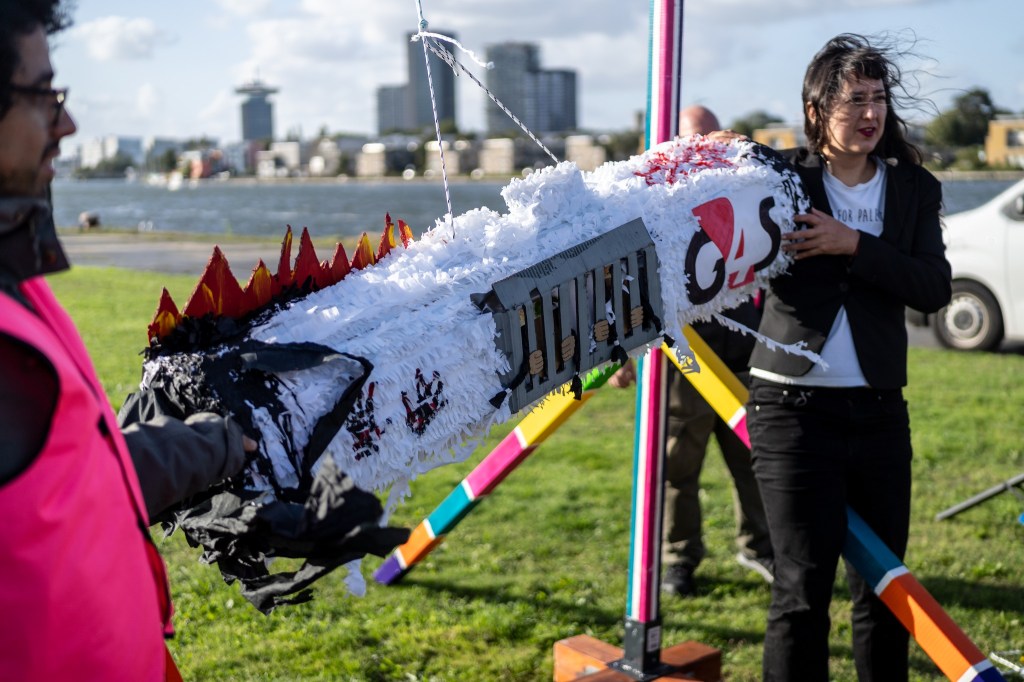
G4S: ‘Security’ corporation: for racism, human rights violations including to Indigenous People of Palestine under occupation, abuse and militarization of surveillance-security
More about this case
WAAROM G4S MOET WORDEN ONTBONDEN
Geschreven door Chihiro Geuzebroek
Waarom dagen we, als coalitie dekoloniale en Inheemse community organizers in Nederland, beveiligingsbedrijf G4S voor een dekoloniale rechtszitting wegens het schenden van rechten van Inheemsen als ook de rechten van de mens? Wat zijn de bezwaren tegen hun integriteit in het veld van ‘beveiligen’ voor winst? In dit artikel zetten we een paar schendingen op een rij die samen een beeld schetsen van enerzijds straffeloosheid na herhaaldelijk samenwerken met koloniale partners, racistische medewerkers en anderzijds onderdrukkende praktijken die diep geworteld zitten in de organisatie.
Er is een lange waslijst aan controverses en eerdere rechtszaken waar G4S bij betrokken is. We zullen ons hier beperken tot vier situaties waarin G4S zich koloniaal en/of onderdrukkend heeft geprofileerd.
- Werkzaam aan de kant van de fossiele industrie tegen Inheemse land beschermers
- Werkzaam aan de kant van koloniale bezetters tegen Palestijnse bevolking
- Moord bij uitzetting van een migrant die herhaaldelijk ‘I can’t breathe’ communiceerde
- Mishandeling en fraude die de wereld niet veiliger maar juist meer onderdrukkend en getraumatiseerd maakt
Voor mensen die G4S niet kennen als bedrijf, maken we allereerst een globale schets van deze multinational die in meer dan 90 landen opereert met hun ‘producten en diensten’. Alhoewel het bedrijf een traceerbare oorsprong kent naar een Deens nachtbewakings bedrijf dat in 1901 is opgericht hebben er zoveel overname en fusies plaatsgevonden dat het enigszins ingewikkeld lijkt verantwoordelijkheid of aansprakelijkheid te traceren voor hun delicten. In 2004 fuseerde Group 4 Falck met Securicor, van oorsprong een Brits bedrijf. Vanaf dat moment spreken we van G4S. Voor een kleine schets van Securior’s portfolio: het bedrijf managede in 1970 een detentiecentrum in Manchester en op vliegveld Heathrow. Met Group 4 beheerde het bedrijf hun eerste geprivatiseerde gevangenis. Pas na de fusie ontstond een explosie van groei. Het bedrijf onder leiding van Nick Buckles had als doel ‘De grootste private beveiligings-multinational in de wereld te worden’ wat anderen zorgen baarde dat enkel kwantiteit en niet kwaliteit prioriteit was (bron). In 2013 moest Buckles aftreden vanwege een onderzoek gestart door de Britse overheid omdat G4S te veel had gefactureerd onder andere voor diensten die ze niet hadden geleverd. Het bedrijf moest 109 miljoen pond terug betalen. Hierover straks meer, in het gedeelte over mishandeling en fraude. Buckles kon ondanks deze veroordeling op 52 jarige leeftijd aftreden als multimiljonair(bron) en het bedrijf groeide uit tot de grootste private onderneming op het gebied van beveiliging in de wereld op basis van winst; 9,76 miljard US dollar in 2020 (bron) met meer dan een half miljoen werknemers.
G4S en de fossiele industrie bedreigen Inheemse landbeschermers
Tussen 1 april 2016 en eind februari 2017 was er een verzetskamp van waterbeschermers en mensen die Inheems land verdedigden in Standing Rock, een Inheems reservaat op de grens van Noord- en Zuid Dakota in de Verenigde Staten. Het land van de Inheemse Lakota/Dakota werd en wordt bedreigd met een gigantische pijpleiding die fossiele brandstoffen moet vervoeren tussen verschillende staten in de VS. De pijpleiding zou eerst via een dichtbij gelegen stadje Bismarck lopen maar de witte bevolking daar kwam in verzet omdat de pijpleiding een bedreiging is van de watervoorziening. De pijpleiding werd vervolgens gepland door het Inheemse reservaat. Hiervoor was geen toestemming gegeven door de Lakota/Dakota en toen is het verzetskamp opgezet door Inheemse waterbeschermers met de leus “Mni Wiconi: Water is life”. Er kwam al snel bijval van vele andere Inheemse volken. In augustus 2016 bood ook Het Permanent Forum over Inheemse Kwesties van de Verenigde Naties haar steun aan de Standing Rock Sioux Tribe aan (bron). Wat zich hier vervolgens voltrok was een koloniale invasie voor natuurlijke grondstoffen over de rug van de Inheemse bevolking van Turtle Island (vandaag bekend als de VS). Waarom? Voor de private winst van Energy Transfer.
Het was genoegzaam bekend dat Energy Transfer en diens pijpleidingen een trackrecord hadden van vele olielekken. Greenpeace bracht in 2018 naar buiten dat het bedrijf in 16 jaar meer dan 13,63 miljoen liter gevaarlijke vloeistoffen heeft gelekt (bron). Dit alles weerhield G4S er niet van om huurling te zijn voor de fossiele industrie en mensen te ondermijnen die huis en haard probeerden te beschermen tegen deze koloniale invasie en milieuvernietiging. De G4S woordvoerder heeft herhaaldelijk ontkend deel te hebben genomen aan de aanval van private beveiligers, die met honden in overtreding waren op Inheems land. Een van de directe acties in verzet tegen de bouw van de pijpleiding, eindigde in het inzetten van honden door de beveiliging, die zes mensen beten, waaronder een zwangere vrouw en een kind. De particuliere veiligheidstroepen hebben ook 30 mensen in elkaar geslagen, meldden activisten. G4S ontkent betrokkenheid bij het incident. Maar op de vraag wat G4S dan wel deed heeft de woordvoerder geen antwoord gegeven. Inheemse waterbeschermers hebben een straatverbod aangevraagd bij de rechter voor zogenaamde ‘beveiligings’ bedrijven die zonder toestemming Inheems land betraden. Maar hier bleek wederom dat het rechtssysteem van de VS, dat tot in de diepste vezel berust op koloniale landonteigening, de Inheemse veiligheid niet beschermt. De koloniale ‘beveiliging’ van het bedrijf ging door.
Er werden diverse gehuurde krachten ingezet om het waterbeschermers onmogelijk te maken zich te weren tegen de fossiele industrie-invasie op hun land. Zo cirkelden er ook steeds bewakingsvliegtuigen rond het kamp van de milieubeschermers. Kyle Kirchmeier, sheriff van Morton County, zei dat de vliegtuigen daar waren om de openbare veiligheid te waarborgen, maar mensen ter plaatse zeiden dat ze werden gebruikt om de signalen van mobiele telefoons te verstoren. Landbeschermers in het verzetskamp klaagden ook over beperkte bewegingsvrijheid, met gewapende militaire controleposten die de toegang tot de kampen beperkten. Andere onderdrukking die Inheemse milieubeschermers aan den lijve ondervonden was de inzet van waterkanonnen in de nacht toen het bijna vroor. En de arm van een vrouw raakte ernstig gewond door een explosieve flitsgranaat die door de politie was gegooid, maar waarvan de politie zegt dat het mogelijk een exploderende propaanbus was. Een jonge vrouw, Vanessa Dundon werd in haar oog geraakt door een traangas huls. Als G4S echt zoveel integriteit had als ze op hun website beweren, dan hadden ze aan de kant van de Inheemse bevolking gestaan om mensenrechten, landrechten en milieubescherming te beveiligen. Maar in plaats daarvan stonden ze aan de zijde van de koloniale spelers die landjepik en levensbedreigende bedrijfsvoering met geweld erdoorheen ramden.
Wellicht was G4S hier maar een kleine speler in een cocktail van politie, private huurlingen en leger. Maar het is geen toeval dat G4S zich inlaat met aarde vervuilende industrieën die huis en haard bedreigen van Inheemse volken en zelfvoorzienende boeren. In 2012 vertelde Martin Fuller namens G4S aan Reuters: “We willen vanaf een zeer vroeg stadium betrokken zijn bij de olie spelers en -markten en een partner van hen zijn tijdens hun exploratie en ontwikkeling tot en met de operationele productiefasen.”(bron). En G4S heeft diverse grote klimaatontwrichters zoals Chevron en Shell als cliënten. In 2013 was er het nieuws dat G4S en Shell een contract tekenden waarover Henk Rump, algemeen directeur van G4S, in een reactie zei trots te zijn op de vernieuwde wereldwijde samenwerking. “Shell is bij uitstek een bedrijf dat veiligheid in haar DNA heeft’.(bron). In 2022 was er nieuws dat Shell en G4S samen zouden werken aan een net zero plan (bron). In Nigeria kwam G4S in het nieuws omdat ze honderden werknemers miljoenen naira verschuldigd waren vanwege onbetaald werk. G4S heeft hun grootste aantal mensen in de Niger Delta tewerkgesteld. Hier heeft Shell een trackrecord van inhuren van krachten die hebben gemarteld, verkracht en moord gepleegd voor het ondermijnen van (Inheems) verzet van Ogoni en andere lokale bevolking. Met een dagelijkse productie van ruwe olie van ongeveer 2 miljoen vaten is de Nigerdelta verreweg het grootste olieproducerende bekken in Afrika. Op de G4S website vermeldt het bedrijf dat ze de fossiele industrie helpen te beveiligen tegen vandalisme(bron). Het is evident dat ze hiermee uitwissen dat hun cliënten zelf vandalisme plegen tegen de aarde en aardbewoners vergiftigd. De North Dakota Access pipeline die door Lakota en Dakota land is getrokken met behulp van gewelddadige ‘beveiligings’ krachten heeft in de eerste zes maanden sinds het in operatie is al vijf keer gelekt (bron).
G4S en winst maken van bezetting kolonialisme in Palestina
Het is mogelijk in de nieuwsberichtgeving te horen over Palestina en Israël in termen van oorlog of religieus conflict maar niet de geschiedenis mee krijgt van de koloniale etnische zuivering. Gezien het belang voor de aanklacht dat G4S een koloniale bedrijfsvoering voert is het belangrijk een mini samenvatting te geven over de geschiedenis van bezetting en kolonialisme van Palestina. Zo werd in 1896 door Theodor Herzl het boek Der Judenstaat geschreven en de Jewish Colonization Association(CJA) opgericht om in Palestina te opereren. In 1905 zegt Israel Zangwill dat Joden de Arabieren moeten verdrijven of anders ‘opgezadeld zitten met het probleem van een grote vreemde populatie’. In 1920 wordt de Hagana opgericht, een zionistische ondergrondse militaire organisatie. De Hagana wordt in de jaren dertig door Britse koloniale krachten in diverse militaire terreur-technieken getraind. Plan Dalet is een militair beleidsplan dat door de Joodse paramilitaire Hagana in 1947-1948, toen de militaire capaciteit van deze zionisten was toegenomen, werd opgesteld en uitgevoerd. Dit plan was geënt op een systematische totale verdrijving van Palestijnen van hun thuisland. Het effect: In zes maanden tijd waren bijna 800.000 Palestijnen uitgezet, 531 dorpen vernietigd en elf stedelijke buurten van hun inwoners ontruimd. Sindsdien leven de resterende Palestijnen in een bezettings kolonie waarin Israël een apartheidsstaat runt waarin Palestijnse burgers systematisch onderworpen worden aan militaire onderdrukking, onteigening van huis en haard en schendingen van mensenrechten. Gezien deze geschiedenis kwalificeert samenwerken als beveiligingsbedrijf met de Israelische staat per definitie als een koloniale daad.
Hoe werkt G4S samen met de Israelische bezetting van Palestina? In 2007 tekende G4S Israël een contract met de Israeli Prison Authority om beveiligingssystemen en -diensten te leveren aan alle grote Israëlische gevangenissen en detentiecentra. G4S begon met bedienen van detentiecentra en gevangenissen waar Palestijnen onder administratieve detentie worden vastgehouden zonder aanklacht of proces op basis van een detentiebevel van zes maanden, dat voor onbepaalde tijd kan worden verlengd (bron). In 2013 begonnen advocaten voor Palestijnse mensenrechten een zaak tegen G4S (bron). De aanklacht luidt dat G4S heeft bijgedragen aan ernstige mensenrechtenschendingen, waaronder de detentie en opsluiting van kinderen in Israëlische gevangenissen, waarbij velen verklaren te zijn onderworpen aan ‘marteling en/of wrede en vernederende behandeling.’ De huidige status op de OECD website meldt: onopgelost. Maar grassroots activisme heeft tussen 2012 en 2023 wel overwinningen geboekt.
#StopG4S begon in 2012, toen Palestijnse politieke gevangenen een historische hongerstaking begonnen en toen de Palestijnse mensenrechtenorganisatie Addameer en anderen die met politieke gevangenen werkten een oproep deden om campagne te voeren tegen G4S. Vakbonden, kerken en basisbewegingen in meer dan 25 landen sloten zich aan bij de campagne die G4S-contracten ter waarde van miljoenen dollars kostte. De campagne #StopG4S heeft zijn impact al bewezen: in december 2016 verkocht G4S zijn dochteronderneming G4S Israël aan het Israëlische aandelenfonds FIMI. Tot dan toe was G4S verantwoordelijk voor het runnen van Israëlische gevangenissen waar Palestijnse politieke gevangenen zonder vorm van proces worden vastgehouden en onderworpen aan marteling en mishandeling. G4S Israël leverde ook uitrusting en diensten aan Israëlische militaire checkpoints, illegale nederzettingen en militaire en politiegebouwen.(bron)
Ondertussen zijn vele gemartelde slachtoffers van willekeurige terreuracties van Israelische autoriteiten niet dichter bij rechtspraak of herstelbeleid. In 2016 reageerde The Public Committee Against Torture in Israel met wat statistieken over marteling in Israel naar aanleiding van de de zaak Fayez Sharary (In Libanon geboren Palestijn die 23 jaar woonachtig was in London). Hij was naar Palestina gereisd met vrouw en dochter voor het vieren van het Eid Al-Adha festival. Hij werd op weg terug naar London aangehouden bij een checkpoint door Israelische soldaten. Fayez werd drie weken in het Petah Tikva Interrogation Centre gemarteld. Tijdens zijn militaire hoorzitting gaf zelfs de Israëlische rechter, Azriel Levi toe dat Fayez was gemarteld en beval zijn vrijlating. Echter, een maand na de hoorzitting merkten activisten op dat Fayez ‘nog steeds opgesloten zat in de beruchte door G4S beveiligde kerker van Israël in Ofer op de Westelijke Jordaanoever’. The public committee against torture in Israel meldde in november 2016 “Het gebruik van foltering gebeurt en is niet uitzonderlijk bij ondervragingen.” Verder werd verklaard dat er meer dan 1000 klachten over foltering zijn ingediend, maar dat geen enkele klacht heeft geleid tot een strafrechtelijk onderzoek, laat staan een proces of een veroordeling. De Israëlische wet heeft foltering nooit strafbaar gesteld en hoewel Israël de VN-verdragen tegen foltering heeft ondertekend, staat het regime erop dat het niet van toepassing is op Palestijnen. Het door de Verenigde Naties gefinancierde behandelings- en rehabilitatiecentrum voor slachtoffers van foltering in bezette Palestijnse gebieden behandelde in 2014 maar liefst 845 Palestijnse slachtoffers van foltering, waaronder 317 vrouwen en 135 kinderen.”(bron)
In juni 2023 komt het nieuws: Het moederbedrijf van G4S, Allied Universal, zou al zijn resterende activiteiten in apartheid Israël hebben verkocht na jaren van campagnes van de BDS-beweging, d Boycot, Desinvestering, Sancties (BDS)-beweging die ernaar streeft de internationale steun voor de Israëlische onderdrukking van de Palestijnen te beëindigen en druk uit te oefenen op Israël om het internationaal recht na te leven.die opkomt voor mensenrechten van de Inheemse bevolking, de Palestijnen.
Het is niet genoeg dat G4S zijn bedrijvigheid beëindigt in bezet Palestina. G4S moet nog steeds verantwoording afleggen voor haar langdurige medeplichtigheid in koloniale geweldplegingen tegen het Palestijnse volk.
Moord bij uitzetting van migrant die herhaaldelijk ‘I can’t breathe’ communiceerde
‘Jimmy Mubenga was een Angolese man die in 2010 door G4S werd vermoord tijdens een vlucht van British Airways toen hij uit Groot-Brittannië werd gedeporteerd. Drie G4S-bewakers werden beschuldigd van doodslag en vrijgesproken, ondanks bewijs dat naar voren kwam tijdens hun proces in 2014 dat ze Mubenga met geweld hadden vastgehouden terwijl hij schreeuwde: “Ik kan niet ademen.”, schrijft Antony Loewenstein in een artikel over de straffeloosheid van ge-outsourced geweld naar migranten (bron).
Zowel the Guardian als Open Democracy hebben geschreven over de onnavolgbare beslissing van de rechter in deze zaak dat extreem racistische smsjes van de G4S medewerkers die verantwoordelijk waren voor de dood van Jimmy Mubenga niet door de jury gelezen mochten worden als bewijs van onderliggende racistische houdingen ten opzichte van het slachtoffer. Hieronder volgt een paragraaf uit het Open Democracy artikel:
Hier is een grap: “Wat is het verschil tussen een cricket-knuppel en een theedoek? Geen moer. Ze wikkelen allebei mooi om het hoofd van een moslim. Fijne Sint-Jorisdag.” Dat was een van de 65 extreem racistische berichten die werden aangetroffen op de mobiele telefoon van Terrence Hughes, een van de drie G4S-bewakers die zijn vrijgesproken van de doodslag op Jimmy Mubenga. De rechter oordeelde dat deze tekst en ander racistisch materiaal dat in het bezit was van twee van de bewakers, ontoelaatbaar bewijs was.(bron)
Het is belangrijk hier op te merken dat in het proces van de rechtszaak vier G4S klokkenluiders naar voren zijn gekomen om bewijsmateriaal voor te leggen dat eigen personeel meerdere keren G4S senioren hebben gewaarschuwd dat mogelijk dodelijk geweld werd gebruikt op de werkvloer (bron).
In een artikel van The Guardian uit 2021 staat een andere zaak beschreven van racistische cultuur en fysiek geweld tegen vastgehouden mensen in het detentiecentrum Brooke House bij Gatwick gerund door G4S. Een klokkenluider bewaker werd gepest voor het lunchen aan een tafel met enkele gedetineerden: “Waarom zit je met deze beesten?” Iemand anders werd aangesproken door een G4S bewaker dat plantaan chips voor N-woord waren. En meerdere bewakers waren lid van extreem rechtse groepen die openlijk racistisch zijn. Er is ook iemand geweest die een G4S-officier heeft gefilmd toen hij een gedetineerde wurgde, zijn vingers in de nek van de gedetineerde duwde en in zijn oor fluisterde: “Niet bewegen, stuk stront, ik ga je verdomme in slaap brengen.”(bron)
In een document waarin tientallen voorvallen van G4S en mishandeling en racisme op een rij wordt gezet wordt opgemerkt dat al in 2010 Dame Anne Owers, de voormalige hoofdinspecteur van gevangenissen, Brook House “onveilig” vond, met pesten, geweld en drugs: “Onze enquêtes, interviews en observaties wezen allemaal op een zekere mate van wanhoop onder de gedetineerden over veiligheid bij Brook House die we zelden zijn tegengekomen. Ten tijde van de inspectie was Brook House een “onveilige plek”(bron). We zien keer op keer dat er geen sprake is van incidentele fouten maar structurele cultuur van misbruik van machtspositie en mishandeling verpakt en gecommodificeerd als ‘beveiliging’.
G4S en Mishandeling en fraude die de wereld meer traumatiseert dan veilig stelt
De lijst is lang met G4S en controverse. Zo is er de wiki-lijst en de lijst van we-own-it of de human cost of G4S watch lijst met dodelijke incidenten en er is vast nog veel meer dan wij in een internet search boven tafel krijgen. Wat belangrijk is om in acht te nemen isde rol die consistentie van misbruik van macht speelt om de wereld meer bruut, koloniaal en getraumatiseerd te maken: een misdaad van enorme omvang en impact. Het is opmerkelijk dat G4S bijna geen kans voorbij laat gaan zich in te laten met gewelddadige opdrachtgevers: van warlords in Afghanistan(bron) tot ‘beveiliging’ na de invasie in Irak door de VS.
Met betrekking tot mishandeling is er ook een documentaire geproduceerd door BBC waarin iemand undercover gaat werken voor G4S om de werkcultuur bloot te leggen in een jeugdgevangenis bedoeld om jonge daders bij te staan op het juiste pad te komen. De documentaire openbaart nog maar het topje van de ijsberg van giftige werkcultuur. Consistent is dat het gevaarlijk wordt om klokkenluider te worden aangezien teams afhankelijk worden gemaakt van het behalen van bepaalde performance doelstellingen. Een fout melden kan baanzekerheid ondermijnen. Een van de meest verbazingwekkende voorbeelden hoe een giftige werkcultuur een hele werkvloer stil maakt is het voorbeeld van Thabo Bester. G4S hield vol dat de veroordeelde verkrachter en moordenaar Thabo Bester in zijn cel was overleden(bron). Later bleek echter dat Bester uit de G4S gerunde gevangenis in Zuid Afrika was ontsnapt. En nu in 2023 lezen we in het nieuws dat acht van de twaalf gearresteerden voor vermeende collaboratie in de ontsnapping G4S medewerkers waren en in sommige gevallen nog steeds zijn (bron).
De lijn tussen beveiliger en crimineel is ver te zoeken in meerdere gevallen. G4S wordt wel vaker gewaarschuwd door eigen personeel over het aannemen van mensen met een gewelddadig verleden of karakter. De USA today meldt:
G4S heeft soms macht, autoriteit en wapens gegeven aan individuen die de dreiging vertegenwoordigen waartegen ze zich moeten beschermen. Uit documenten blijkt dat de Amerikaanse dochterondernemingen van het bedrijf ten minste 300 werknemers hebben aangenomen of in dienst gehouden met twijfelachtige gegevens, waaronder strafrechtelijke veroordelingen, beschuldigingen van geweld en eerdere carrières bij wetshandhaving waarbij ze in schande waren geschorst. Sommigen gingen door met het verkrachten, mishandelen of neerschieten van mensen – ook tijdens hun dienst.(bron)
Een zo’n voorbeeld is Daniel Fitzsimons (werkzaam voor Armorgroup dat onderdeel is van G4S). Hij heeft twee collega’s vermoord in de greenzone in Irak. Een klokkenluider had G4S talloze e-mails gestuurd enkele dagen voordat Fitzsimons in Irak aankwam om het bedrijf te waarschuwen dat het leven van collega-aannemers in gevaar zou worden gebracht als hij een wapen zou krijgen. Fitzsimons had een strafblad, inclusief veroordelingen voor vuurwapens en geweldpleging. En hij was getraumatiseerd door eerdere ervaringen in Kosovo. Er werd wederom niet naar de klokkenluider geluisterd (bron).
Een ander voorbeeld is het aannemen van Philip Mayo die ergens was ontslagen nadat hij het gezicht van een gevangene had toegetakeld en hem zo lang had geslagen dat zijn rug was gebroken. Maar binnen enkele maanden gaf G4S hem een baan. Er waren mensen op de werkvloer die aan de bel trokken over grensoverschrijdend gedrag. Hij viel vrouwen lastig en zette veiligheidscamera’s op een manier dat hij vrouwen kon bespieden in de kleedkamer. En toen overviel hij een schoonmaker die hij tegen de muur drukte en haar kleding van haar lijf scheurde. Toen zij hem smeekte op te houden zei hij: “Ik doe wat ik wil, ik ben de beveiliging”
Dit lijkt sinister genoeg het motto te zijn van het bedrijf G4S dat er niet voor schroomt op het moment dat ze merken dat ze niet de juiste performance score hebben bij een alarmcentrale die 92% van de tijd binnen 10 seconden moet worden beantwoord, dan maar zelf allemaal nep-nood belletjes in scène zette zodat het prestatie rapport niet deed vermoeden dat er onder de norm werd gepresteerd (bron). En hoe zit het met die boete van 109 miljoen? Dit kwam naar aanleiding van het te veel factureren van het ministerie van justitie voor het taggen (electronisch monitoren) van mensen(bron). Het tagging systeem functioneerde niet en zo kwamen mensen met electronische enkelbanden in problemen zonder dat ze een fout hadden gemaakt. Maar ook factureerden ze voor mensen die niet eens leefden.
Het was een groot schandaal in 2013. Maar in 2015 kwam het nieuws dat G4S en Serco beveiligingsbedrijf nog steeds miljoenen ontvingen voor taggen(bron). En in 2023 bericht het nieuws dat de aanklacht tegen drie executives van G4S zijn ingetrokken (bron).
Vanuit een dekoloniale agenda staat het demilitariseren van de wereld bovenaan de agenda. Evenals het versterken en verdiepen van aansprakelijkheid en verantwoordelijkheid naar de aarde en elkaar. Het mag uit deze beknopte weergave van malfunctioneren van G4S blijken dat dit niet de partij is die mensen die vluchten voor geweld of honger van huis en haard kan bijstaan in hun onderkomen, of mensen die in geweld of andere misdaad zijn gevallen te helpen hun leven te verbeteren. Van huurlingen voor winst tot geldtransporten, G4S heeft te veel macht geconcentreerd en te weinig integriteit. Om veiligheid te vergroten moeten we het misbruik van macht ontbinden.
ABOUT THE AUTHOR
Chihiro Geuzebroek is co-founder of Aralez Foundation, an organization dedicated to strengthen and deepen decolonial coalition work in the Netherlands to increase solidarity with frontlines aswell as to impact culture and activism at home. Chihiro is a Bolivian-Dutch woman with Quechua roots who has fought for climate justice since 2009 and is known to advocate anti-racism, Indigenous leadership and liberation and anti-militarism within the environmental movement.
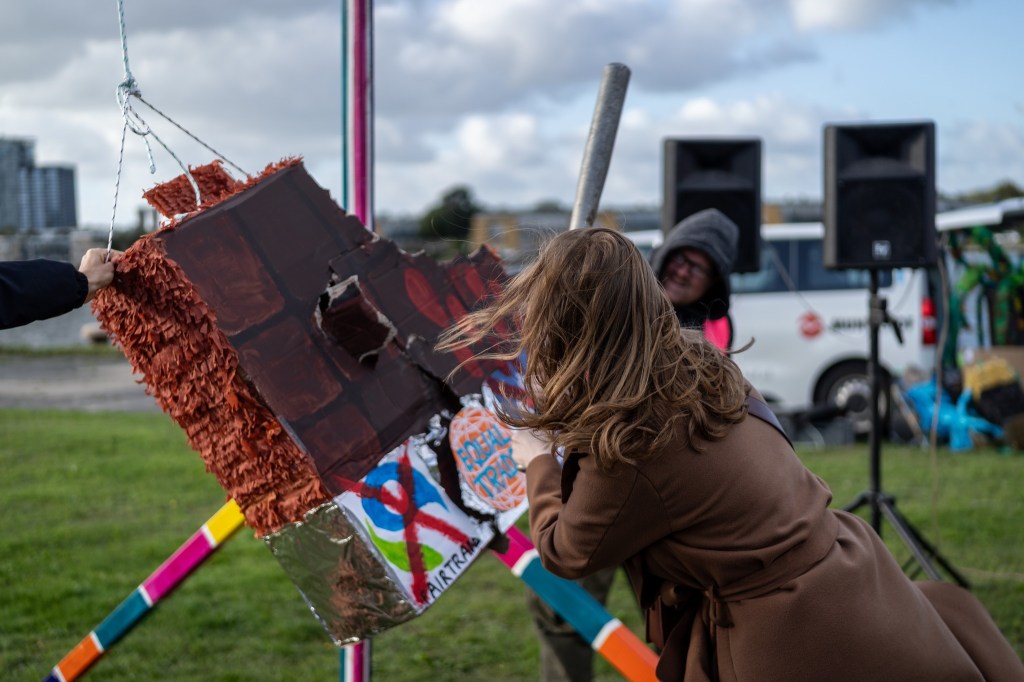
Chocolate Industry
More about this case
Unmasking the Shadows of Economic Neo-Colonialism: The Netherlands’ Role in Ghana’s Cocoa Trade, and the Quest for Liberation
Written by: Max Koffi (CEO, Africa In Motion & Founder, Equal Trade Alliance)
INTRODUCTION
Africa is often referred to as the world’s richest continent due to its abundant reserves of raw materials, natural resources, minerals, and agricultural treasures. However, it is burdened with a troubling paradox: despite its wealth and having the world’s youngest population, Africa is home to some of the most impoverished people globally. This paradox is not a random occurrence but a clear testament to the enduring legacy of exploitation that has plagued the continent for centuries.
The rise of industrialized nations, their affluence, and their global dominance are inextricably tied to the ruthless exploitation of Africa’s people and resources. From the darkest chapters of history, including slavery and colonialism, the scars run deep, weakening the continent’s prospects even today. This ongoing exploitation has metamorphosed into what we now recognize as economic neo-colonialism, a nefarious continuation of historical injustices.
At the core of this modern-day oppression lies the international trade system imposed on African nations. Raw materials are sold at meager prices, while the processing of these resources generates immense wealth in industrialized nations. Meanwhile, African populations continue to grapple with extreme poverty.
One specific example used by Africa In Motion to illustrate this unequal trade system is the cocoa trade between Ghana and the Netherlands, which is, in essence, a violation of human rights. Africa In Motion conducted research in collaboration with Wageningen University titled ‘Beyond Fair Trade,’ which delved deep into the lives of cocoa farmers in Ghana, highlighting the stark disparity between their actual income and what is necessary for them to achieve a dignified livelihood. This inquiry not only shed light on the challenges faced by these essential contributors to the cocoa industry but also sparked innovation.
Six months later, the foundation, in collaboration with Rethinking Economics and ESTIEM’s Social Environmental Responsibility Committee, embarked on a new mission to develop and explore the feasibility of a revolutionary certification scheme. This scheme aimed to ensure genuine fairness in profit distribution throughout the entire cocoa value chain, resulting in the creation of the “Equal Trade Certification.”
This article presents the remarkable outcomes of these two research initiatives, offering fresh perspectives on reshaping the cocoa trade landscape, prioritizing the well-being of cocoa farmers, and guaranteeing their rightful share of the cocoa industry’s profits.
Additionally, this article exposes how the Netherlands, through its multinational corporations and governmental policies, plays a pivotal role in perpetuating the neo-colonial relationship with Ghana within the cocoa trade. It unravels the intricate web of interests and power dynamics that continue to undermine the aspirations of Africa’s youngest and most promising generation.
Yet, this narrative is not one of despair but of hope and revolution. I conclude with the introduction of a revolutionary certification scheme designed to dismantle the chains of economic neo-colonialism. I call upon European progressive civil society organizations to stand in solidarity, supporting this liberating struggle to free Africa from the modern chains of exploitation and usher in a new era of equitable prosperity for all.
THE TRUTH ABOUT THE COCOA VALUE CHAIN
Perpetuating intergenerational poverty in Ghana
Some 95% of the global cocoa production originates from smallholders, who work on land plots of 1 to 3 hectares. Most of them live in Western Africa, with Ghana and Côte d’Ivoire accounting for 70% of global cocoa production, and for only 1% of global chocolate manufacturing. Cocoa beans are typically exported to Europe and North America to be processed into chocolate. The Netherlands is the main importer of cocoa, and 85% of the beans come from West Africa (Ghana, Ivory Coast).
Ghana is the second-largest cocoa producer globally, producing about 800,000 tons of cocoa beans annually. Cocoa is the mainstay of the agricultural sector of Ghana, accounting for about one-third of the country’s export revenue. The favorable climatic conditions in Ghana have increased the cultivation of Ghana’s cocoa crop by more than 20% in the previous growing season. It is to be noted that although Cote d’Ivoire is the largest producer and exporter of cocoa beans in the world, Ghana is also well-known for producing high-quality cocoa beans that command a premium price of Cocoa in the world market. The high-quality Cocoa in Ghana is mainly due to the country’s grading system that takes only top-quality cocoa beans from the farmers.
Cocoa farming is the backbone of Ghana’s economy. 800,000 small scale cocoa farmers make up 60% of the country’s agricultural base. However, despite their importance to Ghana’s development, the large majority of cocoa farmers do not make a living income to provide a sustainable livelihood for their families, let alone invest in their farms and cocoa trees.
Low cocoa prices for consecutive years and falling productivity combined with high transaction and high input costs, put pressure on farmers’ income and subsequently on cocoa supply. While companies can hedge cocoa at the stock exchange and further reduce the risks, farmers are at the losing end of the supply chain. They bear virtually all the risks of induced price volatility, whilst having the weakest economic reserves in the entire supply chain.
The chocolate industry makes about $130B through cacao farmers, who make only $1 or less a day. The report, published in 2015, demonstrates that the average farmer will make between $1,400-$2,000 profit a year, at most about $5 a day, which will need to support 6-10 dependants. So a cocoa farmer and their dependents will be living on between $0.50-$0.84 a day, well below the World Bank’s extreme poverty line of $1.25 a day.
By earning just about $0.80/a day, farmers struggle to meet household needs. A 2010 study found that their expenditure, excluding farming inputs, exceeded their mean total income. Children in cocoa-growing villages are particularly affected by poverty. Because their parents are unable to hire adults, children may become victims of child labor. Furthermore, children from low-income cocoa farming families are less likely than their higher-income friends to attend school. Despite the elimination of school fees, costs such as textbooks and uniforms continue to be a financial burden for low-income families. Since homes with illiterate heads are more likely to be poor, limited education perpetuates intergenerational poverty.
FACTS & FIGURES
1. Produced in the south – consumed in the north

![The World's Biggest Chocolate Consumers [Infographic]](https://lh7-rt.googleusercontent.com/docsz/AD_4nXdra7G7mcVzXJgKKiOScar58Jb78GOkIae2BcJIAQNIpuBRa4TCpNyAzMw2lIz7VQKsv7Y7D20KpMmKwMoQ0sdu6-lu09ZhAr9hkaKdDrNePVf86EJIPHPApComs8SfO_U2jo4M4FsnCtvJpeXER0w?key=3YpbhO2OHeUkOcvZWuy7RT1X)
2. Discrepancy in wealth redistribution along the cocoa value chain

Cocoa farmers are excluded from sharing in the profits generated across the cocoa supply chain. So stark is this imbalance that the average price of a single chocolate bar sold in a first world country will often exceed what a cocoa farmer earns in a week. For many cocoa farming communities, access to modern techniques and environmental practices that could help farmers increase their yields remains an unattainable dream. The result is that, even as demand for chocolate grows, the ability of farmers to supply enough quality cocoa beans will be threatened.
3. Modern slavery in action


The grim reality of producing cocoa beans for a multi-billion-dollar chocolate industry at less than $1 per day is unequivocally modern slavery in action. This exploitative system forces countless cocoa farmers in Ghana, into deplorable conditions similar to indentured servitude. They toil tirelessly to sustain an industry that thrives on their backbreaking labor while they remain trapped in a cycle of poverty. The glaring disparity between their meager earnings and the exorbitant profits amassed by chocolate giants such as Nestlé, which returned CHF 16.9 billion to its shareholders in 2019, represents a violation of basic human rights. It underscores the urgent need for systemic reform, ethical sourcing, and fair compensation to eradicate this form of contemporary enslavement in the cocoa supply chain.
Dutch Multinationals and Government’s Role in Ghana-Netherlands Cocoa Trade
From dehumanizing slavery and colonialism to economic neo-colonialism
Historical review
The trade relationship between the Netherlands and Ghana concerning cocoa beans has a historical evolution. It originated during the era of transatlantic slavery, where the Dutch were deeply involved in the slave trade and the cultivation of commodities like cocoa in their colonies, including what is now Ghana. Cocoa was cultivated by enslaved Africans on plantations, although it was not a major commodity during this period.
In the colonial era, Ghana (then the Gold Coast) was under British rule, and the Dutch influence in the region declined. The British took control of the cocoa industry, and cocoa became a significant cash crop in Ghana. By the early 20th century, Ghana had emerged as one of the world’s leading cocoa producers.
Following Ghana’s independence in 1957, cocoa production remained a pivotal part of its economy. The Ghana Cocoa Board (COCOBOD) was established in 1947 to regulate and promote the cocoa industry, ensuring ‘fair’ prices for cocoa farmers and overseeing cocoa bean exports.
Nowadays, the Netherlands continues its role as a major importer of Ghanaian cocoa beans, claiming sustainability and ethical sourcing practices. Dutch multinationals, including Royal Dutch Shell, Unilever, and Cargill, are key players in the Ghana-Netherlands cocoa trade, involved in all stages of the supply chain, from sourcing cocoa beans in Ghana to processing them into cocoa-based products. The Dutch government actively supports these companies, and claims promoting sustainability and responsible business practices, establishing the Netherlands as a major global cocoa industry player with a strong emphasis on ethical and sustainable cocoa production.
The Role of Dutch Multinationals
Royal Dutch Shell
While primarily an energy company, Shell has diversified interests and subsidiaries in various sectors, including food and agriculture. Shell plays a vital role in the cocoa trade, particularly in transportation and logistics. Its expertise in shipping and logistics is crucial in moving cocoa beans from Ghana to the Netherlands and other cocoa-processing hubs worldwide.
Unilever
Unilever is a multinational consumer goods company with a significant presence in the Netherlands. The company actively participates in the cocoa trade by sourcing cocoa beans from Ghana and other cocoa-producing countries for its chocolate and cocoa-based products, including popular brands like Magnum and Ben & Jerry’s.
Cargill
Cargill is one of the world’s largest agricultural and food companies, with a substantial presence in the Netherlands. Cargill is deeply involved in the cocoa industry, engaging in cocoa sourcing, processing, and trading. The company purchases cocoa beans from Ghanaian farmers, processes them in its facilities, and supplies cocoa-based products to various industries, including food and confectionery.
The Dutch profit machine
Numerous other Dutch firms play a central role in the cocoa trade between Ghana and the Netherlands, generating huge profits through diverse channels in this sector. They engage in:
Import and Processing: Dutch companies import raw cocoa beans from Ghana, converting them into cocoa products like cocoa powder, cocoa butter, and chocolate. Profits are garnered from selling these processed products domestically and internationally.
Trading and Export: They serve as intermediaries between Ghanaian cocoa producers and global buyers, buying cocoa beans in bulk from Ghana and exporting them, earning a profit margin and employing risk management strategies.
Logistics and Transport: Dutch logistics firms are responsible for cocoa bean transportation, profiting from shipping, handling, and warehousing services, ensuring timely delivery and minimizing losses.
Value-Added Products: They create premium cocoa-based products, like chocolates and cocoa-based ingredients, which command higher profit margins due to their quality and added value.
Certifications and Sustainability: Some invest in ethical and sustainable cocoa initiatives, marketing these products at premium prices and thus generating higher profits.
Research and Innovation: Dutch companies invest in cocoa processing techniques, product development, and operational efficiency, leading to cost savings and increased profitability.
Retail and Distribution: Companies with retail operations sell cocoa-based products directly to consumers, earning profits from sales and brand recognition.
Financial Services: Dutch banks provide financing, credit, and risk management services, earning interest and fees.
Market Intelligence: Companies engaged in market research offer valuable cocoa market insights, potentially generating revenue from consulting services, aiding stakeholders in making informed decisions. Dutch companies exploit these multifaceted roles to thrive within the cocoa trade industry.
The Role of the Dutch Government
The Dutch government plays a crucial role in facilitating the cocoa trade between the two countries. It helps create a conducive environment for trade by implementing trade policies, regulations, and agreements that promote smooth cocoa imports from Ghana. The Dutch government plays an active role in supporting Dutch multinational companies involved in the cocoa trade. They do this through various means:
Sustainable Cocoa Initiatives: The government is part of the “Initiative on Sustainable Cocoa” (ISCB), which aims to improve cocoa farmers’ lives, eliminate child labor, and reduce environmental impact in cocoa production through collaboration with industry, civil society, and cocoa-producing countries.
Funding and Grants: Financial support and grants are provided to Dutch companies for projects that promote sustainability, including farmer training, certification, and sustainable farming practices.
Public-Private Partnerships (PPPs): The government facilitates partnerships between government, businesses, and civil society to collectively address cocoa sustainability issues.
Certification Programs: Encouragement of cocoa certification programs like Fair Trade and Rainforest Alliance to promote ethical and sustainable cocoa production.
Export Credits and Trade Promotion: Export credit agencies may offer insurance or financing to Dutch cocoa trade companies, reducing financial risks.
Advocacy for Responsible Business Conduct: Advocating for responsible business practices among Dutch companies abroad, including adherence to international guidelines on human rights, labor, and environmental protection.
Legislation and Reporting Requirements: Introducing laws and reporting requirements to enhance transparency and due diligence in supply chains, such as the “Child Labor Due Diligence Law.”
Diplomatic Efforts: Engaging diplomatically with cocoa-producing countries to encourage sustainable cocoa production and address issues like deforestation and child labor.
Various Dutch ministries are engaged in the cocoa trade between the Netherlands and Ghana. These include the Ministry of Foreign Affairs, which maintains diplomatic relations; the Ministry of Economic Affairs and Climate Policy, handling economic aspects; the Ministry of Agriculture, Nature, and Food Quality, involved in agricultural policy; and the Ministry of Foreign Trade and Development Cooperation, focused on sustainable trade and development projects. The extent of their involvement depends on specific policy matters and initiatives related to the cocoa trade between the two countries.
The Issue With The Status Quo
Empty promises from the Dutch Government and multinationals
Farmer poverty is an important element for CSR initiatives in the chocolate sector. Despite two decades of sustainability programs, voluntary action, and well-intentioned promises by the chocolate industry and policy makers, cocoa farmers are still confronted with issues such as extreme poverty, child labour, gender inequality and deforestation on a daily basis. Multinationals and NGO alike operate outreach programs focused on raising income and tackling some of the worst consequences of the extreme poverty witnessed in the industry.
The West African cocoa industry, where two-thirds of the world’s cocoa is grown, is notorious for its human rights abuses. From hazardous child labor to child trafficking to the poverty wages that farmers earn, little of the cocoa supply chain in West Africa is “fair” or “sustainable.” Yet over the past decade, certification schemes – such as Rainforest Alliance, Fairtrade International, and Fair Trade USA – and so-called sustainability programs – like Mondelez’s Cocoa Life, Nestlé’s Cocoa Plan, Mars’ Cocoa for Generations, and Hershey’s Cocoa For Good – have proliferated. This has led to a confusing array of labels on chocolate products that all purport that the cocoa was produced under “decent working conditions” and “sustainably.”
Scholars investigating their actual impact state that the interventions did not substantially improve the situation. A new report from the Fairtrade Foundation and Mondelez International reveals a concerning trend. Sector-wide efforts to improve the lives of farmers, communities and the environment are having little impact; the scope of proposed solutions is not even in the ballpark of addressing the scope of the problem.
Multinationals and NGO alike operate outreach programs focused on raising income and tackling some of the worst consequences of the extreme poverty witnessed in the industry. Chocolate manufacturers usually have cocoa sustainability programs and certification schemes, but these certificates we see on the packaging are related to non-financial support. Certainly, some companies make those programs for the purpose of marketing and attracting consumers. Some of them like to show off their certificates in front of the customers and/or competitors, but none of them really makes an impact on helping the farmers when it comes to eradicating poverty, child labor, women rights abuses, and environmental damages.
These schemes supposedly provide farmers with increased income, improved training, and increased access to the market. They “require” farmers to uphold certain human rights and environmental standards and then put their labels on cocoa products to mark them as allegedly free of labor and environmental abuses. Yet time and time again certification schemes have been shown to fail those who need them most – cocoa farmers, their children, and their communities.
Similar to how Dutch administrators remained inactive during the periods of the slave trade and colonization, they persist in ignoring systemic injustices. Even in the modern era, despite explicit warnings from scientists and researchers concerning pressing issues like severe poverty, child labor, gender disparities, and environmental deterioration in Ghana, the Dutch government persist in ignoring systemic injustices, and remain reluctant to adopt significant measures to address the misbehavior of multinational corporations operating in the cocoa industry. The current cocoa trade system sustains the violation of fundamental rights for Ghanaian cocoa farmers to a dignified life, and a government that remains passive becomes an accomplice in the extensive human rights abuses.
J’ACCUSE!
Legal Complaint Against the Dutch Government for Involvement in Human Rights Violations within the Cocoa Supply Chain and Neglecting Assistance to At-Risk Future Generations in Ghana.
I charge the Dutch Government on behalf of the Ghanaian cocoa farmers and in light of the gross human rights violations occurring within the cocoa supply chain. The grave allegations stem from the Dutch Government’s active complicity in facilitating and supporting Dutch multinational corporations engaged in the cocoa industry, thereby perpetuating a system that is equivalent to contemporary slavery and exploitation.
As outlined in this article, the cocoa supply chain, driven by multi-billion-dollar chocolate conglomerates, exploits countless Ghanaian cocoa farmers. These farmers, earning less than $1 per day, are subjected to deplorable conditions akin to indentured servitude. Their toil sustains an industry that thrives on their backbreaking labor while they remain trapped in an unending cycle of poverty.
The Dutch government’s non-assistance and complicity in the exploitation of Ghanaian cocoa farmers are clear violations of human rights principles and ethical standards. It is high time for the Dutch government to take responsibility for its role in this exploitative system and adopt substantial measures to address the misconduct of multinational corporations operating in the cocoa industry. Ethical sourcing, fair compensation, and systemic reform are urgently needed to eradicate the modern-day slavery that plagues the cocoa supply chain. Failure to do so would be a grave betrayal of the principles of justice, dignity, and human rights that should underpin all international trade relationships.
Key Allegations:
- Violation of Basic Human Rights: The article unequivocally demonstrates that the glaring disparity between the meager earnings of Ghanaian cocoa farmers and the exorbitant profits accrued by chocolate giants, such as Unilever, Nestlé, or Cargill, constitutes a violation of their basic human rights, including the right to a fair and dignified life.
- Complicity in Exploitation: The Dutch Government’s active role in creating a conducive environment for the cocoa trade between Ghana and the Netherlands, including the implementation of trade policies, regulations, and agreements, has enabled Dutch multinational corporations to profit immensely from the exploitation of Ghanaian cocoa farmers. This complicity echoes historical injustices during periods of the slave trade and colonization when Dutch administrators remained inactive.
- Ignoring Warnings: Despite explicit warnings from scientists, researchers, and humanitarian organizations concerning severe poverty, child labor, gender disparities, and environmental degradation in Ghana’s cocoa sector, the Dutch Government has chosen to turn a blind eye. This inaction not only contravenes moral principles but also raises questions regarding compliance with international human rights law.
- Government’s Complicity: By remaining passive in the face of extensive human rights abuses within the cocoa supply chain, the Dutch Government becomes an accomplice in this injustice, further exacerbating the suffering of Ghanaian cocoa farmers.
In light of these serious allegations, we urge the Dutch government to take immediate responsibility for its role in this exploitative system. We demand that substantial measures be adopted to address the misconduct of multinational corporations operating in the cocoa industry. These measures must include, but not be limited to, ethical sourcing practices, fair compensation for cocoa farmers, and systemic reforms aimed at eradicating the modern-day slavery that plagues the cocoa supply chain.
Resolution Requested:
Acknowledgment of Complicity: We request that the Dutch Government acknowledges its complicity in the human rights violations within the cocoa supply chain.
Compliance with International Standards: We implore the Dutch Government to demonstrate its commitment to upholding international human rights principles and ethical standards by taking concrete actions to rectify the current state of affairs.
Systemic Reform: We urge the Dutch Government to take immediate and substantial measures to address the misconduct of Dutch multinational corporations operating in the cocoa industry. This includes promoting ethical sourcing, ensuring fair compensation for cocoa farmers, and fostering systemic reform within the industry.
We urge the Dutch government to:
- Step out of the Sustainable Cocoa Initiatives: The government is part of the “Initiative on Sustainable Cocoa” (ISCB), which aims to improve cocoa farmers’ lives, eliminate child labor, and reduce environmental impact in cocoa production through collaboration with industry, civil society, and cocoa-producing countries.
- Use Funding and Grants exclusively for Dutch companies and NGO’s who adopt the Equal Trade Certification: Financial support and grants are provided to Dutch companies for projects that promote sustainability, including farmer training, certification, and sustainable farming practices.
- Promote Public-Private Partnerships (PPPs): Proactively encourage collaborations between the government, businesses, and civil society to jointly tackle cocoa sustainability challenges, with a focus on embracing and promoting the implementation of Equal Trade certification.
- Cease endorsing Certification Programs like Fair Trade and Rainforest Alliance: Cocoa certification initiatives such as Fair Trade and Rainforest Alliance, aimed at fostering ethical and sustainable cocoa production, have proven ineffective and are often characterized by unfulfilled commitments.
- Deliver Export Credits and Trade Promotion exclusively to adopting Equal Trade principles: Export credit agencies may offer insurance or financing to Dutch cocoa trade companies, reducing financial risks.
- Instead of advocating for Responsible Business Conduct, let’s consider outlining potential sanctions for Dutch companies operating abroad that fail to adhere to responsible business practices.
Failure to address these pressing issues would not only tarnish the reputation of the Dutch government but also constitute a grave betrayal of the principles of justice, dignity, and human rights that should underpin all international trade relationships.
We anticipate a prompt and comprehensive response to this complaint, outlining the specific measures that the Dutch government plans to implement in order to address this situation and safeguard the human rights of Ghanaian cocoa farmers. In the absence of such a response, Africa In Motion will initiate formal legal proceedings by bringing this complaint before the International Court of Justice and also request the establishment of a parliamentary inquiry committee.
The Equal Trade Certification
Decolonizing the Cocoa value chain and restoring Ghana’s sovereignty
The “Equal Trade Certification” represents a groundbreaking approach to addressing the cocoa industry’s poverty paradox in Ghana. It has the potential to instigate a profound systemic shift in the cocoa trade dynamics. Under this scheme, cocoa producers would no longer sell their beans at a fixed minimum price but would instead share in the financial gains of the (semi-)finished chocolate products, significantly enhancing the living standards of African farmers.
The ramifications of this shift are profound. African states, laborers, and farmers would no longer occupy the peripheral margins of the trade equation but would ascend to positions of partial ownership within the expansive value chain. This transformation ensures that compensation aligns with each distinct step of value addition encapsulated within the broader value chain.
In essence, the Equal Trade certification heralds an era where trade becomes a collaborative endeavor, transcending the traditional exploitative supplier-buyer relationship. It empowers African producers by affording them a rightful share in the economic benefits generated by their labor and resources. This pioneering approach embodies the principles of fairness, inclusivity, and equity, promising a more equitable future for all participants in the global trade system.
The comprehensive adoption of Equal Trade Certification in African raw material value chains, including agriculture, has the potential to significantly boost state revenues. This additional income would be channeled into the Equal Trade Wealth Fund, which would then reinvest these funds into the communities supporting these farmers. This approach aims to drive profound structural changes, improving the socio-economic conditions in raw material-producing countries.
The expected result is a notable rise in the living standards within these communities, addressing various issues rooted in extreme poverty. These challenges range from youth migration in search of better prospects to the brain drain depleting talent from the continent. Moreover, it tackles concerns such as child labor, labor exploitation, environmental impacts, gender inequality, human rights violations, and political instability often linked to resource conflicts.
In essence, the widespread implementation of Equal Trade Certification has the potential to reshape not only the economic but also the social and political landscapes of African raw material-producing nations. It offers a powerful tool for addressing deeply entrenched challenges and paving the way for a brighter future.
‘EQUAL TRADE CHOCOLATE TASTES BETTER’ CAMPAIGN
The call to action
The cocoa industry will be our point of departure to gradually advocate for the application of Equal Trade Certification within the value chains of every raw material (agriculture, minerals) that is exported by African countries to the West including Europe.
In order to reach a dominant position in the certification ladder, pressure and awareness need to be created among consumers and politicians in Western countries. Encouraging African politicians to unite on this matter is essential. Once enough external pressure on companies is created by consumers and politics, the Equal Trade certification has a significantly larger chance of succeeding and being adopted by the most important companies in the Cocoa value chain.
The ‘Equal Trade Chocolate Tastes Better’ campaign is set to run simultaneously in both Ghana and the Netherlands. Rooted in the core principle of promoting fair economic distribution, this campaign seeks to address historical injustices that have plagued traditional colonial trade systems. It represents a departure from the conventional practice of selling raw materials at low prices and instead advocates for a revolutionary shift.
This innovative approach directly challenges the obstacles posed by existing neo-colonial trade dynamics and has the potential to trigger significant systemic change. By shifting the paradigm of trade dynamics, the campaign strives to enhancing the lives of Ghanaian cocoa farmers and reshaping the future of the global cocoa trade.
As consumers, we often find ourselves powerless when it comes to addressing the intricate problems within industries like cocoa production, resulting in a perpetuation of the status quo. Extreme poverty serves as a foundational issue underlying many of the challenges in the cocoa sector, amplifying their complexity. The prevailing consumer landscape further exacerbates these inequalities, emphasizing the urgent need for a shift in consumer perspectives.
The Equal Trade Certification presents a practical avenue through which consumer influence can be harnessed to promote trade justice and offer a tangible solution to tackle these multifaceted issues. We extend an invitation to all civil society organizations, youth groups, influencers, media outlets, and NGOs in both Ghana and the Netherlands to unite in the fight against economic neo-colonialism within the cocoa trade. Together, we can work towards its eradication.
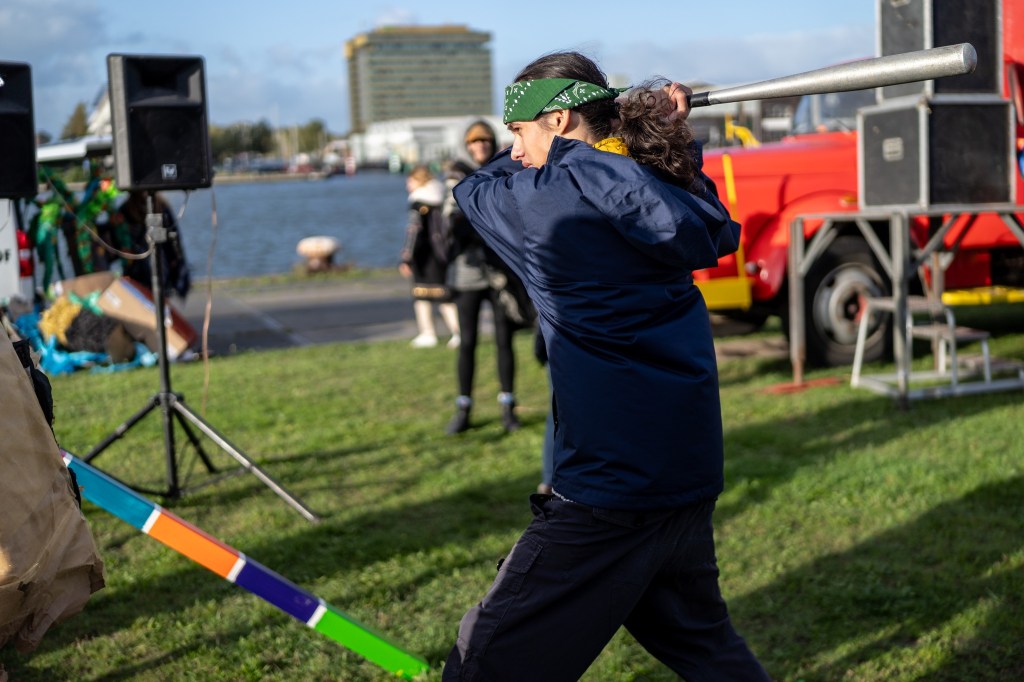
Lady Justicia
More about this case
Aanklacht tegen Vrouwe Justitia
Geschreven door Fadjar Schouten-Korwa
Hierbij dienen wij bij het 1492 People’s Tribunal een aanklacht in tegen Vrouwe Justitia.
Vrouwe Justitia is de personificatie van het koloniale rechtssysteem. Dit rechtssysteem waarborgt niet de rechten van de Inheemse volken. Haar blinddoek is geen waarborg voor onpartijdigheid. Haar blinddoek maakt dat zij
BLIND is voor de daden van de kolonisator;
BLIND is voor de onrechtmatige inname van het voorouderlijk land;
BLIND is voor de vernietiging van de natuur en alles wat er leeft;
BLIND is voor de hebzucht;
BLIND is voor het ONRECHT.
Het onrecht dat het leven van de Inheemse mensen raakt in al haar facetten. Inheemse gemeenschappen zijn verdreven van hun land. Vrouwen raken vermist, worden verkracht en gedood. Kinderen worden geroofd. De natuur wordt vernietigd. En tegen deze misdaden wordt veelal niets gedaan: er is geen onderzoek, de daders worden niet vervolgd, de toegang tot het recht wordt ontzegd.
Een duidelijke situatie van dit onrecht vindt plaats in het grootste regenwoud ter wereld – 6,9 miljoen vierkante km, verspreid over 8 verschillende landen – Brazilië, Bolivia, Colombia, Ecuador, Guyana, Peru, Venezuela en Suriname: de Amazone. In de Amazone – en overal elders in de wereld – hebben de koloniale bezetters, zoals het Spanje van Columbus, de oorspronkelijke Inheemse bevolking verdreven van hun land. Een veelgehoord argument was dat het land toch leeg was en er slechts kleine groepjes nomaden leefden. Dit argument klopte niet, wat ook blijkt uit een onderzoek uit 2018. Op basis van de resultaten van het onderzoek is de conclusie dat in het gehele Amazonegebied – niet enkel langs de rivieren – dorpen zijn geweest. Er was sprake van een geavanceerd netwerk van met elkaar verbonden dorpen.1 Volgens een recent artikel in The New Scientist rapporteerden de eerste Europeanen al dat ze veel boerderijen en steden in het gebied zagen. Deze verslagen zijn in de afgelopen decennia gesteund door ontdekkingen van oude grondbewerkingen en uitgestrekte donkere bodems die door landbouw moeten zijn ontstaan. Mogelijk telde de precolumbiaanse bevolking van het Amazonegebied wel 8 miljoen mensen.2 Daarnaast werd een reeks pauselijke bullen uit de vijftiende eeuw, tezamen dat Europese naties soevereiniteit mochten claimen over niet-christelijke gebieden die ze hadden ‘ontdekt’. Pas in april 2023 nam het Vaticaan afstand van deze ‘doctrine van ontdekking’.3
De koloniale bezetters hebben de Inheemse bevolking in de Amazone verdreven, uitgeroeid door de meegebrachte ziekten en uitgemoord. Vandaag vormen de Inheemse volken in het Amazonegebied dan ook een kleine minderheid. Een minderheid wiens rechten zijn ontnomen en die wordt gemarginaliseerd en gediscrimineerd.4
De koloniale bezetter was het immers niet om de mensen te doen in het veroverde land, maar om de natuurlijke rijkdommen, zoals goud en hout. Tot op de dag van vandaag voeren de Inheemse mensen dan ook een strijd tegen de vernietiging van hun leefomgeving. Door ontbossing voor extensieve veeteelt, mijnbouw, houtkap en oliewinning verdwijnt het tropische bos. Inmiddels wordt erkend dat het behoud van het tropische regenwoud van cruciaal belang is voor het behoud van de aarde. Ook wordt erkend dat Inheemse volken de schatbewaarders zijn van de ecosystemen waarvan het leven op aarde afhangt. Immers, ondanks dat Inheemse volken slechts 6% deel uitmaken van de totale wereldbevolking, beschermen zij 80% van de biodiversiteit van hun land.5
De inheemse volken in de Amazonelanden voeren een ongelijke strijd.
Nationaal
Op nationaal niveau worden wetten uitgevaardigd, die niet de rechten van de Inheemse bevolking beschermen, maar de bedrijven en corrupte regeringen in staat stellen om zich te verrijken.
Het was nog in juni 2023 – dit jaar – dat in Brazilië de Wet 490/2007 door het parlement is aangenomen. Deze wet staat de exploitatie van mijnbouw, water en energie binnen Inheems grondgebied toe zonder dat hiervoor de vrije, voorafgaande en geïnformeerde toestemming / free prior informed consent (FPIC) van de oorsponkelijke bewoners is vereist. Dat is een duidelijke schending van de internationale conventie 169 (ILO Convention 169), die Brazilië heeft ondertekend. Ook was in deze wet het zogenoemde Marco Temporal of Time Frame beginsel opgenomen, waarbij Inheemse volken voor het behoud of terug claimen van hun land, moesten bewijzen dat ze deze grond tijdens de ondertekening van de grondwet in 1988 al fysiek bewoonden. Op die manier zouden alle gedwongen verhuizingen voor 1988 ongemoeid kunnen blijven.6 Op 22 september jl. heeft het Braziliaans Hooggerechtshof uitspraak gedaan ten gunste van de rechten van de Inheemse bevolking. De landbouwlobby heeft evenwel aangekondigd deze uitspraak van het Hooggerechtshof naast zich neer te leggen en de Wet 490 te willen doorduwen.7
Er zijn wel positieve ontwikkelingen in Brazilië te zien na de verkiezing van President Luiz Inácio Lula da Silva – Lula. De ontbossing in de Amazone is in de eerste zes maanden van zijn ambtstermijn afgenomen ten opzichte van het jaar daarvoor toen Bolsonaro nog aan de macht was.8 Ook heeft Lula een speciaal ministerie voor Inheemse volken ingesteld en zes regio’s als inheems territorium aangewezen. De vraag is evenwel of de regering van Lula ook opgewassen is tegen de landbouwlobby en de druk van andere bedrijven die de Amazone exploiteren. Tijdens de Amazone Summit in augustus 2023 heeft Lulu samen met de leiders van de 7 andere Amazone landen een verdrag getekend, waarin afspraken zijn gemaakt over het beschermen van de rechten van Inheemse volken. Echter, tegelijkertijd gingen de afspraken niet zover dat de regeringsleiders de ontbossing van het Amazone regenwoud per direct volledig hebben stopgezet.9
Bedrijven omzeilen de aanwezige wetten en regels die de inheemse bevolking moeten beschermen. Bijvoorbeeld door het Canadese mijnbouwbedrijf Belo Sun, dat de grootste goudmijn in de Amazone exploiteert. Vast is komen te staan dat Belo Sun de Inheemse lokale bevolking in de provincie Para illegaal heeft verdreven.10 Ook in Bolivia staan de Inheemse volken, verenigd in Central de Peublos Indígenas de La Paz | CPILAP, tegenover de goudmijnbouwbedrijven. De mijnbouwbedrijven willen de goudwinning uitbreiden naar eerder aangewezen beschermde Inheemse gebieden. Zoals in Para heeft de legale en illegale goudwinning in Bolivia geleid tot kwikvervuiling van de rivier, die vervolgens leidt tot ernstige gezondheidsgevolgen voor de Inheemse bevolking.11 De vraag is nu of de Boliviaanse regering de druk van de goudmijnbouwbedrijven kan weerstaan en zich zal houden aan de afspraken, zoals vastgelegd in de tussen de verenigde Inheemse bevolking en de regering gemaakte overeenkomst over de waarborging van het recht op vrije, voorafgaande en geïnformeerde toestemming / free prior informed consent (FPIC).
Dit zijn slechts twee voorbeelden waarbij de rechten van Inheemse volken in de Amazone wel in wetten, regels en overeenkomsten worden beschermd, maar in de praktijk worden geschonden. Zonder dat aan deze schendingen consequenties voor de daders worden verbonden. En als de Inheemse volken tegen deze misdaden in actie komen, worden ze niet gehoord, genegeerd of vermoord. Uit het rapport “Standing Firm” van Global Action van september 202312 blijkt dat Inheemse gemeenschappen onevenredig vaak het doelwit zijn van geweld, terwijl zij een cruciale rol in de bescherming van het regenwoud spelen. In totaal zijn er in 2022 177 natuurbeschermers vermoord. Daarvan waren 64 inheems. Er vindt geen vervolging plaats van de daders en straffeloosheid heerst. Een belangrijke aanbeveling in dit rapport van de Inheemse volken uit de Amazone is, dat regeringen het Akkoord van Escazú voor Latijns-Amerika ondertekenen. Dit akkoord bevat een routekaart voor daders tegen te gaan.
Internationaal
Nog belangrijker is dat op internationaal niveau niet alleen erkenning is van de rechten van Inheemse volken, maar dat ook voor Inheemse volken een gelijkwaardige deelname aan de besluitvorming wordt gewaarborgd. Binnen de Verenigde Naties (VN) bekleden Inheemse volken geen gelijkwaardige positie naast de lidstaten. Sinds de oprichting van de VN werkgroep inzake Inheemse Bevolkingen in 1982 zijn er wel meerdere initiatieven genomen voor het verbeteren van de betrokkenheid van Inheemse volkeren in de VN processen. Echter, deze betrokkenheid is beperkt tot verplichte raadpleging en vertegenwoordiging in VN-organen. Echter, Inheemse volken hebben geen gelijk aandeel in de besluitvorming. De oorzaak van het onrecht is dan ook gelegen in het niet respecteren van het recht op zelfbeschikking van Inheemse volken dat sinds 2007 is erkend in de VN Verklaring over de Rechten van Inheemse Volken. Door koloniale bezetting en voortdurende economische exploitatie wordt de zeggenschap over het land, water en de daarin en daarop bevindende natuurlijke rijkdommen van Inheemse volken door Vrouwe Justitia nog altijd niet goed beschermd.
Wij verzoeken Vrouwe Justitia de blinddoek af te doen en recht te doen aan Inheemse volken EN
1. Onze land- en bosbouwrechten te erkennen, bestaande wetten uit te voeren en wetgeving te bevorderen die onze rechten erkent. Dit omvat de erkenning van ons recht ons land te besturen.
2. Ons recht op vrije, voorafgaande en geïnformeerde toestemming (FPIC) veilig te stellen als onderdeel van een voortdurende cyclus van betrokkenheid bij alle activiteiten die plaatsvinden, of invloed hebben , op onze leefomgeving.
3. Prioriteit te geven aan bilaterale en multilaterale investeringen in Inheemse en door gemeenschappen geleide initiatieven en ervoor te zorgen dat internationale financiering voor klimaatmitigatie en adaptatie terechtkomt bij de gemeenschappen ter plaatse die er het beste gebruik van kunnen maken.
4. Criminalisering en vervolging van Inheemse volken een halt toe te roepen;
5. Bevorderen van delen van onze traditionele kennis en praktische ervaringen met land- en bosbeheer om klimaatverandering tegen te gaan.
6. Erkenning van Inheemse genocide, en meer bescherming van Inheemse vrouwen, en meisjes en two-spirit peoople die vermist zijn en of zijn vermoord zonder dat hier adequaat onderzoek naar wordt gedaan. Het verlies en schade door gedwongen sterilisatie van Inheemse vrouwen en roof van Inheemse babies door de bezettende entiteit moet een aandachtspunt zijn voor intergenerationele heling en rechtvaardigheid processen.
7. De rechten van Inheemse vrouwen te erkennen om land, bossen en hulpbronnen, die de basis vormen voor hun levensonderhoud, gemeenschap welzijn en voedselzekerheid, te bezitten, te beheren en te controleren.13
Footnotes:
1 “Pre-Columbian earth-builders settled along the entire southern rim of the Amazon”, 27 Jonas Gregorio de Souza, Denise Pahl Schaan, Mark Robinson, Antonia Damasceno Barbosa, Luiz E. O. C. Aragão, Ben Hur Marimon Jr., Beatriz Schwantes Marimon, Izaias Brasil da Silva, Salman Saeed Khan, Francisco Ruji Nakahara & José Iriarte, Nature Communications volume 9, Article number: 1125, 27 maart 2018, https://www.nature.com/articles/s41467-018-03510-7
Zie ook https://www.nationalgeographic.nl/geschiedenis-en-cultuur/2018/03/het-amazoneregenwoud-had-miljoenen meer-inwoners-dan-eerder-werd-gedacht
2 https://www.newscientist.nl/nieuws/duizenden-jaren-oud-netwerk-van-steden-ontdekt-in-amazonegebied/ aangeduid als de ‘ontdekkingsdoctrine’, ingezet als legitimatie. Deze ontdekkingsdoctrine hield in
3 https://www.nrc.nl/nieuws/2023/04/06/vaticaan-bedenkt-zich-500-jaar-na-columbus-a4161461
4 https://www.ohchr.org/en/indigenous-peoples/about-indigenous-peoples-and-human-rights
5 IPCC, 2019: Climate Change and Land: an IPCC special report on climate change, desertification, land degradation, sustainable land management, food security, and greenhouse gas fluxes in terrestrial ecosystems, P.R. Shukla, J. Skea, E. Calvo Buendia, V. Masson-Delmotte, H.-O. Pörtner, D. C. Roberts, P. Zhai, R. Slade, S. Connors, R. van Diemen, M. Ferrat, E. Haughey, S. Luz, S. Neogi, M. Pathak, J. Petzold, J. Portugal Pereira, P. Vyas, E. Huntley, K. Kissick, M. Belkacemi, J. Malley, (eds.)]. In press. https://www.ipcc.ch/srccl/
Zie ook https://ipccresponse.org/home-en
8 https://nos.nl/artikel/2481864-ontbossing-amazone-met-een-derde-afgenomen-sinds-aantreden-lula
10 Gold at what cost? Another megaproject threatens biodiversity in the Amazon, Raffael M. Tófoli, Rosa M. Dias, Gustavo H. Zaia Alves, David J. Hoeinghaus, Luiz C. Gomes, Matheus T. Baumgartner, Angelo A. Agostinho, Perspectives in Ecology and Conservation, Volume 15, Issue 2, April–June 2017, Pages 129-131. 11
transparantie, toegang tot informatie en milieurechtspraak. In het bijzonder om straffeloosheid van
13 https://ipccresponse.org/home-en
2022 – Kop van Java Manifestation
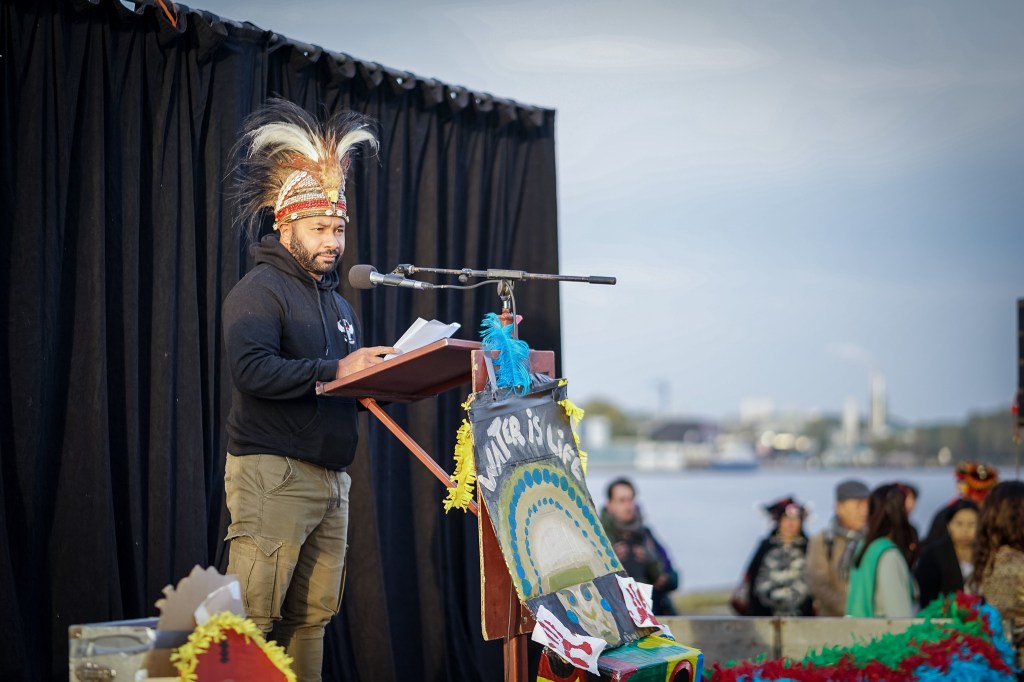
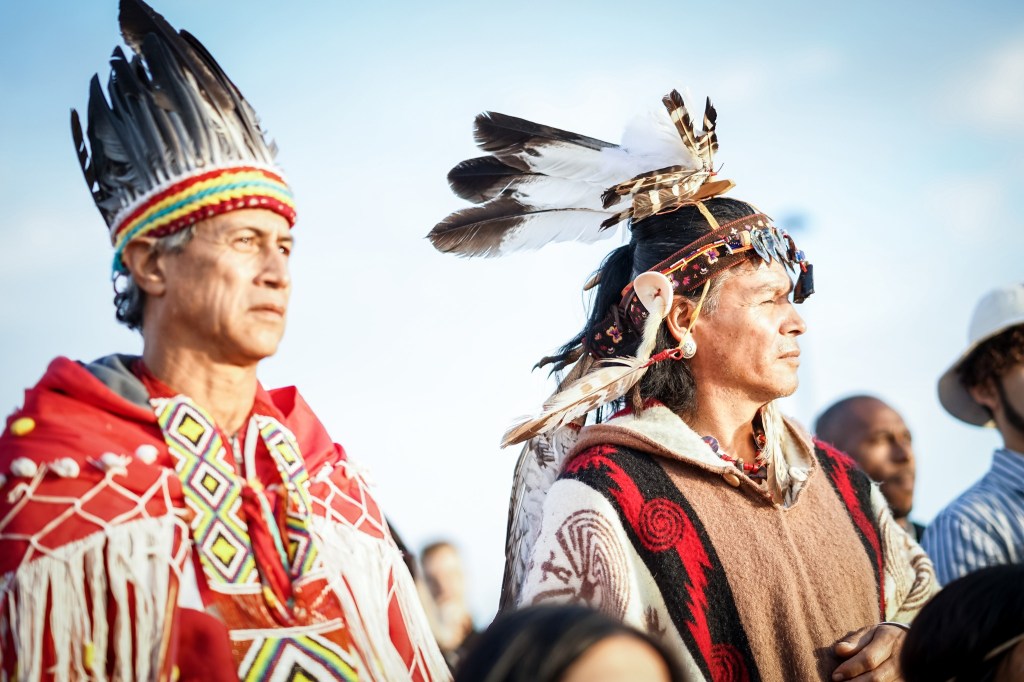
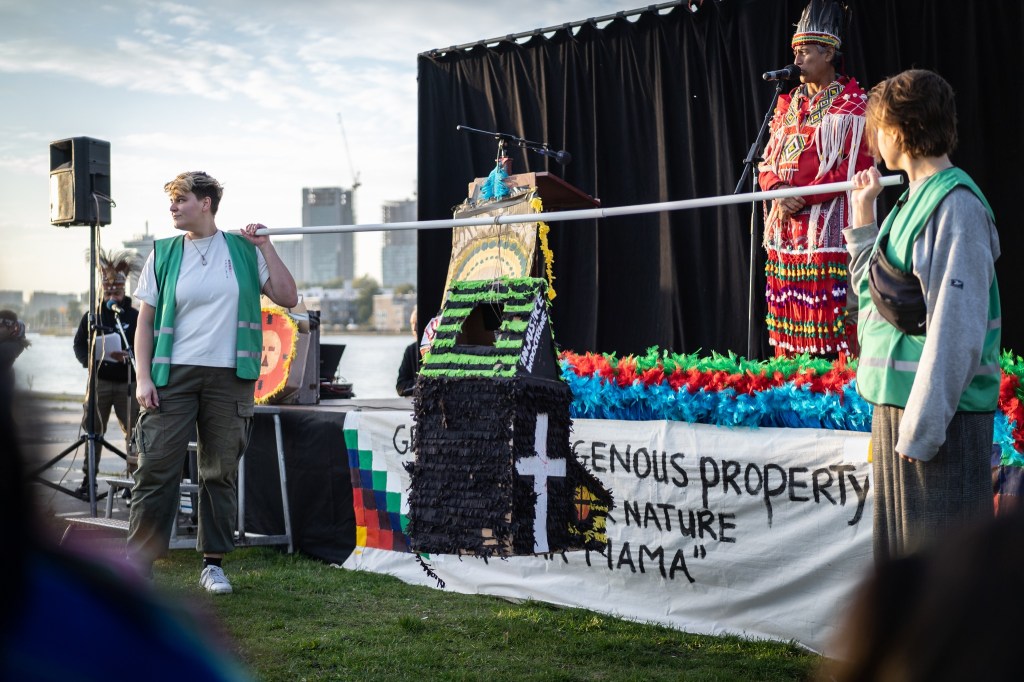
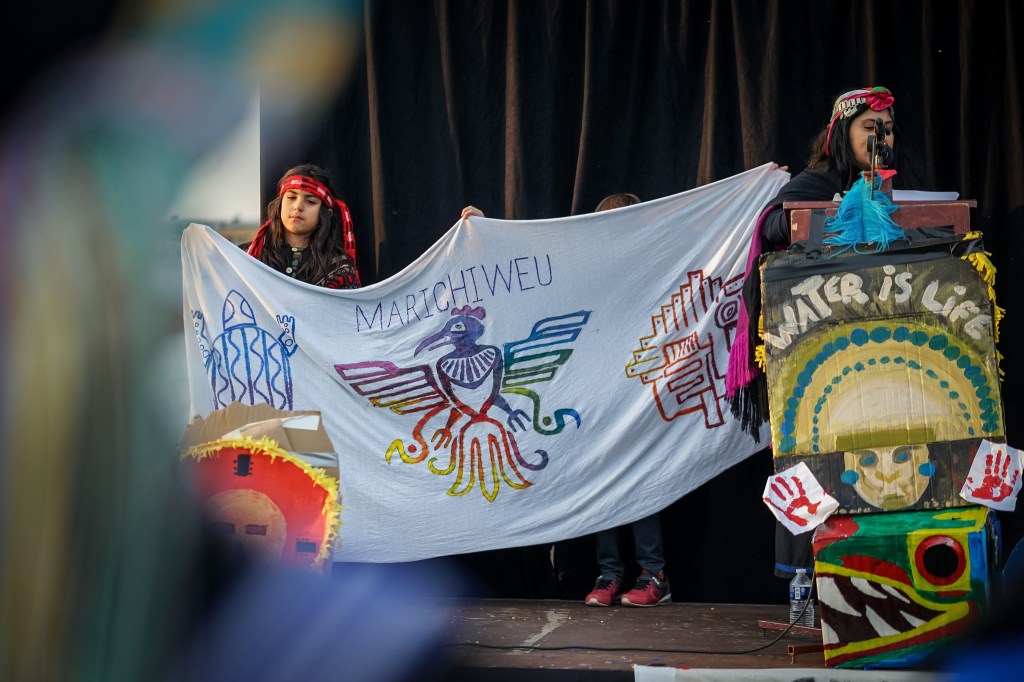
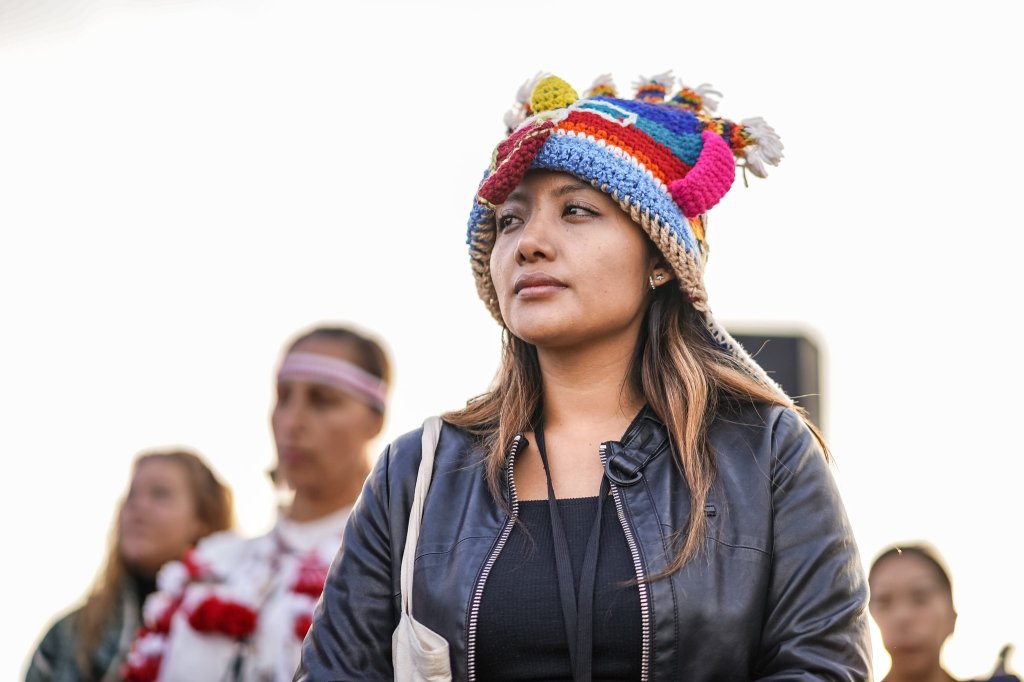
Cases Presented:
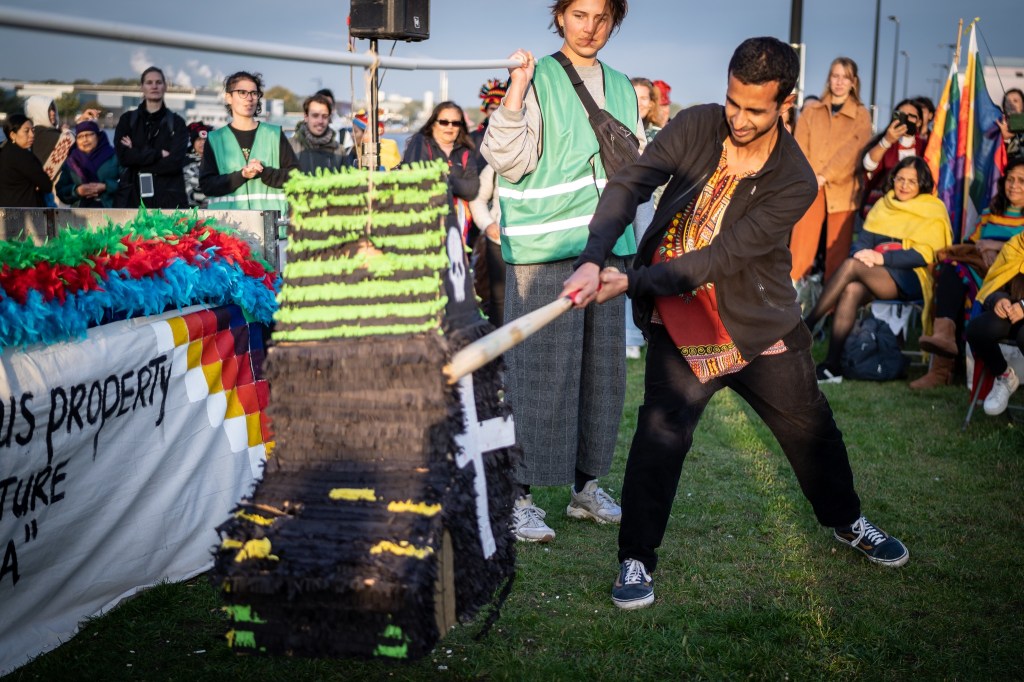
The Church
More about this case
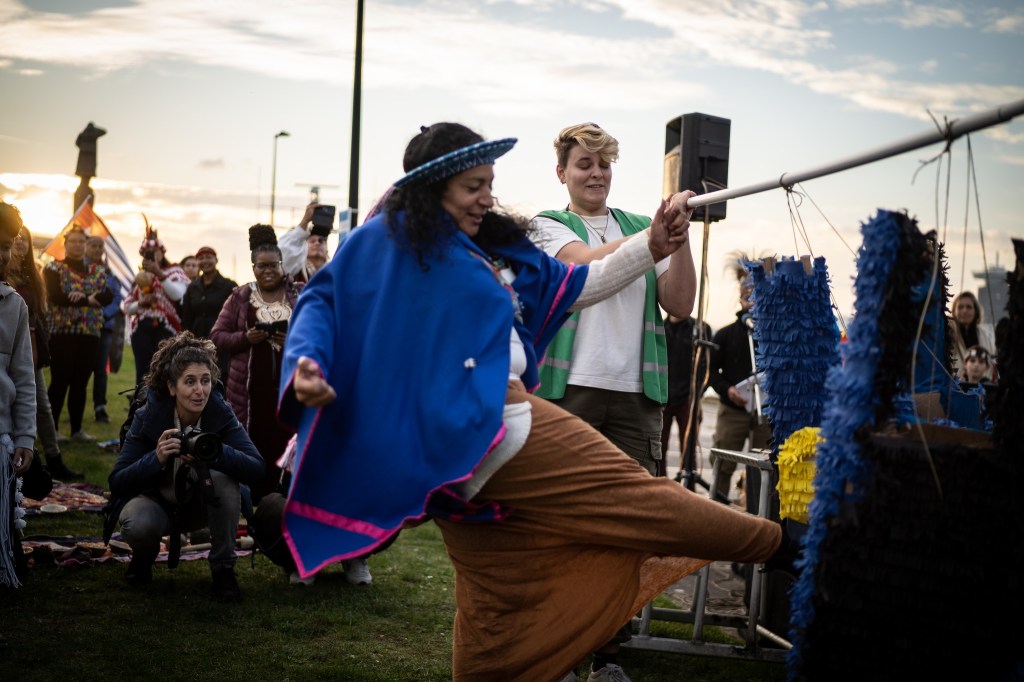
Dutch Royal Family
More about this case
Charge Against the Monarchy for Colonial Crimes
Speech by Chris Kaspar de Ploeg, reasearch journalist & co-founder of Stichting Aralez
This speech was given during Indigenous Liberation Day at the 1492 People’s Tribunal in Amsterdam, on October 12th 2022. The speech is a charge against the (Dutch) monarchy and royal families for colonial crimes against Indigenous peoples and other colonized peoples.
Dear judge and jury,
I am here to talk about Western royalty. About colonial royalty. From the Spanish empire to the British, from the French empire to the Dutch, nearly the entire world was colonized, enslaved, raped, pillaged and murdered in the name of the royal heads of state.
We know that king Leopold pillaged the Congo as his own personal property, killing 10 million people in a brutal holocaust. We know that the Spanish crown financed the voyage of Columbus, setting in motion the process of unimaginable genocides and ecocides, leading to the death of an estimated 175 million people. We know that British royalty were the main shareholders of the Royal African Company, which has shipped more enslaved people than any other company in the world.
When queen Elizabeth died a few weeks ago, she was still the largest legal landowner in the world, owning a sixth of the planet’s land surface. We are still living in the colonial present, your honor.
Dear judge and jury, I am of course here to speak, in particular, about Dutch royalty. And for the sake of time, allow me to focus on just three people of the House of Orange-Nassau. I believe they will suffice to make my case.
First, Johan Maurits Nassau, who became the governor of ‘new Holland’, a Dutch colony in Northern Brazil and one of the major centres of trans-atlantic slavery after the genocide of the local Indigenous peoples. Maurits Nassau became one of the richest people in the Netherlands, as he traded in enslaved people and hunted down maroon communities in a complete reign of terror. The House of Orange-Nassau was a major shareholder in the West Indian Company, which became, for a brief period in time, the single largest trader of enslaved people across the globe. As such, the royal family was directly responsible for grave crimes against humanity.
Our very first official king, your honor, is William the first. Under the Dutch constitution, the colonies were completely under his tyrannical foreign rule. William the first was heavily involved in the brutal crushing of the Java uprising, where his forces murdered 200,000 civilians. These brutal massacres laid the basis for William’s imposition of the so-called Culture System, forcing Indigenous peasants to work their best lands for coffee and sugar, on which the Dutch Trading Company (NHM) gained a complete monopoly. And William the first himself was the major shareholder, getting rich as countless locals succumbed to deep poverty and even to famine and starvation.
But William the first was also a drug-pushing mobster. His Dutch Trading Company (NHM) became one of the largest opium traders in the world as they drugged the local population who slaved away on the colonial plantations. Clearly, the royal family was directly responsible for some of the worst crimes of colonialism, including forced labor, forced starvation, civilian massacres, war crimes and massive dealing in opioids.
To finish off, your honor, with a more recent example, prince Bernhard, who passed away in 2004. Before he married the Dutch queen Juliana, he was a German citizen, member of the Nazi SS, SA and the NSDAP. After WW2, prince Bernhard still had the nerve to fraudulently appropriate a million gilders from a German fund for holocaust victims. But, you honor, there is more.
Prince Bernhard was one of the founders and first president of the World Wildlife Foundation, which to this day tortures, murders and forcefully deports Indigenous peoples from their lands in the name of white conservationism – nature parks for tourists – all across the world. But Bernhard himself was a hunter and a hypocrite. The 1000 founding funders of the WWF are full of major Apartheid figures, arms dealers, dictators, fascists and oil barrons. Prince Bernhard personally financed the first WWF death squad in South-Africa, the KAS. According to insider testimonies, the KAS directly trained pro-Apartheid militias in the Kruger National Park and killed an estimated 6000 oppononents of the Apartheid regime. As such, prince Bernhard sided with the crimes of apartheid and against the self-determination of Indigenous peoples.
These are just three examples, dear judge and jury. There are, of course, many more. The royal family was a major shareholder – might actually still be – in countless Dutch companies that grew directly under colonialism, including Royal Dutch Shell, ABN AMRO and Unilever. That is how the royal family became one of the richest in the world, with an estimated wealth of 12 billion euros. And still, the royal house receives an estimated 350 million euros every year from the Dutch state, through tax privileges and subsidies for the maintenance of their castles and their luxurious travels. Like their trips to their vacation home in Wallmapu, on stolen Indigenous Mapuche lands.
Right now, as we speak, the king and queen claim they want to come clean with their past. But talk is cheap. I say the answer is simple. Forsake your power and your stolen wealth. Give back your castles and your shares – those mountains of gold you have never worked for – return all of it, every last penny, to the peoples that were colonized, murdered and enslaved. It is time for reparations. So step down from your throne. Become a common person like all of us. Because the royal house cannot be decolonized, it can only be abolished.
Dear judge and jury, that is all I have to say.
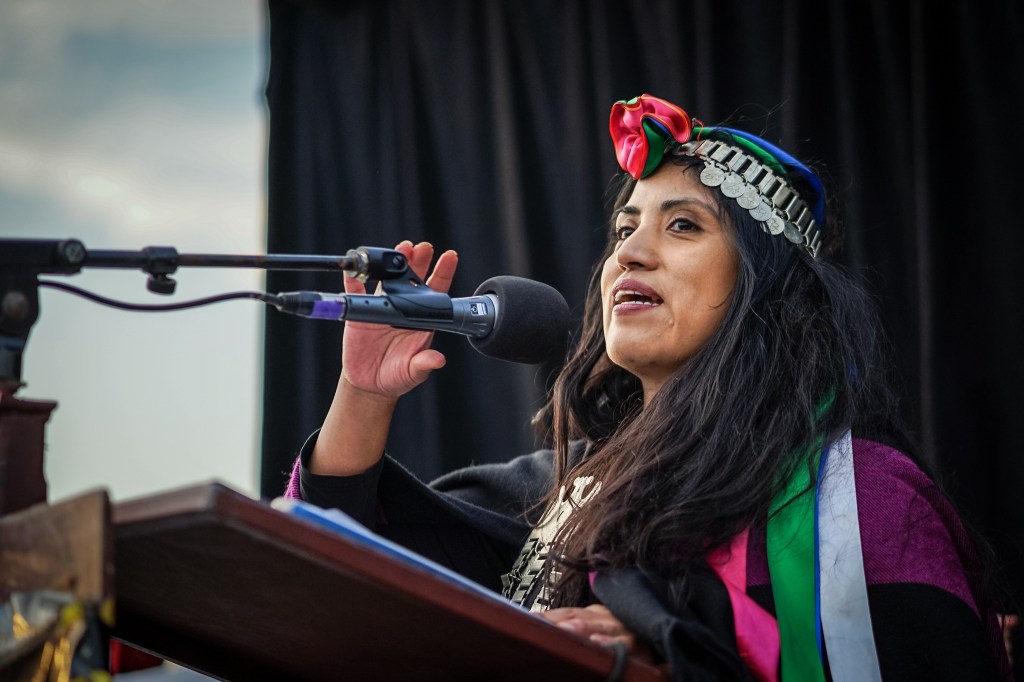
The Chilean State
More about this case
2021 – Mandela Park Manifestation
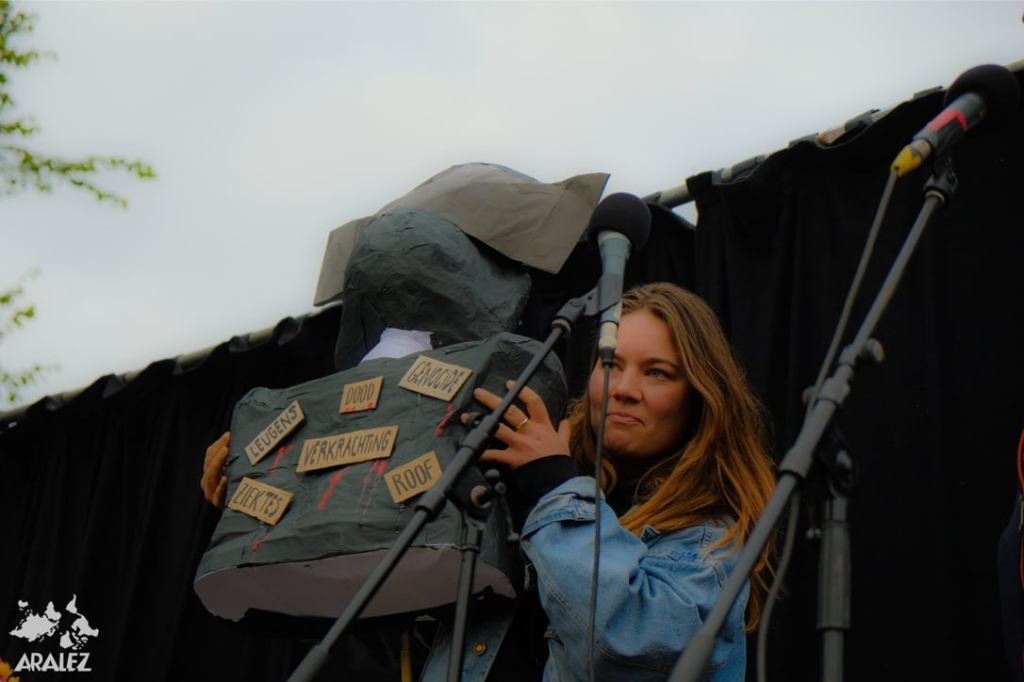
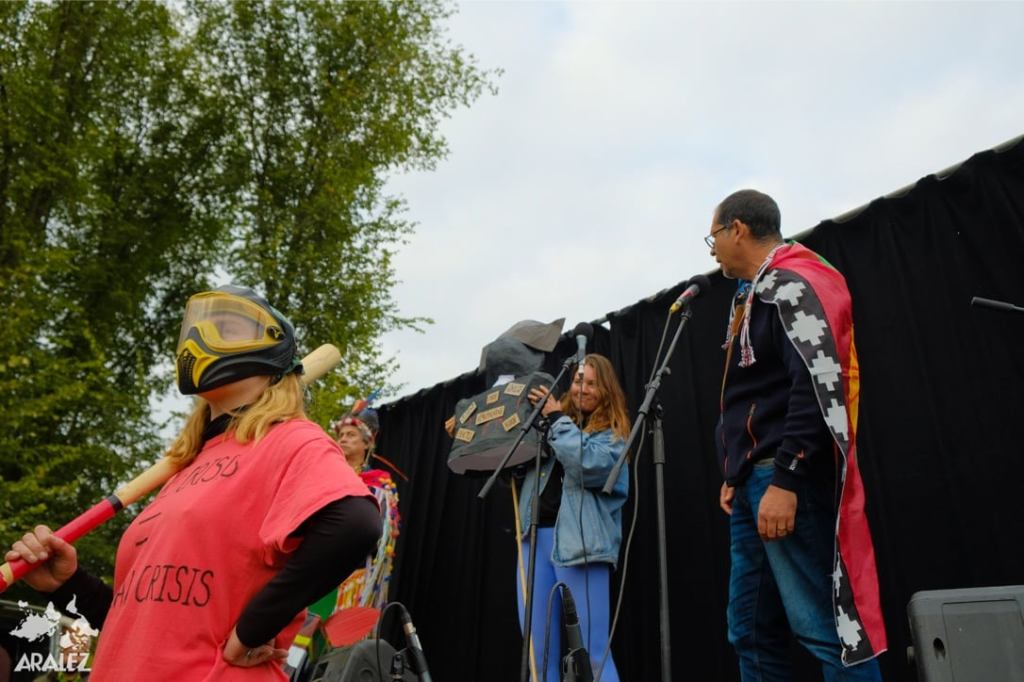
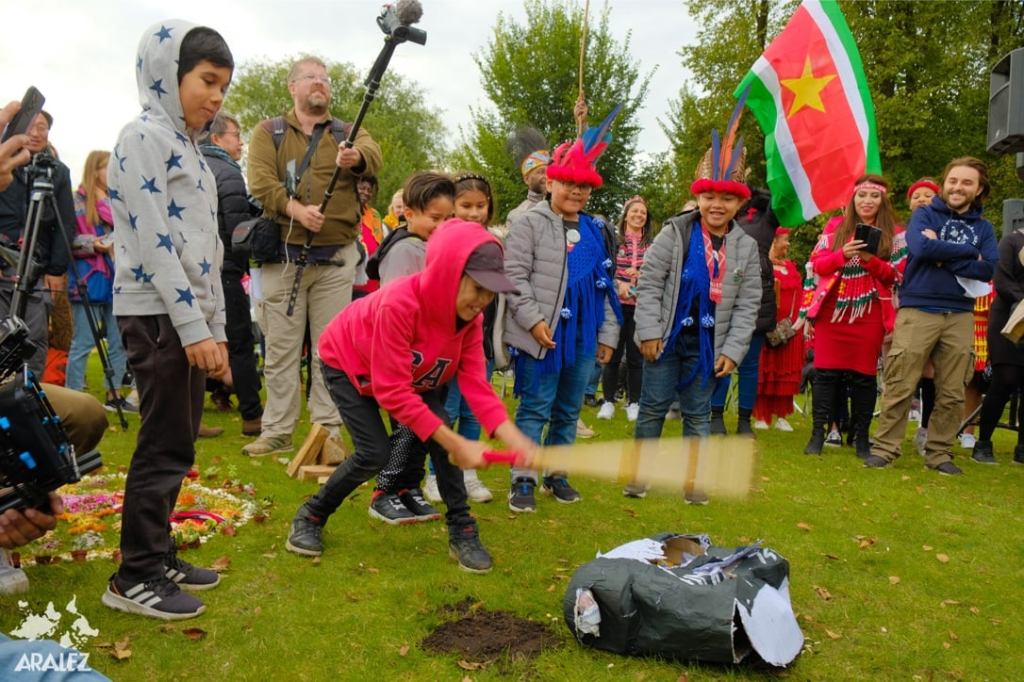
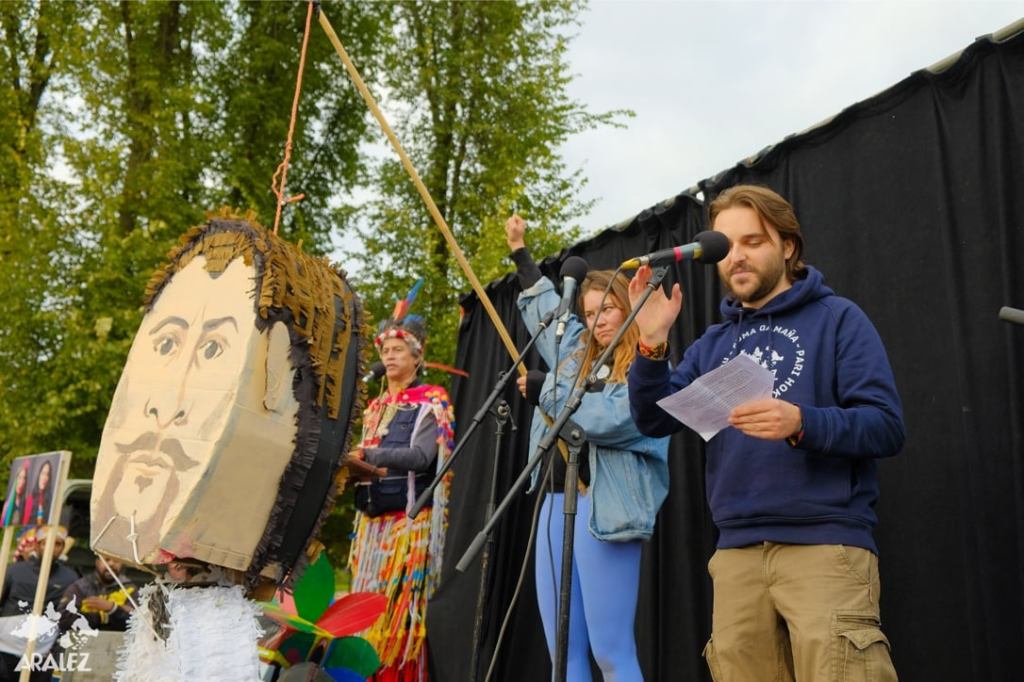
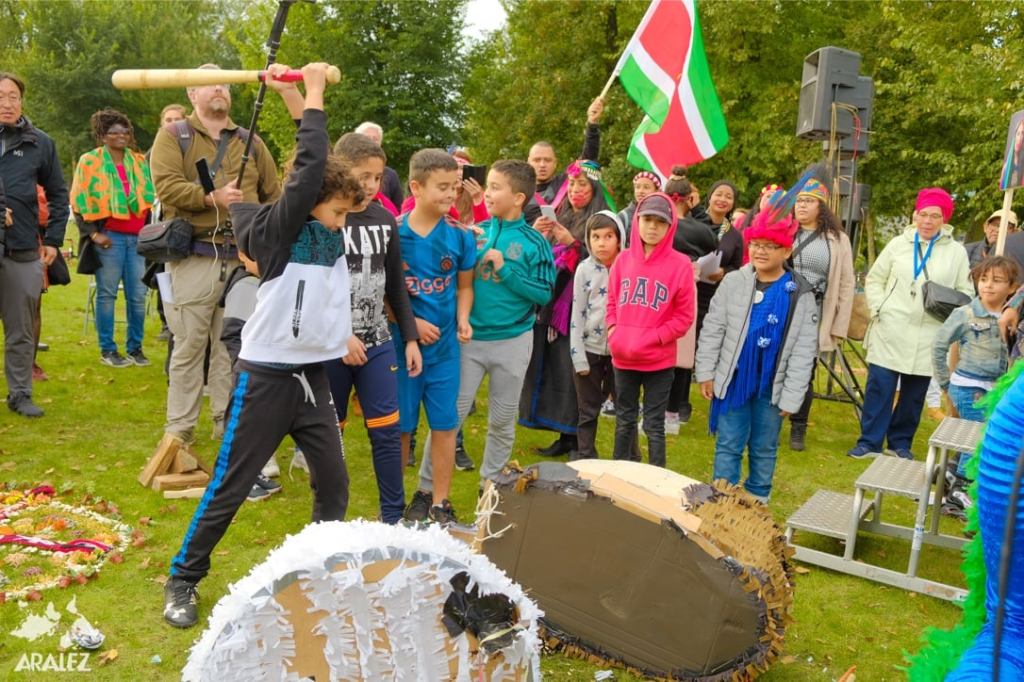
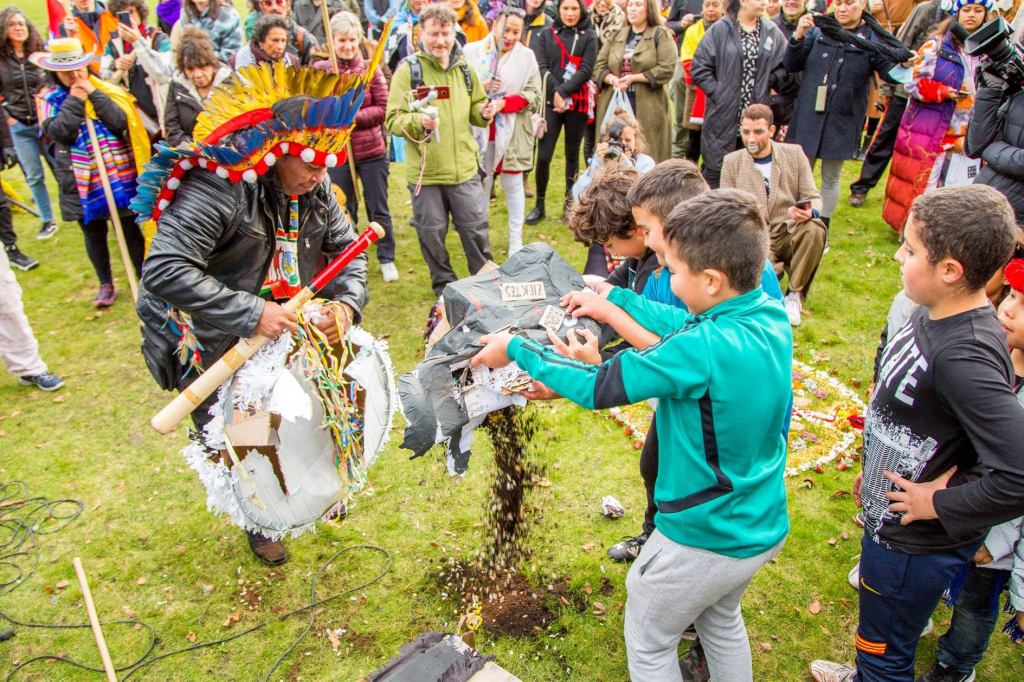
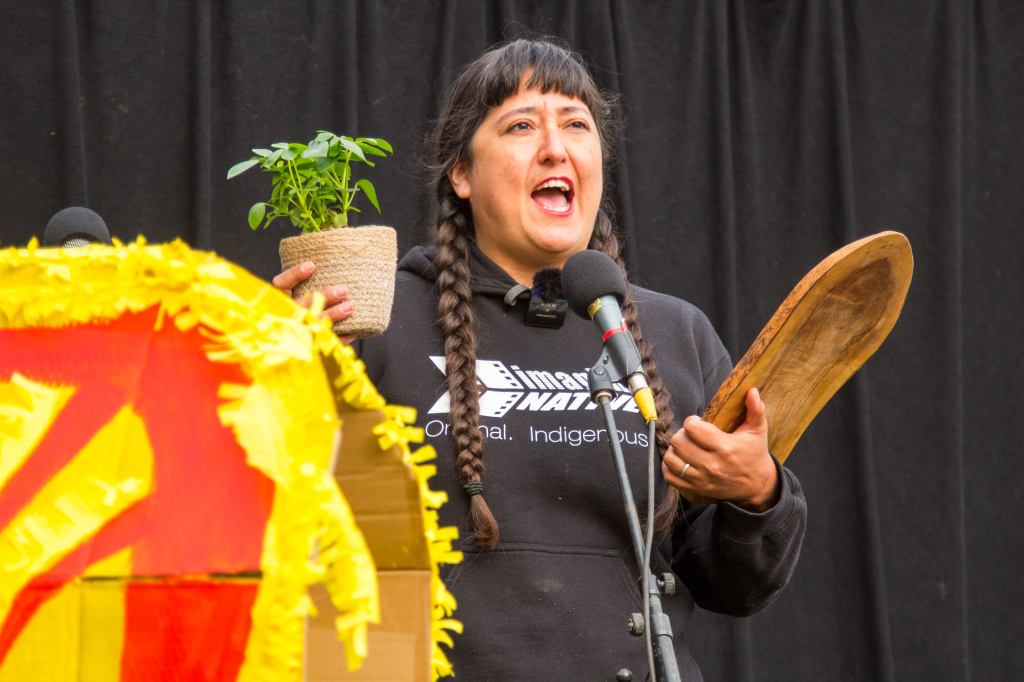
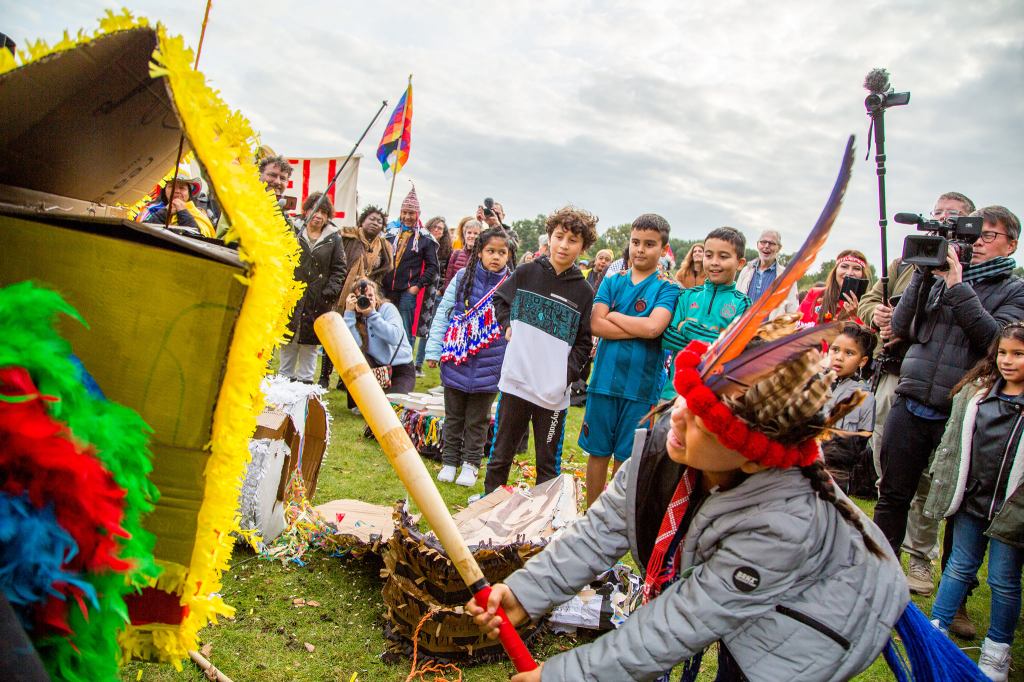
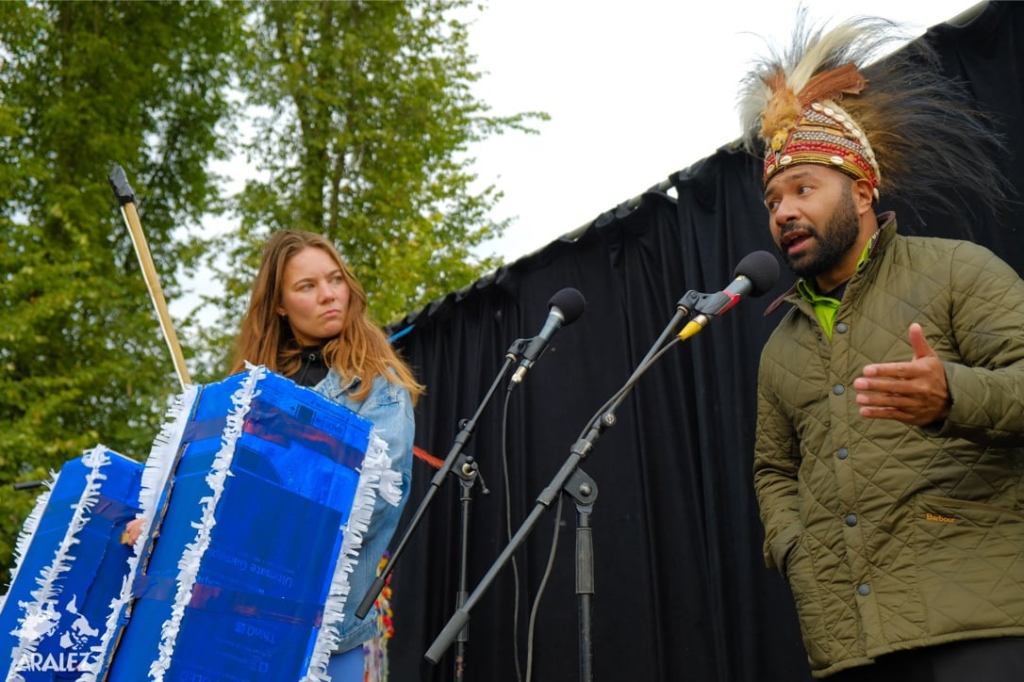
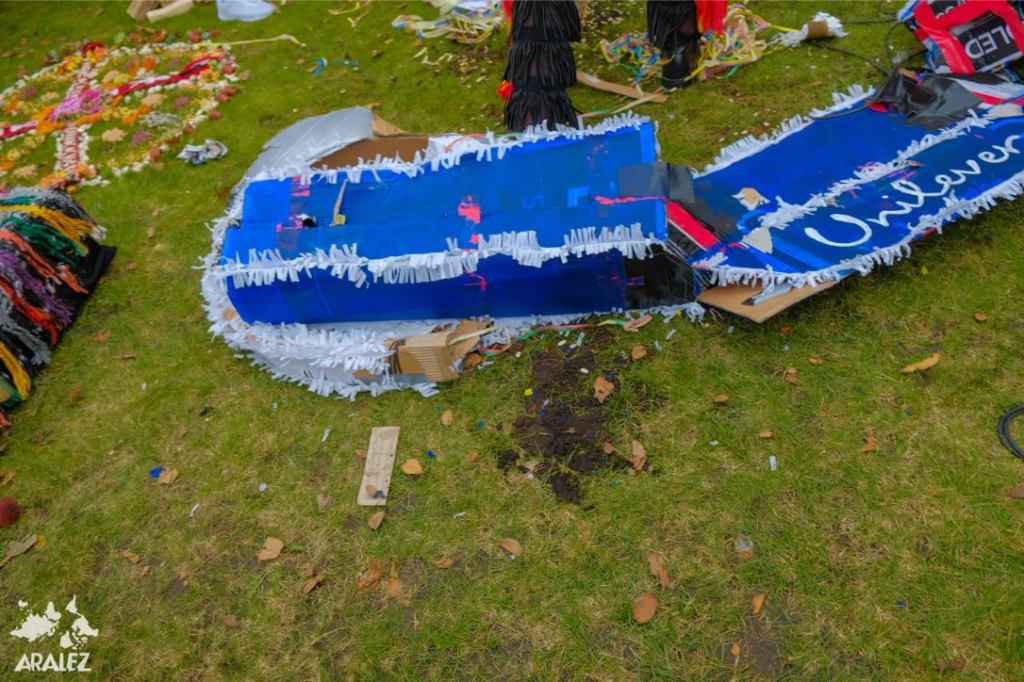
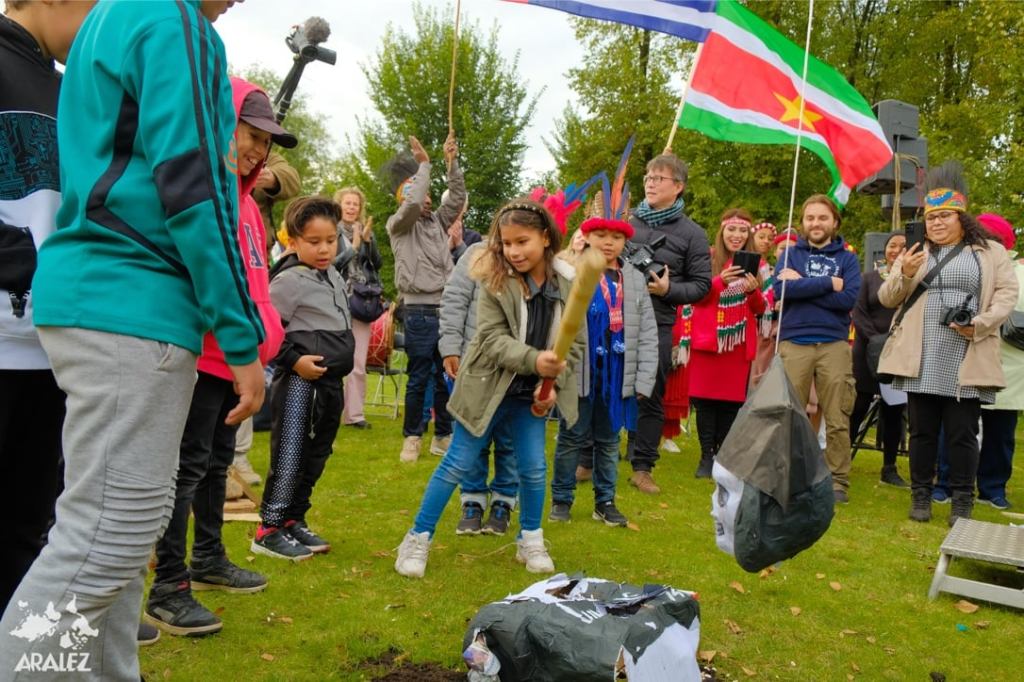
Christopher Colombus: Colonial genocide and ecocide pur sang, murder in the first degree.
For a quick overview of colonial violence that Colombus committed or ordered see this article. There are countless books that go in more detail. One book that recounts the early days of Colombus horror in Madeira (Canary islands) where modern slavery was taking shape under his command, is The history of the world in seven cheap things. This book is also translated into Dutch.
More about this case
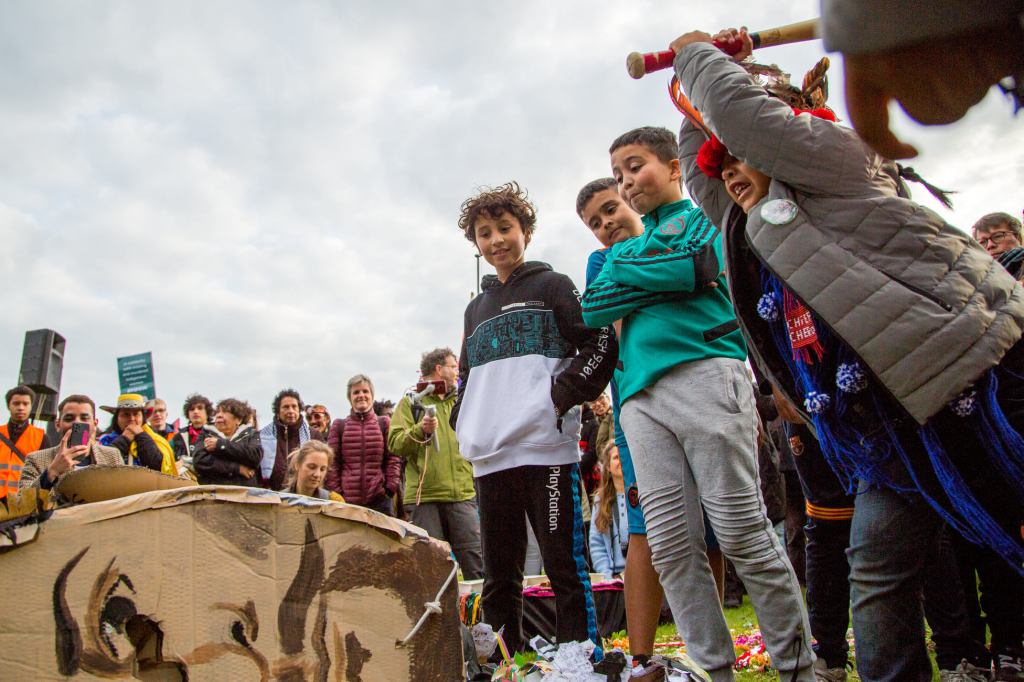
JP Coen
This historical figure working for VOC is charged with colonial genocide and ecocide pur sang, murder in the first degree. If you want to learn more a good place to start is with the book Banda.
More about this case
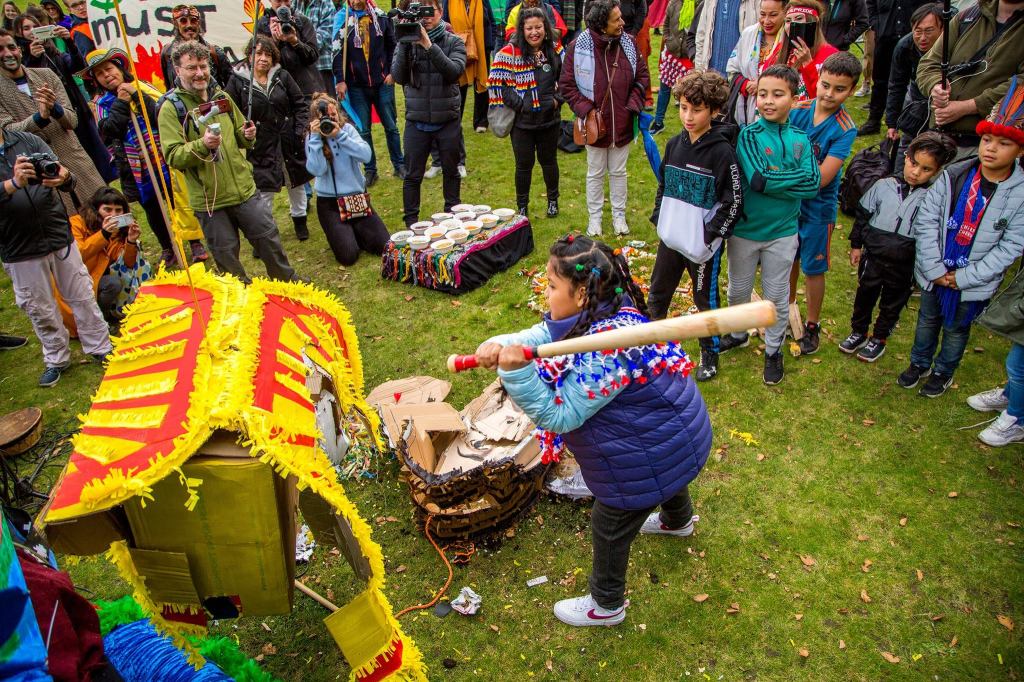
Shell
This multinational is charged with theft of resources through colonial biased laws in Indonesia and Nigeria, supporting apartheid in South Africa and countless cases of dispossession of Indigenous people and land for resource extraction in the so called global south (Mapuche land in Argentina) to Indigenous lands in Turtle Island.
More about this case
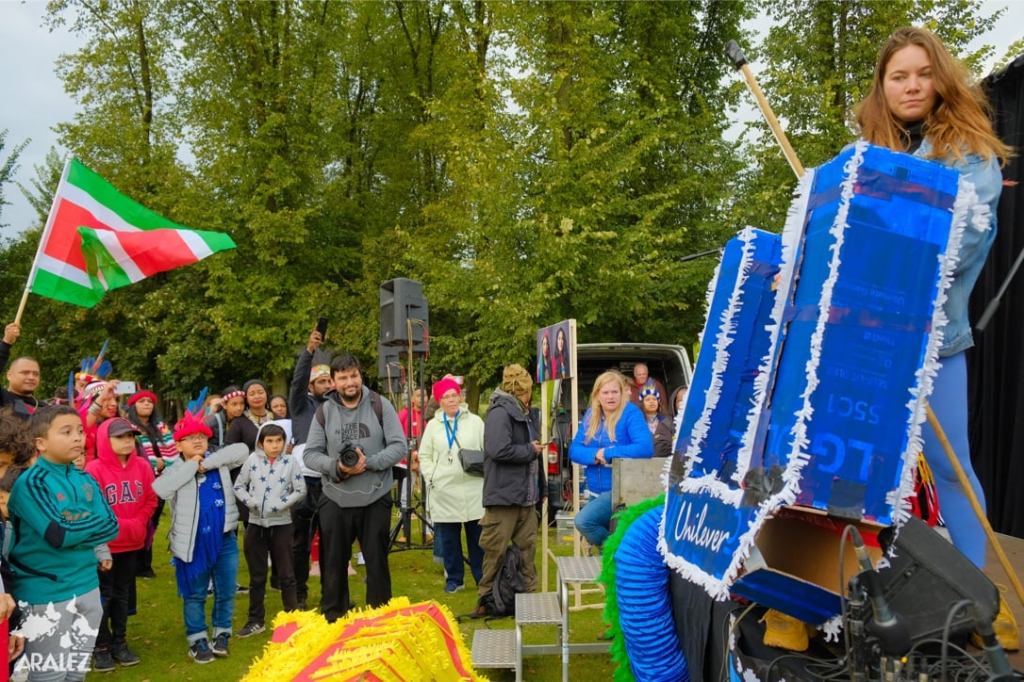
Unilever
This company accumulated wealth of colonial shipping and stolen land in what is now known as DRC, using slave labor for palm oil plantations for soap, sustained racism and coercive monopoly on market. To read more about the original colonial crimes of Lever brothers read essay in Grabbing Back to read more about current affairs there are multiple reports to check out. Maybe a good place to start is on the forest peoples website.
 INDIGENOUS DREAMS